
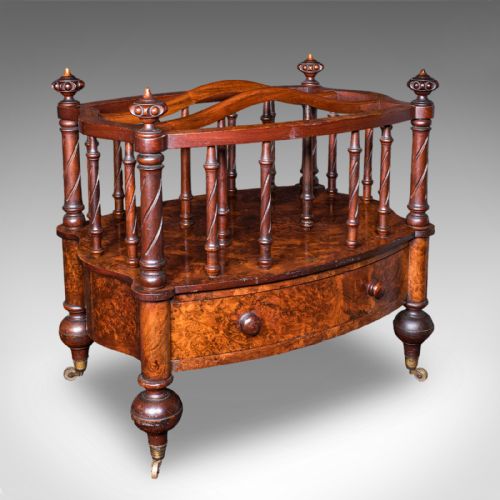
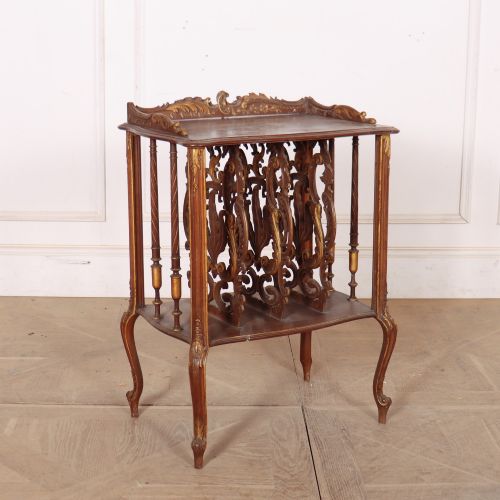


Vintage Magazine Canterbury Table
These vintage magazine canterbury tables are practical stands for newspapers and periodicals that bring period timber and clever compartmentalised storage into a sitting room.
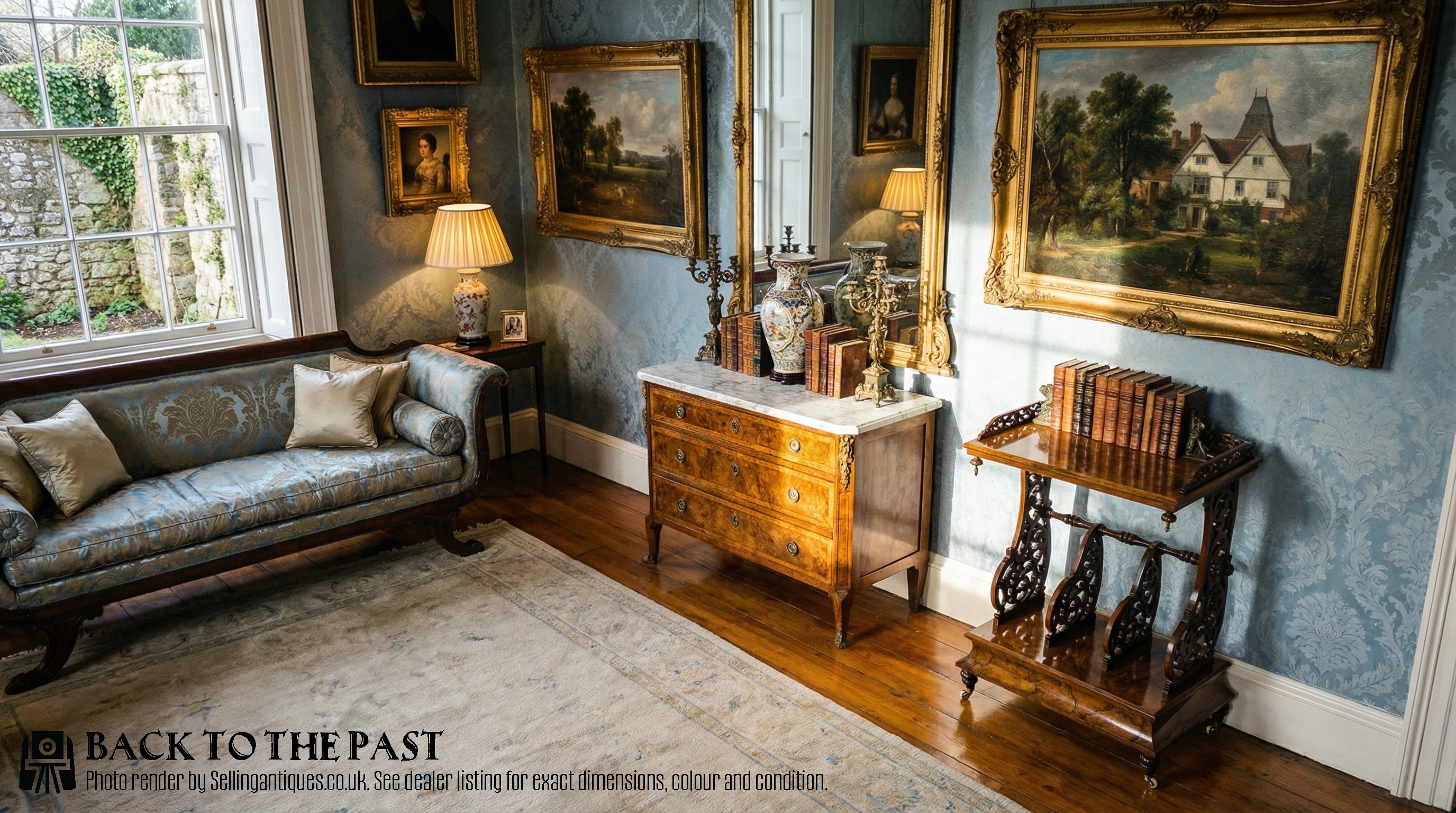
Vintage Magazine Canterbury Table
A vintage magazine canterbury table combines a low display or surface top with vertical divisions beneath for holding periodicals, sheet music or newspapers. These pieces emerge from the nineteenth century onward, spanning the Georgian, Regency, and Victorian eras.
How they were made
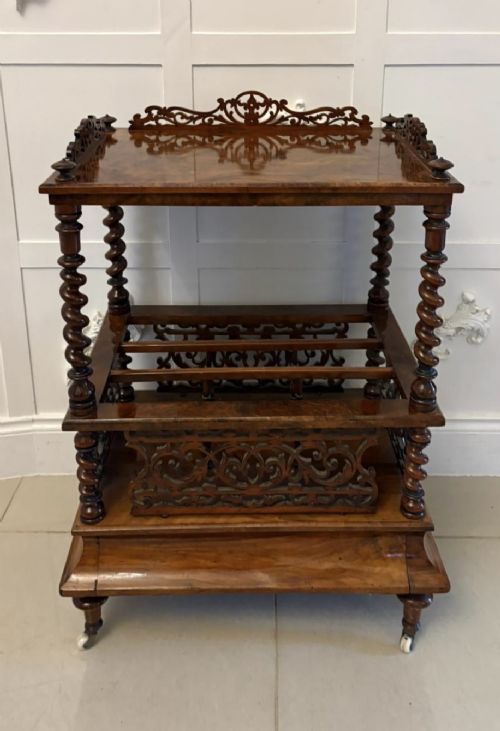
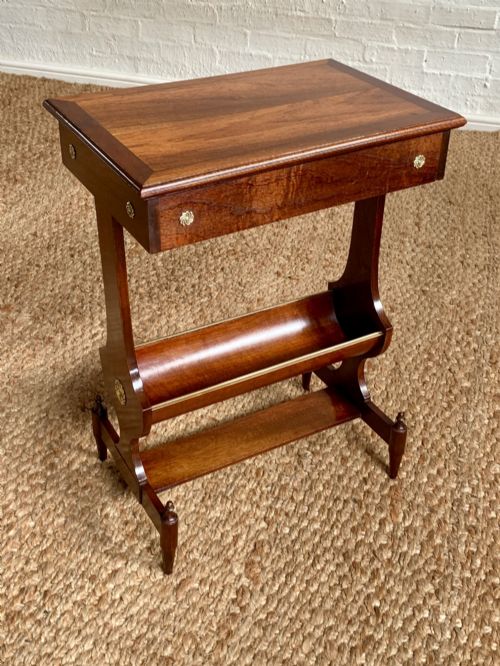
Cabinet makers constructed these stands using dense hardwoods including mahogany, rosewood, and burr walnut, frequently applying fine inlay work to the top surfaces. Timber choice defined the piece, with richly figured veneers and solid frames shaping the overall silhouette.
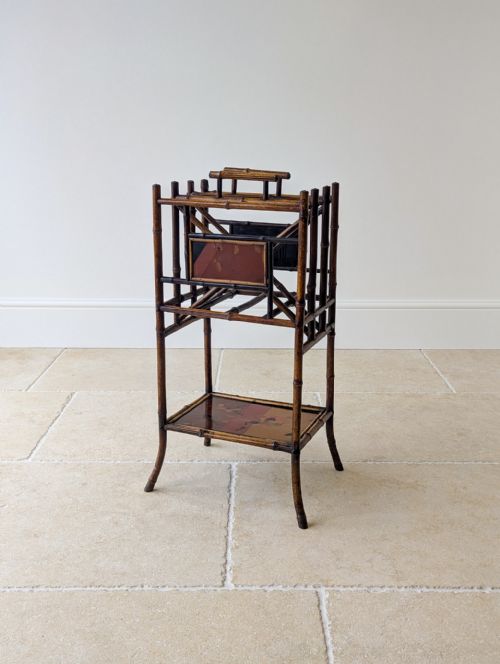
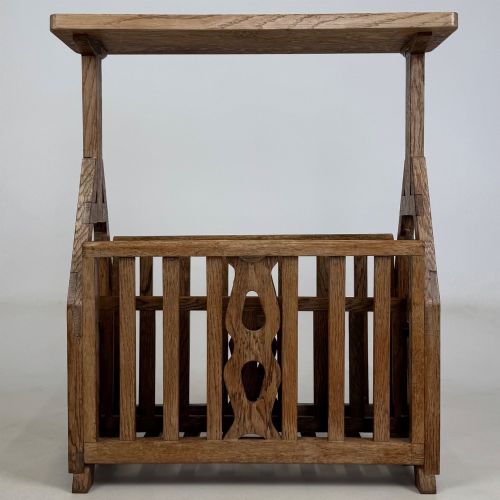
Alternative constructions utilised bamboo and lacquer for lighter, exotic interpretations during the aesthetic movement, while structural divisions were shaped with turned spindles and carved rails to support folded papers.
Listings feature woods such as mahogany, walnut, rosewood, and bamboo, spanning the Regency, Victorian, and Edwardian periods.
What varies in quality
The distinction between ordinary and exceptional pieces lies in the choice of timber veneer, the crispness of any carved detailing, and the integrity of the internal partitions. Fine examples display carefully matched burr walnut or deep rosewood grain across the entire surface rather than plain secondary woods.
Joinery execution in the vertical dividers and the integration of drawers or undershelves also mark the tier of craftsmanship, separating standard production stands from finely finished parlour furniture.
The Vintage Magazine Canterbury Table Glossary
- Canterbury
- A low stand featuring vertical partitions designed for holding sheet music, books, or newspapers. The form dates back to the eighteenth century and evolved to serve various sitting room storage needs.
- Burr walnut
- A highly figured timber veneer taken from the growth excrescences of walnut trees. It yields complex, swirling grain patterns prized by nineteenth-century cabinet makers.
- Aesthetic movement
- A late nineteenth-century design style that valued artistic expression over strict historical revival. It often introduced Japanese-influenced bamboo and lacquered finishes to English interiors.
- Regency revival
- A stylistic period drawing on the classical restraint and bold grain patterns of the early nineteenth century. Makers reproduced these graceful proportions for later Victorian homes.
Vintage Magazine Canterbury Table: Frequently Asked Questions
What is a canterbury table?
A canterbury table is a small occasional or lamp table that incorporates vertical slatted compartments beneath the top surface. It was designed to keep periodicals, sheet music, and newspapers neatly stored beside a seating area.
Over the nineteenth century, the form merged with side tables and lamp tables, providing both a surface for lamps and accessible storage for daily reading materials.
How do I date a canterbury?
Dating relies upon timber choices, construction methods, and stylistic details visible in the legs and partitions. Georgian and Regency pieces often feature precise mahogany or rosewood turnings, while Victorian examples frequently showcase burr walnut veneers and heavy carving.
Later nineteenth-century pieces may utilise bamboo or incorporate aesthetic movement motifs, reflecting the changing tastes of the decades.
Were these tables used for magazines?
They were originally designed to hold unbound sheets of music and newspapers before modern mass-market magazines became common. As the nineteenth century progressed, their purpose adapted easily to the storage of weekly journals and periodicals.
Today, they continue to serve this exact function beside armchairs and sofas in traditional and eclectic interiors.
How do I care for a walnut canterbury?
Care involves keeping the piece away from direct heat sources and strong sunlight to protect the sensitive veneers from drying and fading. Regular dusting with a soft, dry cloth preserves the polished surface without building up residue.
Applying a traditional beeswax occasionally helps nourish the hardwood and maintain the natural lustre of the grain.