




Vintage Luri Runner
A vintage luri runner delivers rustic warmth and bold tribal character straight from western Persia to your hallway.
Vintage Luri Runner
The pieces you are most likely to encounter on this page range from nineteenth-century tribal works to rugs dated around 1900, 1920, and 1930. They frequently share stylistic ground with Qashqai and Khamseh weaving traditions while retaining a distinct Luri tribal identity.
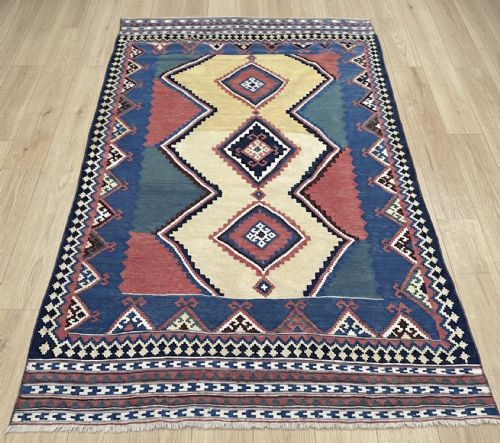
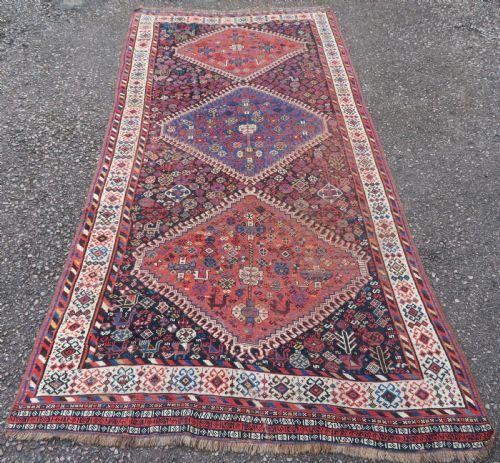
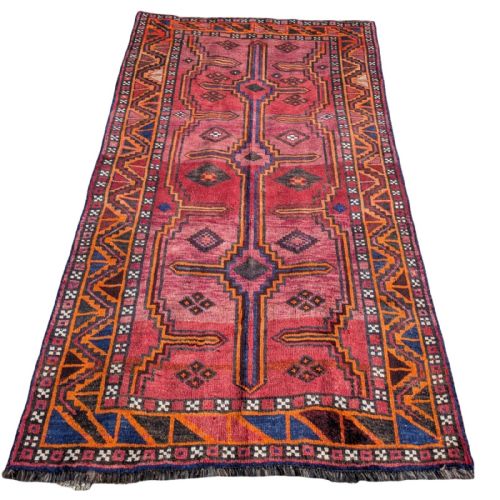
Makers focused on practical floor coverings and household textiles designed for daily nomadic life rather than urban court workshops. Their creations carry repeating shield motifs, tree of life patterns, and natural depictions of flowers and birds.
How they were made
These textiles rely entirely on wool and hand-spun wool, providing the dense, durable foundation characteristic of nomadic Persian weaving. Weavers utilised natural dyes to achieve rich, earthy palettes that have matured gracefully over the decades.
The construction involves traditional hand-weaving techniques executed on portable upright looms set up by the Luri tribe. This artisanal process ensures each rug possesses subtle irregularities that reflect the hand of the individual maker.
Vintage Luri Runner Retail Price Guide 2026
Typical asking prices for vintage luri runner among the pieces listed under this phrase on Sellingantiques today, from the lower quarter to the upper quarter. They describe what is for sale here now, not the wider market.
Listings feature pieces spanning the nineteenth century up to 1930, utilising wool and natural dyes.
What varies in quality
The distinction between standard examples and the top of the range rests on the precision of the weave and the clarity of the design. Rugs featuring complex pictorial elements like birds and trees often demand greater technical skill from the weaver.
Material preparation also plays a role, particularly the consistency of the hand-spun wool and the depth achieved by natural dyes. Well-preserved tribal carpets display an integrity of structure that holds firm despite heavy foot traffic.
The Vintage Luri Runner Glossary
- Runner
- A long, narrow carpet format specifically proportioned for corridors, hallways, and staircases.
- Kelim
- A flat-woven textile produced without a pile, traditionally utilised for floor coverings and utility cloths.
- Sofreh
- A flat-woven spread or cloth traditionally used during meals or bread-making within nomadic households.
- Kelleh
- A large format rectangular rug, typically longer than a standard room-size carpet but wider than a corridor runner.
- Tribal Persian
- A descriptive category for rugs woven by nomadic or village confederations rather than city manufactories.
Vintage Luri Runner: Frequently Asked Questions
Where were vintage luri runners made?
These textiles originate from western Persia, specifically the mountainous Luristan region inhabited by Luri tribes.
The weavers maintained semi-nomadic lifestyles, drawing stylistic inspiration from their immediate environment and neighbouring groups such as the Qashqai.
How do I care for a tribal runner?
Protect the hand-spun wool by placing a quality underlay beneath the piece to prevent slipping and reduce friction.
Vacuum gently without using a rotating brush roll and consult a specialist familiar with antique tribal carpets for cleaning.
What motifs appear on these rugs?
Common design elements include repeating shield patterns, geometric fields, and symbolic tree of life compositions.
Certain examples incorporate pictorial details featuring stylized flowers and birds within the traditional tribal framework.
How old are these carpets typically?
The available selection spans from the nineteenth century through the early decades of the twentieth century, including pieces dated around 1900 and 1920.
Exact dating relies on stylistic analysis, material composition, and structural characteristics recorded in each listing.