

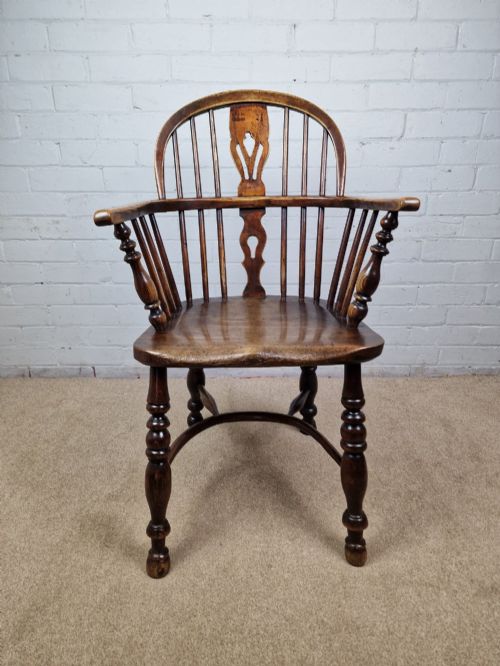


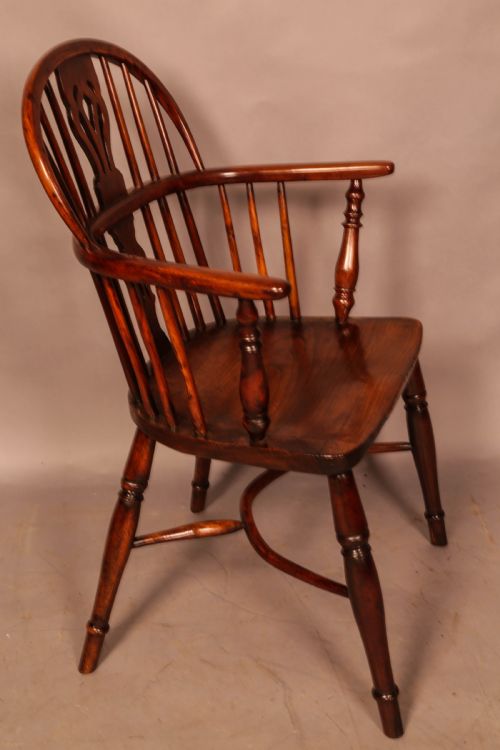


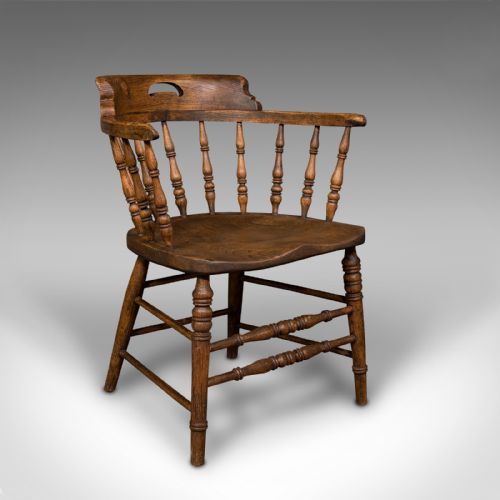

Vintage Low Back Windsor
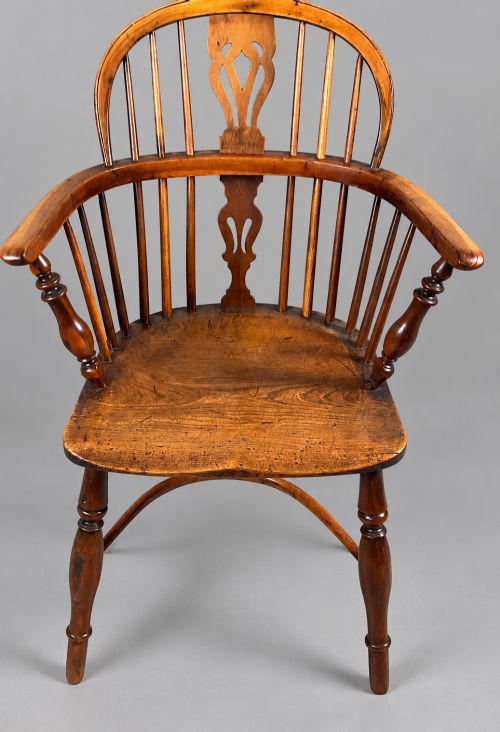
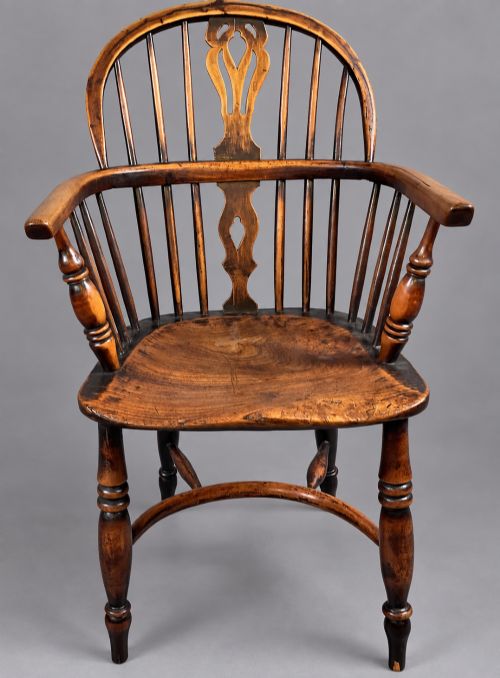
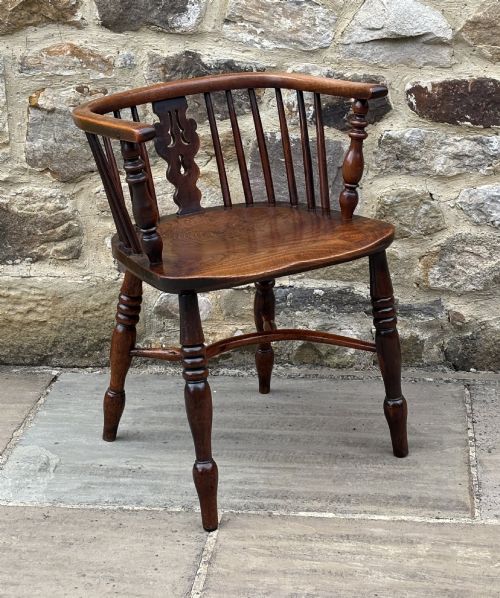
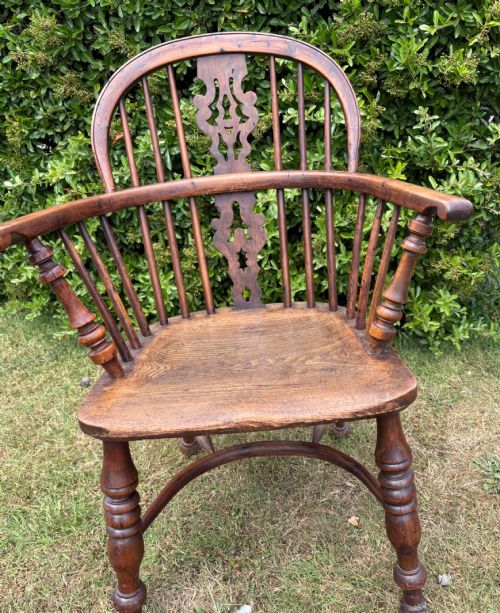
These vintage low back windsor chairs offer sturdy provincial comfort, combining vernacular ash, elm, and rich yew wood.
Vintage Low Back Windsor
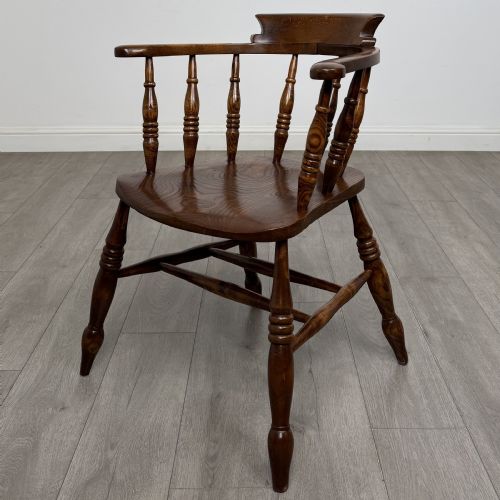
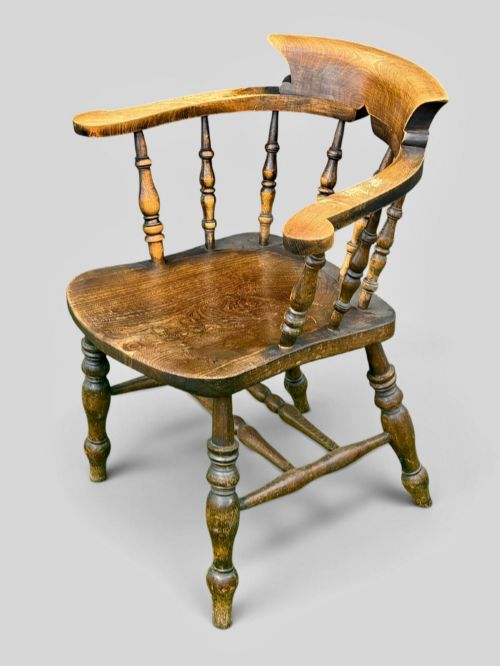
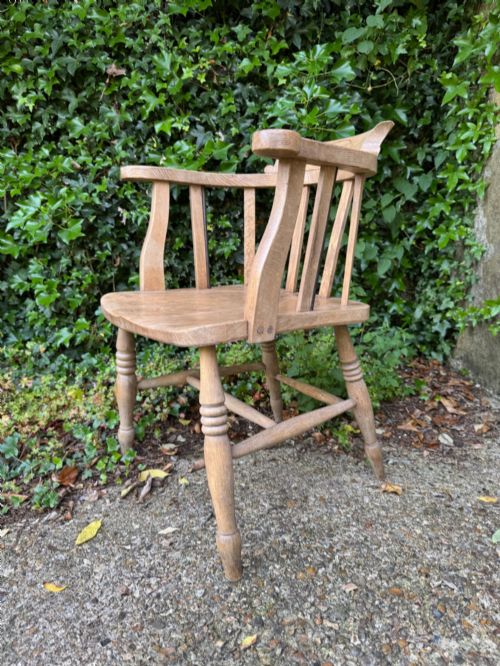
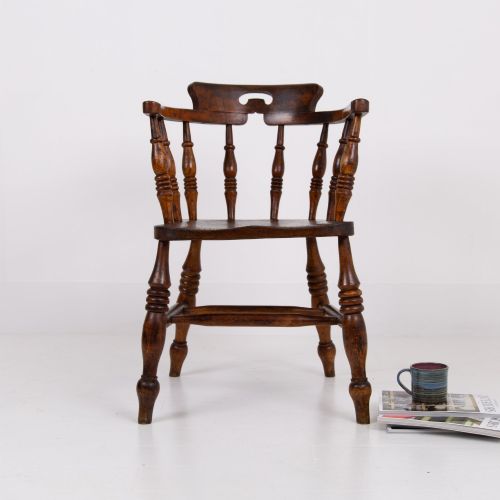
A vintage low back windsor is a sturdy seating form rooted in English provincial tradition, frequently designated as an armchair, elbow chair, or smoker's bow. These pieces emerge primarily from the Victorian era and the nineteenth century, reflecting regional vernacular woodworking rather than courtly London design. A buyer on this page is most likely to meet elm and ash combinations or rich yew wood constructions.
The low back profile defines the form, often featuring a continuous armrail curved low around the sitter. These armchairs function well as desk seats or dining chairs, bringing rustic country character into modern rooms. Makers in places like Nottinghamshire and Worksop produced these robust forms for daily domestic and commercial use.
How they were made
Local timber selection dictated the construction, pairing elm seats with ash or beech spindles and legs. Yew wood also appears frequently, prized for its dense grain and warm tone in provincial workshops.
Craftsmen shaped solid elm into saddled seats, boring holes directly into the wood to receive turned legs and stick backs. Some examples retain original painted finishes over the timber framework.
Vintage Low Back Windsor Retail Price Guide 2026
Typical asking prices for vintage low back windsor among the pieces listed under this phrase on Sellingantiques today, from the lower quarter to the upper quarter. They describe what is for sale here now, not the wider market.
Listings feature nineteenth century pieces constructed from elm, ash, beech, oak, and yew wood.
What varies in quality
The choice of timber creates a clear distinction across the range, with figured yew wood commanding greater appreciation than standard elm and beech combinations. Timber selection directly reflects the workshop's ambition and the regional market it served.
Joinery execution and turning crispness separate ordinary utility chairs from finer provincial work. The depth of the saddle shaping in the seat and the graceful sweep of the bent arm bow show the hand of a more skilled chairmaker.
Gabbitass Worksop·Rockley Maker
The Vintage Low Back Windsor Glossary
- Smoker's bow
- A low-backed Windsor armchair with a continuous curved armrail and short turned spindles, often used in public houses and parlours.
- Saddled seat
- A wooden seat scooped and carved into a concave shape to fit the human body comfortably. This technique required considerable skill with an adze and scorper.
- Vernacular
- Objects designed and built by regional makers using local traditions and materials rather than following academic architectural styles. These pieces prioritize practical utility above high fashion.
- Stick back
- A chair construction method where turned wooden rods are tenoned directly into the seat and underside of the top rail. This method provides immense structural strength with minimal weight.
Vintage Low Back Windsor: Frequently Asked Questions
What is a low back windsor chair?
A low back windsor chair is a traditional wooden seat featuring a curved armrail that sits below shoulder height, supported by turned spindles.
These pieces rely on a solid carved seat into which the legs and back sticks are wedged directly.
How do I identify a smoker's bow?
A smoker's bow is essentially a sturdier, lower version of the Windsor armchair designed for domestic and tavern use during the Victorian period.
They share the same stick back construction but typically feature a more enclosed arm rail wrapping around the sitter.
Are these chairs comfortable for daily use?
Yes, the deep saddle-sculpted wooden seats and supportive low back rails make them surprisingly comfortable for sitting at desks or dining tables.
Their robust nineteenth-century construction handles everyday living easily without needing cushions.
What woods were used to make them?
English makers relied on native hardwoods, most commonly pairing elm for the solid seats with ash or beech for the bent components and legs.
Finer examples utilise yew wood, which exhibits a distinctive rich grain and warm reddish-brown tone.
How do I date a nineteenth century windsor?
Dating relies on examining tool marks, timber shrinkage, construction wear, and regional turning styles characteristic of the period.
Nineteenth-century examples show hand-lathe turning and traditional joinery methods predating modern industrial manufacturing.