



Vintage Long Ottoman
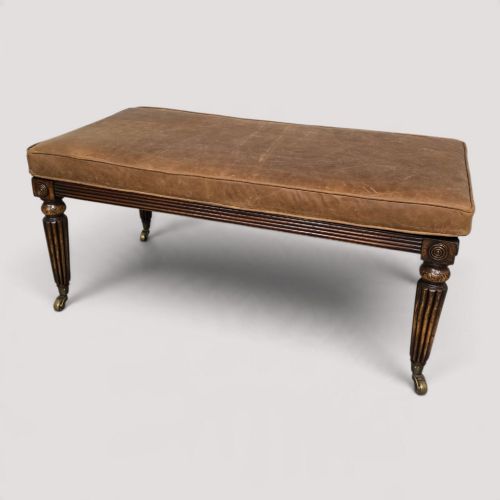
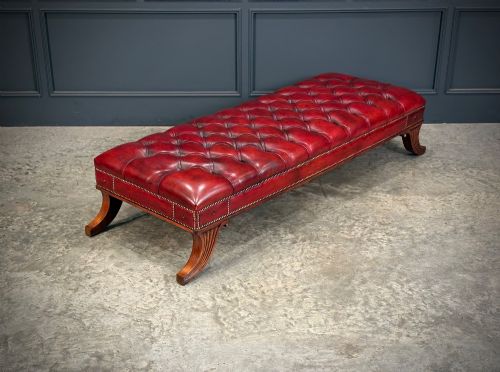
A vintage long ottoman provides a low, extended seat or footrest, combining period upholstery with enduring craftsmanship.
Vintage Long Ottoman
A vintage long ottoman covers an extended group of seating forms, ranging from footstools and dressing stools to window seats and benches. These pieces often feature timber frames paired with upholstered surfaces, appearing across periods from the nineteenth century into the twentieth.
The versions most frequently met on this page span styles such as Regency, Edwardian, and Louis XV, alongside revival designs like Chippendale and Jacobean. Frames appear in mahogany, oak, painted wood, and gilded finishes, reflecting diverse aesthetic traditions.
Makers and workshops utilised various textile coverings, including wool, leather, linen, and kilim, to finish these long seating pieces. Such variety allows a vintage long ottoman to function as a low bench, a window seat, or a substantial footrest within a room.
How they were made
Makers constructed these frames using solid hardwoods like mahogany and oak, often incorporating hand-carved details and cabriole legs. Painted or gilded wood finishes also appear on French and Italian pieces, showing decorative surface treatments.
Upholstery techniques combined traditional stuffing with durable textiles such as wool, linen, leather, and flat-woven kilim. Caning is also utilised on specific frames, providing a lighter texture alongside solid wooden structures.
Vintage Long Ottoman Retail Price Guide 2026
Typical asking prices for vintage long ottoman among the pieces listed under this phrase on Sellingantiques today, from the lower quarter to the upper quarter. They describe what is for sale here now, not the wider market.
The furniture forms span footstools, window seats, and dressing stools referencing Regency, Edwardian, and Louis XV styles.
What varies in quality
The distinction between standard examples and finer pieces lies in the precision of the timber carving and the integrity of the frame construction. Heavy mahogany frames with detailed ball and claw motifs represent superior execution compared to plain structures.
The quality of the covering materials and the sophistication of the upholstery work further differentiate the range. Hand-carved gilding and specialised textile choices elevate certain French and Italian examples above simpler utility pieces.
Morris & Co.
The Vintage Long Ottoman Glossary
- Bergere
- An enclosed armchair or stool style featuring upholstered sides, often paired with exposed wooden frames. It originates from French furniture design traditions.
- Kilim
- A flat-woven textile or rug used as an upholstery covering on footstools. This material introduces geometric patterns and durable wool construction to the piece.
- Frizzen
- The vertical steel plate struck by a flintlock mechanism to create sparks. This technical component appears specifically on antique firearms included within broader listings.
- Cabriole leg
- A furniture leg that curves out and then in, mimicking an animal's limb. It is commonly found on Victorian and period revival seating frames.
- Snaphaunce
- An early type of flintlock ignition mechanism used on historical firearms. It employs a sliding pan cover separate from the frizzen.
Vintage Long Ottoman: Frequently Asked Questions
What is a vintage long ottoman used for?
These pieces function primarily as extended footstools, low benches, or window seats in living spaces and bedrooms.
Their elongated proportions allow them to serve multiple seating or resting purposes depending on the room layout.
How do I date a vintage long ottoman?
Dating relies on identifying stylistic markers, timber types, and upholstery methods characteristic of periods like the Edwardian era or the nineteenth century.
Design influences such as Regency or Louis XV styles also provide clues to the approximate decade of manufacture.
What materials are used in these frames?
Frames are predominantly built from timbers such as mahogany and oak, with some examples featuring painted or gilded wood finishes.
Textile coverings range from leather and linen to wool and traditional kilim flat weaves.
Are all long ottomans upholstered?
Most examples feature upholstered pads or woven cane surfaces integrated into the wooden frame structure.
Some pieces rely entirely on carved wooden tops without soft padding.