

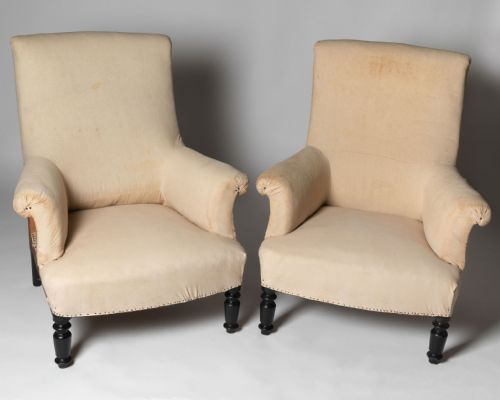
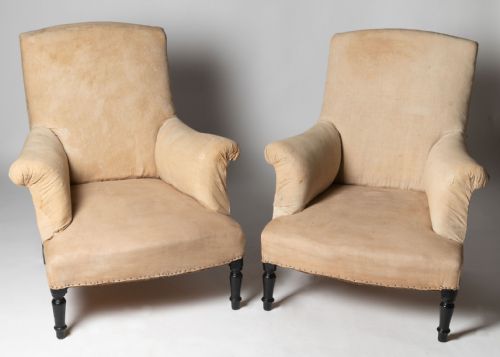
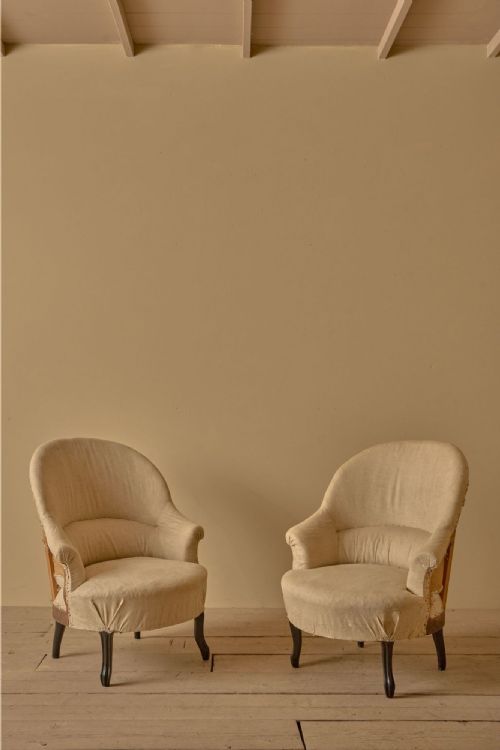
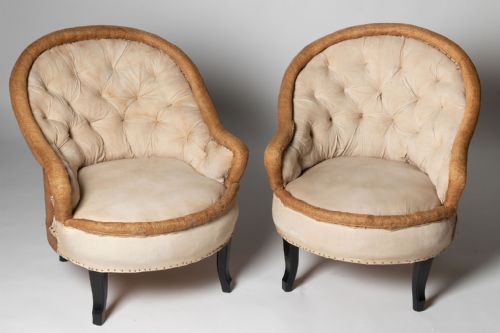


Vintage Linen Armchairs
These vintage linen armchairs combine period frames with tactile cloth, offering deep comfort for a traditional or eclectic interior.
Vintage Linen Armchairs
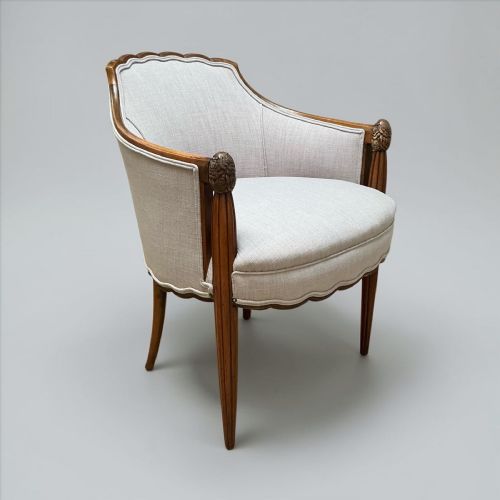
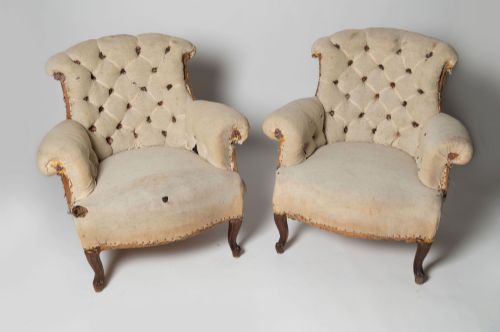
Vintage linen armchairs encompass a wide variety of seating forms spanning the 19th century, Edwardian era, and 1930s. Buyers searching for vintage linen armchairs will encounter diverse styles, from French Napoleon III tub chairs and Arts and Crafts recliners to English country fireside chairs.
The selection frequently includes pairs alongside single statement pieces such as slipper chairs, wing armchairs, and wicker porters chairs. These seats range from compact bedroom chairs to substantial walnut and beech frames upholstered in patterned or plain linen and calico.
Origins vary between English country house designs and French country or Louis XV styles, often featuring painted or ebonised wood finishes. This assortment provides options suitable for formal drawing rooms, libraries, and quiet corners alike.
Materials and construction
Construction relies upon traditional timber frames utilising woods such as beech, walnut, oak, and general timber. These sturdy foundations are frequently augmented by brass details, Hessian webbing, and traditional stuffing before final upholstery.
Outer coverings consist primarily of linen, sometimes accompanied by supplementary calico linings or specialised printed cloth like Mulberry rococo linen. Frames themselves range from exposed polished wood to later painted surfaces and ebonised finishes.
Vintage Linen Armchairs Retail Price Guide 2026
Typical asking prices for vintage linen armchairs among the pieces listed under this phrase on Sellingantiques today, from the lower quarter to the upper quarter. They describe what is for sale here now, not the wider market.
Listings feature periods spanning the Victorian era, Edwardian period, 1910, 1920, and 1930s, utilising linen, walnut, beech, brass, and Hessian.
Assessing quality and craftsmanship
Quality in these chairs rests upon the integrity of the underlying timber frame and the skill of its joinery. Heavier woods like walnut and oak, alongside robust beech structures, provide superior longevity compared to lighter framing.
The standard of upholstery work and textile selection dictates the finish. Pieces featuring detailed deep buttoning, precise fabric alignment, and supportive interior stuffing demonstrate higher craftsmanship than simpler, standard builds.
William Birch
The Vintage Linen Armchairs Glossary
- Linen
- A durable natural textile woven from flax fibres, commonly utilised for upholstery due to its strength and breathable texture. It softens gracefully over time while retaining structural integrity.
- Tub chair
- A comfortable armchair characterised by a low, curved back that flows continuously into the arms. This compact form originated in the 19th century and suits intimate spaces.
- Slipper chair
- A low-set upholstered bedroom chair traditionally designed for ladies to sit upon while dressing. Their elevated seating angle and absence of arms make them exceptionally easy to move.
- Hessian
- A coarse woven fabric made from jute plant fibres, historically used as a foundational under-layer for webbing and stuffing in traditional upholstery. It provides essential support beneath the final cover.
- Fauteuil
- An open-framed armchair with wooden armrests, originating in France. These elegant seats typically expose carved or painted woodwork around the arms and back.
Vintage Linen Armchairs: Frequently Asked Questions
What periods do these armchairs cover?
The selection spans from the early 19th century through the Victorian and Edwardian eras, extending into the 1920s and 1930s.
You will find everything from late 1890s painted fauteuils to Art Deco French designs and 1910s Arts and Crafts recliners.
Are pairs commonly available?
Yes, matching pairs appear frequently across different styles, including French Napoleon III tub chairs and painted country seating.
Securing a matched pair offers a balanced look for framing a fireplace or placing opposite a sofa.
How do I care for vintage linen?
Vacuum the fabric gently using a soft brush attachment to remove dust and prevent particles from settling into the weave.
Address accidental spills promptly with mild, colour-safe cleaners, avoiding harsh scrubbing that might disturb the natural flax fibres.
What wood types should I expect?
Frames are constructed from a variety of traditional timbers, most notably walnut, oak, beech, and general structural wood.
Some examples feature exposed polished grain, while others arrive with painted or ebonised surfaces applied during their history.