

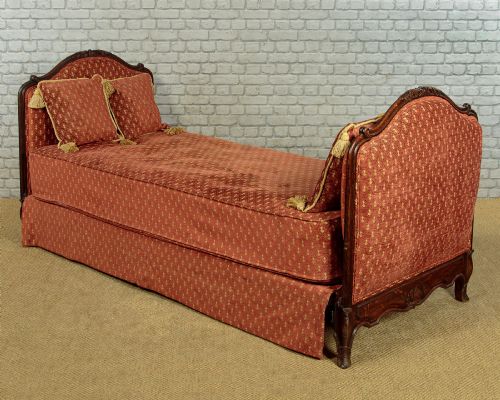


Vintage Light Wood Bed
These vintage light wood bed frames bring warmth to a room through blonde maple, bleached oak, and birds eye maple.

Vintage Light Wood Bed
A vintage light wood bed brings warmth and character to a bedroom through pale timbers like birds eye maple, bleached oak, and blonde maple. You are likely to encounter daybeds, double beds, and larger bedsteads spanning from the nineteenth century through the Art Deco era.
The selection ranges from French Provincial sleigh daybeds and Louis XV styles to streamlined Art Deco designs with integral cabinets. Pieces draw on diverse aesthetic traditions, including English country houses, French Rococo, and Indian rustic forms.
Makers and workshops of the early twentieth century utilised these pale timbers to create striking geometric forms and softer provincial curves. Alongside human sleeping frames, the category occasionally accommodates specialised items such as pet furniture.
How they were made
Construction relies heavily on solid timber frames paired with decorative timber veneer, notably birds eye maple, to achieve distinctive grain patterns. Workshops also employed brass fittings and applied upholstery fabric to daybeds and headboards.
Surface treatments range from intentional bleaching on oak to polished maple that highlights natural figuring. Caning and integral cabinetry are integrated directly into the structural woodwork of larger beds.
Vintage Light Wood Bed Retail Price Guide 2026
Typical asking prices for vintage light wood bed among the pieces listed under this phrase on Sellingantiques today, from the lower quarter to the upper quarter. They describe what is for sale here now, not the wider market.
Among full-sized sleeping quarters and daybeds, the selection includes a dedicated country house dog bed.
What varies in quality
Quality rests on the selection of timber veneer and the precision of the joinery, particularly where integral cabinets or curved frames meet. Superior examples display carefully matched grain patterns across large surfaces, such as birds eye maple headboards.
The sophistication of the stylistic execution marks the distinction between standard provincial pieces and high-design commissions. Finer beds demonstrate balanced proportions and integrated storage solutions that complement the primary timber.
Betty Joel
The Vintage Light Wood Bed Glossary
- Birds eye maple
- A figure in maple wood where the grain resembles small, swirling eyes. This decorative veneer is prized in Art Deco bedroom furniture.
- Bleached oak
- Oak timber treated to lighten its natural colour. This technique gained popularity in early twentieth-century French design.
- Daybed
- A form serving as both a seat and a bed. These frames often feature upholstered backs or scroll ends.
- Timber veneer
- A thin layer of superior wood glued to a base panel. It allows makers to display striking grain patterns across large furniture surfaces.
Vintage Light Wood Bed: Frequently Asked Questions
What periods do these beds cover?
The selection spans from the nineteenth century through the Regency period and into early twentieth-century decades like 1910, 1920, and 1930.
Art Deco and Edwardian examples sit alongside nineteenth-century daybeds and rustic Indian pieces.
How do I identify Art Deco beds?
Art Deco bed frames typically feature streamlined geometry, blonde birds eye maple veneers, and sometimes built-in cabinetry.
They represent the 1930s aesthetic shift toward sleek, polished surfaces and functional furniture design.
What woods are used most often?
Listings feature pale timbers including oak, maple, birds eye maple, and general timber veneer.
These light woods offer a softer alternative to darker mahogany or walnut frames.
Are daybeds different from standard beds?
Daybeds combine seating and sleeping functions, often designed to sit against a wall with upholstered backs or framed ends.
They appear in both French provincial styles and nineteenth-century rustic forms.