


Vintage Leather Keepsake Box
These vintage leather keepsake box examples span centuries of hidework, wood and brass, offering compact storage for jewellery and small treasures.
Vintage Leather Keepsake Box
When you search for a vintage leather keepsake box, you encounter containers built to hold personal valuables, documents and trinkets. These objects serve practical storage needs while bringing textured hide and metal into a room.
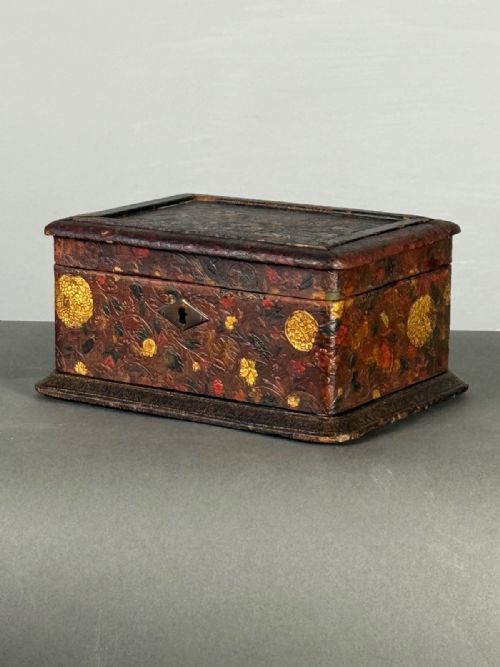
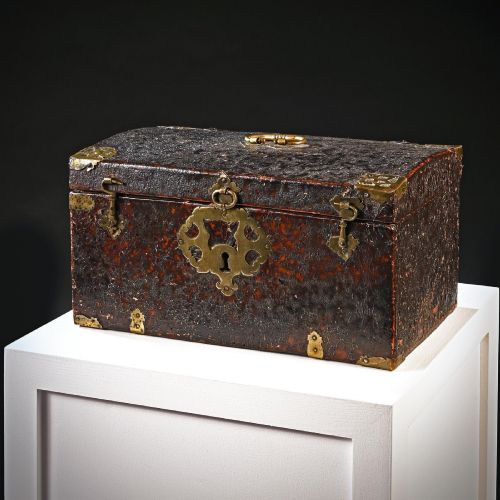
The selections here span centuries, ranging from late seventeenth century travelling containers to mid twentieth century faux book caskets. Forms include standard rectangular jewellery boxes, document chests and novelties shaped like volumes.
Most entries originate from the nineteenth and early twentieth centuries, with Victorian and nineteen-twenties pieces appearing frequently. Materials extend beyond plain hide to include crocodile skin, pig skin, wood cores and brass mounts.
How they were made
Construction relies on solid cores of wood or metal wrapped in leather, pig skin or crocodile skin. Artisans secured these coverings with brass tacks, hinges and locks to protect the contents within.
Surface decoration frequently involves gold leaf tooling, polychrome pigment and blind stamping. Makers like Susse Frères applied intricate gilt and colour onto leather surfaces to achieve rich decorative effects.
Interior arrangements often feature fabric linings tailored to cushion jewellery and small keepsakes. Structural variety is evident in travelling chests reinforced with heavy brass work alongside delicate faux book caskets.
The listings here cover periods from the seventeenth century through to the nineteen-fifties, featuring wood, brass, fabric and multiple leather types.
What varies in quality
Quality rests upon the precision of the leatherwork, the complexity of the tooling and the integrity of the underlying core. Pieces featuring detailed gold leaf stamping or specialised skins like crocodile stand apart from plain utility boxes.
Hardware contributes significantly to the overall standard, with heavy brass mounts, secure locks and working keys elevating a piece. Finer examples display careful alignment between the exterior hide, the internal fabric lining and the structural joints.
Susse Freres Paris
The Vintage Leather Keepsake Box Glossary
- Faux book
- A box disguised to resemble a bound volume, often featuring spine ridges and marbled paper edges. These conceal compartments for documents or valuables.
- Tooling
- The process of impressing decorative designs into leather using heated metal tools and gold leaf. It creates intricate patterns across the exterior surface.
- Travelling box
- A sturdy container equipped with robust brass hardware and secure latches designed for transit. These items prioritize durability and secure closure.
- Polychrome
- The application of multiple colours onto a surface, often combined with gold leaf in nineteenth century decorative hide work. It adds visual depth to the ornamentation.
- Pig skin
- A durable animal hide utilised for box coverings, recognizable by its distinct follicle pattern. It provides a tough alternative to standard calf leather.
Vintage Leather Keepsake Box: Frequently Asked Questions
What were leather keepsake boxes used for?
These containers served to safeguard jewellery, letters and personal valuables both at home and during travel. Their sturdy construction protected delicate items from dust and damage.
Over time, owners repurposed them for various small domestic items, making them versatile desk and dressing table accessories.
How do I date a leather box?
Dating relies on examining the hardware styles, fastening methods and interior linings alongside exterior decoration techniques. Seventeenth century pieces display heavy brass work and simple wooden cores.
Later Victorian and twentieth century examples incorporate machine stamping, refined lock mechanisms and distinct material choices like crocodile skin.
Are all these boxes made of real leather?
The listings feature genuine animal hides including standard leather, pig skin and crocodile skin wrapped over rigid frames. Some incorporate secondary materials such as wood and metal reinforcement.
Surface finishes range from plain natural hide to heavily gilded and pigmented outer layers.
How should I care for a vintage leather box?
Keep the hide away from direct sunlight and excessive moisture to prevent drying and cracking of the material. Gentle dusting maintains the surface without disturbing the original gold tooling or brass mounts.
Avoid using modern chemical cleaners on antique leather finishes.