


Vintage Leaf Brooch
These vintage leaf brooch examples bring together precious metals and delicate enamel across a wide span of early to mid-century design.
Vintage Leaf Brooch
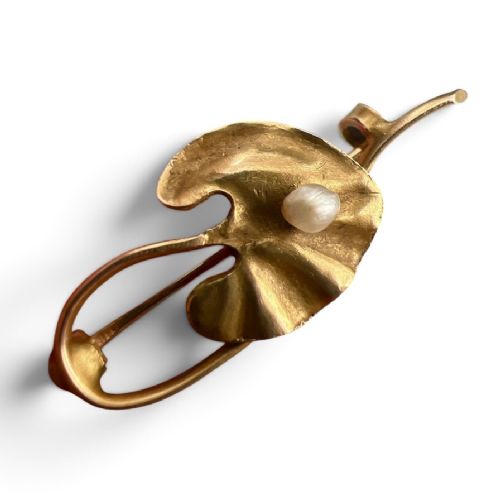
A vintage leaf brooch takes natural botanical forms and renders them in precious metals, enamel, and gemstones. When searching for a vintage leaf brooch, a buyer encounters pieces ranging from Victorian and Edwardian gold work to mid-century Scandinavian enamel.
The selections span distinct periods including the Edwardian era, Art Nouveau, and 1940s Retro. Common material combinations unite gold, silver gilt, and platinum with diamonds, pearls, and vibrant coloured enamel.
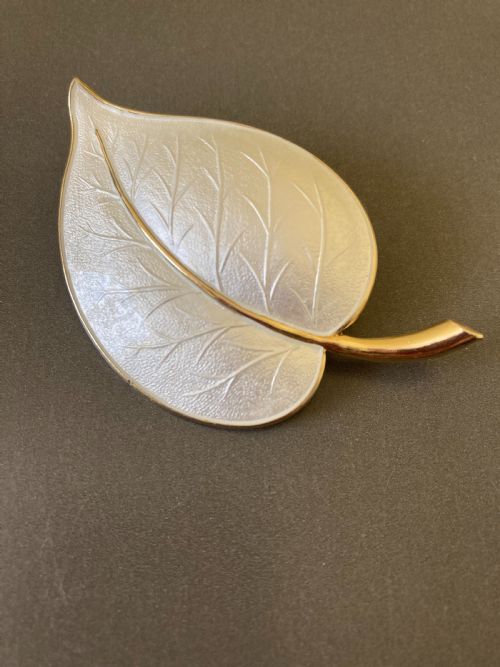
Makers in this category encompass notable workshops such as Georg Jensen, Aksel Holmsen, David Andersen, and Meyle & Mayer. Forms vary from simple gold sprays to elaborate jewellery suites and plique-a-jour designs.
How They Were Made
Goldsmiths and silversmiths utilised casting, wirework, and sheet fabrication to build realistic or stylised botanical structures. Surface textures often mimic natural leaf veins through hand engraving or chased detailing.
Enamelling techniques such as plique-a-jour allow light to pass through translucent coloured glass held within delicate metal frameworks. Gemstones including diamonds, pearls, emeralds, and peridots are securely set in bezels, claws, or grain settings tailored to the period.
Listings feature periods from the Victorian era through the 1960s, executed in platinum, gold, and silver gilt.
What Varies in Quality
The distinction between ordinary and exceptional pieces rests upon the crispness of the metalwork and the depth of design execution. Superior examples display meticulous attention to vein patterns, secure gemstone settings, and undamaged enamel.
The reputation of the maker and the choice of materials strongly influence the standing of a piece within the range. Pieces bearing clear hallmarks and the marks of recognised Scandinavian or European workshops command greater attention from collectors.
Aksel Holmsen·Georg Jensen·David Andersen·Meyle & Mayer
The Vintage Leaf Brooch Glossary
- Silver Gilt
- Sterling silver that has been coated with a thin layer of gold. This finish provides the warm tone of gold while utilising a silver base.
- Plique-a-jour
- An enamelling technique where enamel is applied to cells without a backing, creating a stained-glass effect that lets light shine through. It demands high skill to prevent cracking during firing.
- Assay
- The testing of precious metals to determine their purity and legality for sale. Hallmarks applied after assaying indicate the standard of gold or silver.
- Jewellery Suite
- A coordinated set of matching jewellery items, such as a brooch worn alongside earrings or a pendant, designed to be worn together.
Vintage Leaf Brooch: Frequently Asked Questions
How do I date a brooch?
Dating relies on stylistic clues, construction methods, and metal hallmarks stamped on the reverse. Examining the pin mechanism and catch often reveals whether a piece is Victorian, Edwardian, or mid-century.
Assay marks and maker stamps provide definitive clues to the year or decade of manufacture. Comparing the design to known periods helps narrow down the production window.
Are these brooches heavy to wear?
Weight varies considerably depending on the materials and size of the specific piece. Simple gold or silver leaf designs remain light and suit delicate fabrics.
Larger diamond-set or platinum examples possess more heft and require sturdy garments for secure placement. Proper fastening prevents the brooch from sagging on lapels or scarves.
How should I clean my brooch?
Cleaning depends entirely on the materials present in the specific piece. Enamelled and pearl-set items require gentle wiping with a soft, dry cloth rather than liquid submersion.
All-metal or diamond pieces tolerate mild soapy water and a soft brush to remove dust from settings. Professional inspection ensures fragile stones remain secure in their mountings.
What is Scandinavian modern style?
Scandinavian modern design emphasises clean lines, stylised natural forms, and vibrant enamel work. Pieces from this tradition often feature bold leaf shapes rendered in silver gilt.
Workshops in Norway and Denmark popularised this minimalist aesthetic during the mid-century period. The focus remains on organic geometry and exceptional surface colour.