



Gold Leaf Pin
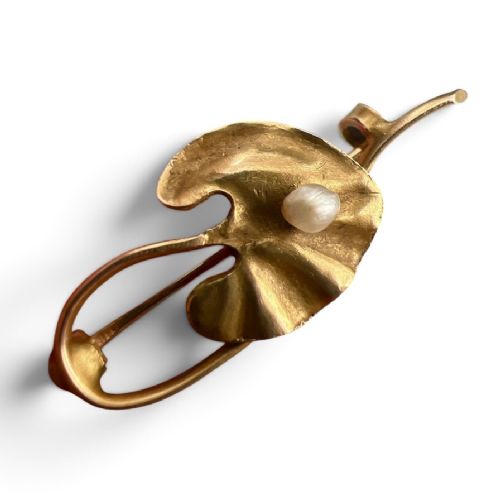
A gold leaf pin brings together delicate botanical motifs and precious metals, offering a wearable piece of history from the Victorian and Edwardian eras.
Gold Leaf Pin
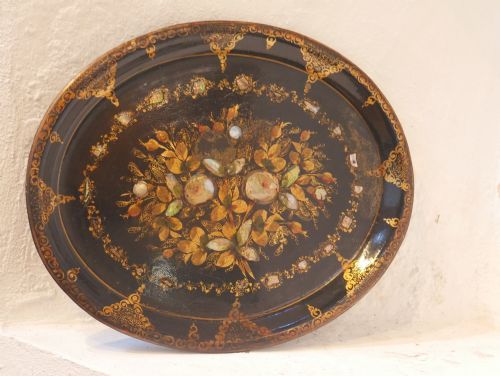
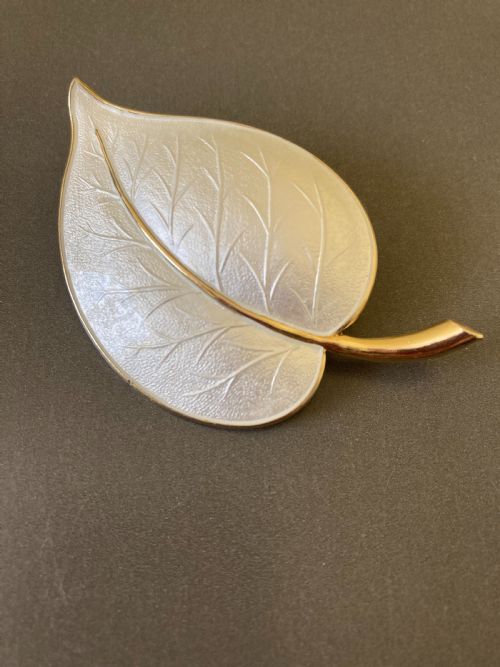
When you search for a gold leaf pin, you encounter a selection of botanical and foliate bar brooches, alongside decorative trays and dishes that incorporate leaf ornamentation. The pieces span from the late nineteenth century through to the mid-twentieth century, capturing changing tastes in jewellery and decorative arts.
Victorian and Edwardian iterations dominate the selection, featuring detailed foliate motifs rendered in yellow gold, rose gold, and silver. Alongside these wearable jewels, the category includes porcelain dishes and trays bearing painted leaf or classical motifs from manufacturers such as Worcester and Vienna.
Materials and construction methods
The construction of these items relies on precious metals including nine-carat, fifteen-carat, and eighteen-carat gold, often paired with silver settings for gemstones. Makers mounted diamonds, sapphires, rubies, pearls, and enamel onto these metallic structures to enhance the naturalistic forms.
Techniques range from intricate hand-carved gold foliage to detailed silver gilt work and fired enamel. Porcelain pieces employ hand-painted decoration finished with fine gilding to depict classical scenes and botanical subjects.
A porcelain Bacchus and Ariadne tray sneaks into the pin search, proving that ancient gods appreciate a good leaf motif.
Evaluating the craftsmanship
Quality in these pieces rests upon the precision of the metalwork and the naturalism of the leaf motifs. Finer examples display crisp detail in the veining of the leaves and secure, well-balanced stone settings that protect each diamond or pearl.
The choice of materials also elevates a piece, with higher carat golds and superior gemstone pairings distinguishing the top tier of the range. Maker attribution, such as signed porcelain or marked silver, adds further distinction to the object.
Aksel Holmsen·Barr Flight And Barr Worcester·Royal Worcester
The Gold Leaf Pin Glossary
- Bar brooch
- A narrow horizontal pin of metal, often mounted with gemstones or decorative motifs such as leaves. This form was especially popular during the Victorian and Edwardian periods.
- Silver gilt
- Silver that has been coated with a thin layer of gold on its surface. This technique provides the rich appearance of solid gold while utilising a silver base.
- Enamel
- A glassy substance fused to the surface of metal through firing for decoration. It provides vibrant colour and smooth texture in floral and abstract designs.
- Assay
- An official test of the purity of precious metal content. Marks stamped by an assay office indicate the standard of gold or silver used in the piece.
Gold Leaf Pin: Frequently Asked Questions
What periods do these pieces come from?
The selection spans from the early nineteenth century through to the mid-twentieth century.
Victorian and Edwardian examples are particularly common, alongside mid-century and nineteenth-century decorative porcelain.
How were these brooches worn?
These pins served as functional fasteners and decorative ornaments on lapels, collars, and scarves.
Bar brooches and floral leaf pins were typically secured across heavy fabrics during the nineteenth and early twentieth centuries.
What materials are used?
Items incorporate various grades of gold, including nine-carat, fifteen-carat, and eighteen-carat, alongside silver and silver gilt.
Gemstones such as diamonds, sapphires, rubies, peridots, and pearls frequently accompany the metalwork.
Are porcelain items included?
Certain listings feature porcelain trays and dessert dishes rather than wearable jewellery.
These ceramic pieces incorporate painted motifs and gilding from notable factories.