

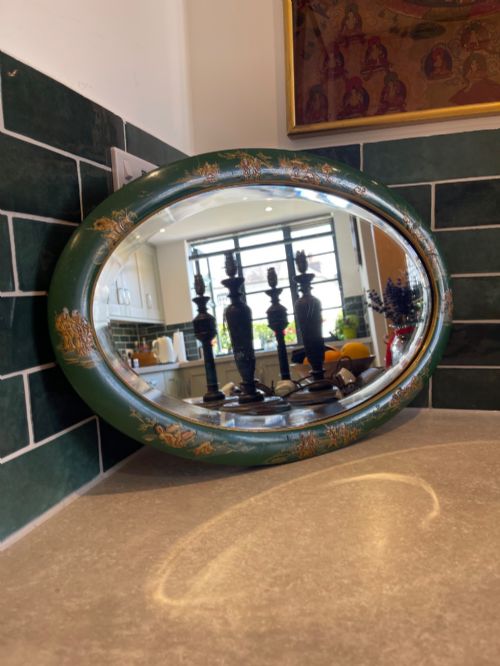


Vintage Lacquered Mirror
A vintage lacquered mirror brings hand-painted depth and glossy reflection to a room, drawing the eye with rich motifs.
Vintage Lacquered Mirror
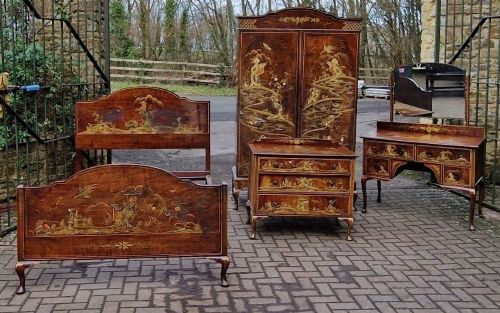
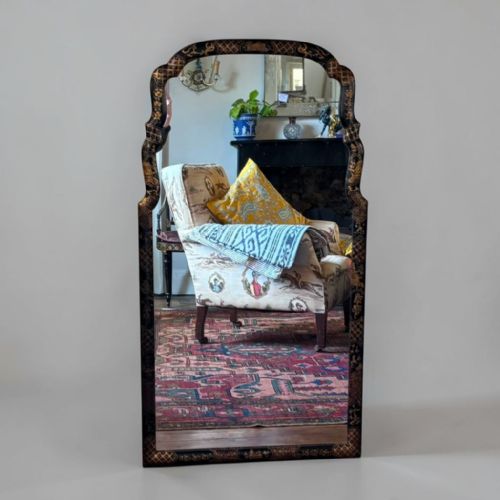
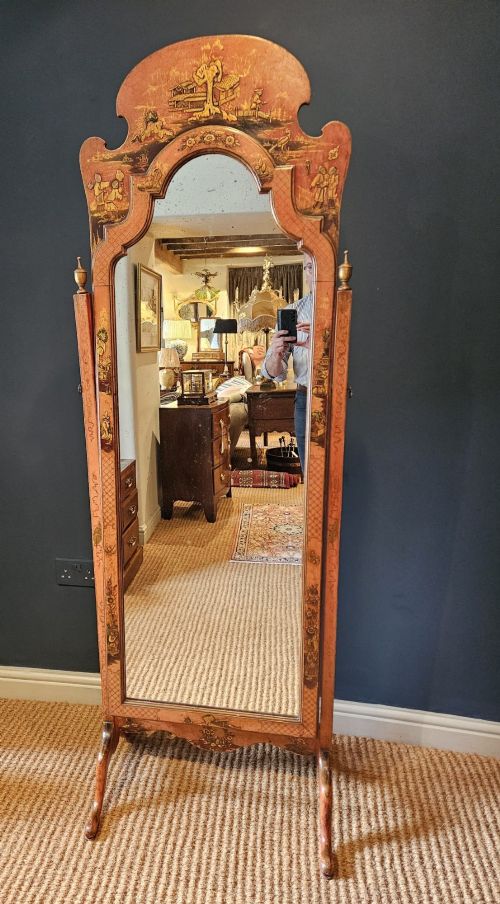
A vintage lacquered mirror combines polished glass with deep, glossy surface finishes, often executed in Chinoiserie styles. These pieces span wall mirrors, cheval mirrors, and table mirrors from periods including the Victorian, Edwardian, and Art Deco eras.
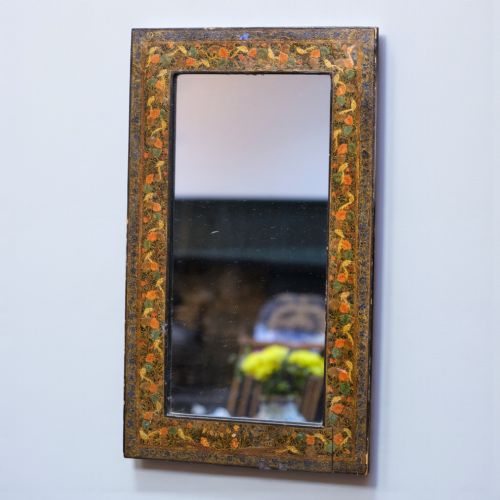
The most common examples encountered on this page are Chinoiserie wall mirrors in black or cream lacquer, featuring decorative oriental scenes. Makers adopted styles ranging from Kashmiri and Anglo-Indian traditions to French Empire and George I Revival interpretations.
Surviving formats include overmantel mirrors, pier mirrors, and dressing table mirrors framed in ebonised wood or gilt-accented lacquer. Occasional console tables paired with mirrors also appear among these selections.
How they were made
The construction relies upon wooden substrates finished with multiple layers of lacquer to build a deep, reflective surface. Artisans then applied painted decoration, sometimes incorporating gold leaf or gilt brass mounts.
Mirror glass was set into these custom wooden frames, utilising materials such as ebonised wood and mirror glass. The integration of gold leaf provided contrast against black, red, or cream lacquer grounds.
Vintage Lacquered Mirror Retail Price Guide 2026
Typical asking prices for vintage lacquered mirror among the pieces listed under this phrase on Sellingantiques today, from the lower quarter to the upper quarter. They describe what is for sale here now, not the wider market.
Listings feature periods from the nineteenth century through the 1930s, using wood, glass, lacquer, and gold leaf.
What varies in quality
Quality rests upon the depth of the lacquer finish and the intricacy of the painted or gilt decoration on the wood. Finer examples display meticulous brushwork in their Chinoiserie scenes, whereas simpler pieces show more restrained ornamentation.
The preservation of the original mirror glass and the stability of the wooden frame dictate the structural integrity. Superior pieces maintain their original surface sheen without excessive craquelure or loss to the gold leaf.
The Vintage Lacquered Mirror Glossary
- Chinoiserie
- European decorative style reflecting Chinese artistic influences, frequently featuring hand-painted landscapes, figures, and pagodas on lacquered surfaces.
- Cheval mirror
- A full-length freestanding mirror suspended on a pivoting frame, allowing the glass to tilt.
- Japanned
- European imitation of East Asian lacquerwork, created through layers of varnish and heat curing.
- Pier mirror
- A tall mirror designed to hang on the wall between two windows, often placed above a pier table.
- Overmantel mirror
- A wide mirror designed specifically to be positioned directly above a fireplace mantel.
Vintage Lacquered Mirror: Frequently Asked Questions
Where should I hang a Chinoiserie mirror?
These mirrors suit hallways, living rooms, and bedrooms where their reflective surfaces and decorative frames can catch the light. They function effectively above mantelpieces or console tables to anchor a room.
Position them opposite windows to maximise natural light while showcasing the hand-painted lacquer details against the wall.
How do I clean a lacquered mirror frame?
Dust the frame gently with a soft, dry cloth to prevent scratching the delicate lacquer and gilt surfaces. Avoid harsh chemical cleaners and excessive moisture.
Clean the mirror glass separately using a standard glass cleaner applied to a cloth rather than sprayed directly onto the glass near the frame.
What is the difference between Edwardian and Victorian styles?
Victorian examples often feature heavier ebonised wood and more robust proportions, reflecting mid-to-late nineteenth-century tastes. Edwardian pieces tend towards lighter frames and brighter cream or black lacquer.
Both periods embraced Chinoiserie motifs, but Edwardian designs frequently display a brighter, airier aesthetic suited to smaller rooms.
Are all these mirrors antique?
The selections span multiple eras, including Victorian, Edwardian, and early twentieth-century periods. Dating depends on the construction methods, materials, and stylistic markers present in the frame.
Review the specific period details for each piece to understand its exact historical context and origin.