



Vintage Lacquered Chest
A vintage lacquered chest brings together surface finish and functional storage, offering a striking focal point for any interior.
Vintage Lacquered Chest
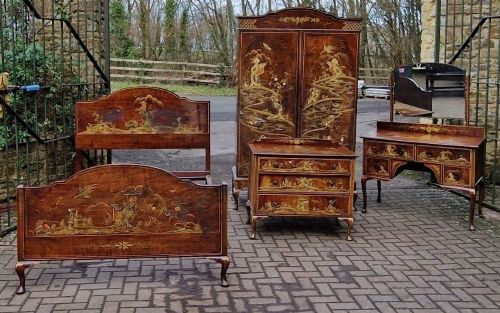
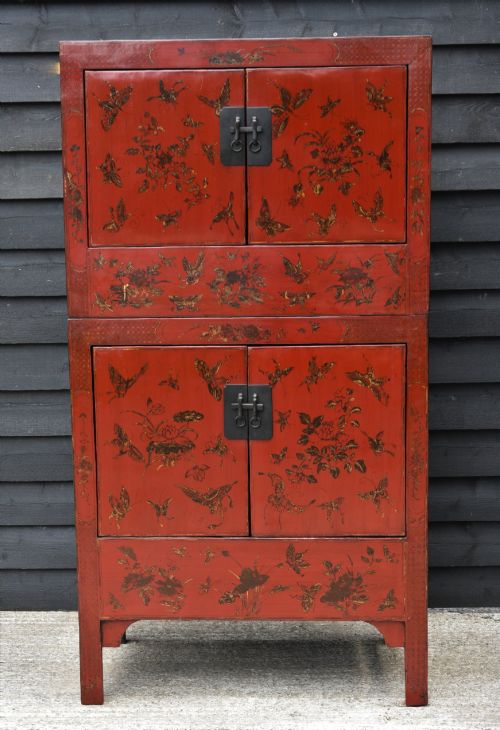
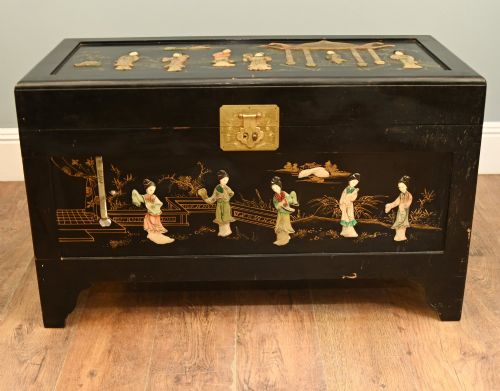
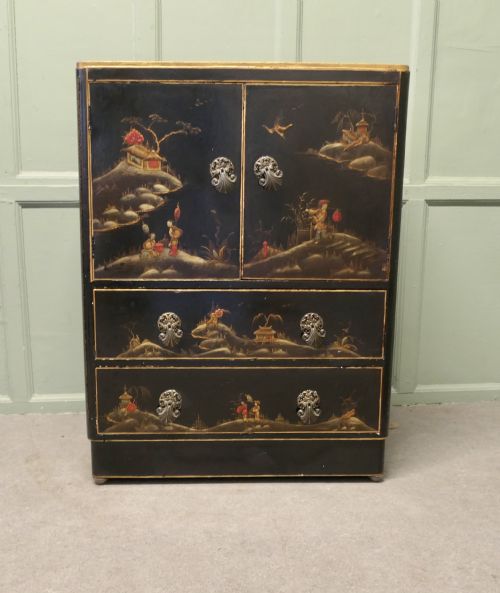
A search for a vintage lacquered chest brings up a diverse range of storage forms, from traditional Chinese wedding boxes and apothecary cabinets to Japanese tansu chests and English Japanned drawers. These pieces date across the nineteenth and twentieth centuries, encompassing various regional styles such as Chinoiserie, Meiji, and Qing Dynasty traditions.
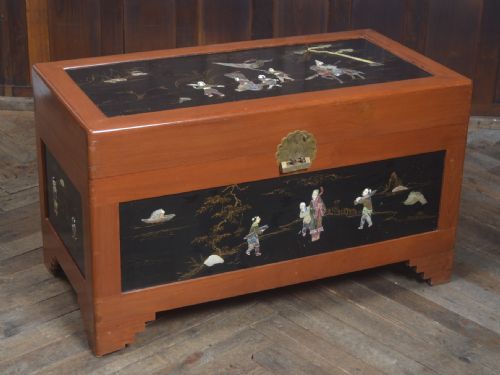
The most common examples on this page are Chinese lacquer coffers and apothecary cabinets, alongside Japanese table cabinets and storage trunks. Many pieces incorporate wood, brass, and iron fittings, displaying painted or polished surfaces that reflect diverse Asian and European decorative histories.
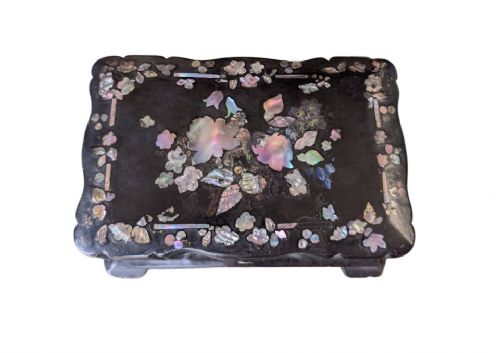
Buyers also encounter smaller tabletop pieces, including tea caddies, jewellery boxes, and spice boxes, which demonstrate that the category extends far beyond large floor-standing furniture. These varied formats provide practical compartments while retaining the distinct visual appeal of applied lacquer and paint.
Materials and construction
These items are predominantly built from wood, including elm and camphor wood, combined with lacquer coatings that provide a hard, protective finish. Artisans applied multiple layers of lacquer, sometimes integrating paint, gilt, or mother of pearl inlay to build up intricate surface patterns.
Metal components such as brass and iron serve as structural reinforcement and decorative hardware, appearing as hinges, lock plates, and carrying handles. Papier mâché and pig skin also appear in specific nineteenth-century and early twentieth-century examples, showing the range of foundational materials utilised by makers.
Vintage Lacquered Chest Retail Price Guide 2026
Typical asking prices for vintage lacquered chest among the pieces listed under this phrase on Sellingantiques today, from the lower quarter to the upper quarter. They describe what is for sale here now, not the wider market.
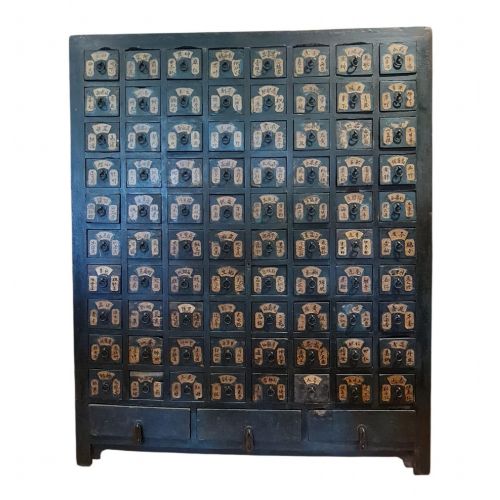
Several apothecary cabinets offer up to eighty tiny drawers, providing endless hiding spots for forgotten treasures.
Assessing quality and craftsmanship
Quality in these pieces rests primarily on the depth and preservation of the surface decoration, whether hand-painted Chinoiserie motifs, intricate lacquer layers, or delicate mother of pearl inlay. Superior examples retain their original painted schemes and structural integrity without heavy modern repainting.
The sophistication of the hardware and the joinery also separate finer pieces from simpler utilitarian boxes. Well-executed dovetailing, robust internal partitions, and original brass or iron mounts indicate higher standards of period craftsmanship.
Jennens and Bettridge·Harrods
The Vintage Lacquered Chest Glossary
- Chinoiserie
- European decorative style inspired by Chinese art and design, often featuring motifs of figures, landscapes, birds, and flowers rendered in lacquer or paint. This aesthetic gained widespread popularity across various periods in furniture and decorative objects.
- Tansu
- Traditional Japanese mobile storage chests, typically constructed from wood with prominent iron or brass hardware. These pieces were designed for specific domestic uses, including clothing and document storage.
- Apothecary cabinet
- Multi-drawer storage unit originally designed for holding medicinal herbs, powders, and remedies. These pieces are distinguished by their numerous small drawers, often individually labelled.
- Japanned
- European imitation of East Asian lacquerwork, popular in eighteenth and nineteenth-century furniture production. The technique involved building up layers of varnish and paint, frequently finished with gilt detailing.
- Toleware
- Painted or enamelled sheet metalware, commonly associated with small boxes, trays, and caddies produced during the Georgian and Victorian eras.
Vintage Lacquered Chest: Frequently Asked Questions
What is a tansu chest?
A tansu chest is a traditional Japanese mobile storage unit built from wood and fitted with robust metal hardware. These pieces were designed for versatility within the home.
They frequently feature multiple compartments and drawers configured for storing clothing, documents, or valuables.
How were apothecary cabinets used?
Apothecary cabinets were functional storage units utilised by practitioners to organise medicinal ingredients, dried herbs, and powders. Their numerous small drawers allowed for the systematic separation of contents.
Today, these cabinets are adapted for domestic storage of small items while retaining their distinctive multi-drawer facade.
What distinguishes Chinoiserie from traditional Chinese lacquer?
Chinoiserie represents European interpretations of Chinese artistic motifs, executed by Western craftsmen using Japanning and painting techniques. These designs often combine European furniture forms with Asian-inspired pictorial elements.
Traditional Chinese lacquer pieces, by contrast, were created within Asian workshops following indigenous methods and structural designs.
How do I care for a lacquered surface?
Lacquered surfaces require gentle maintenance to preserve the finish against excessive dryness or humidity. Dusting with a soft, dry cloth is generally sufficient for regular upkeep.
Harsh chemical cleaners and direct sunlight should be avoided to prevent fading or damage to the delicate layers.