

Vintage Kneehole Table
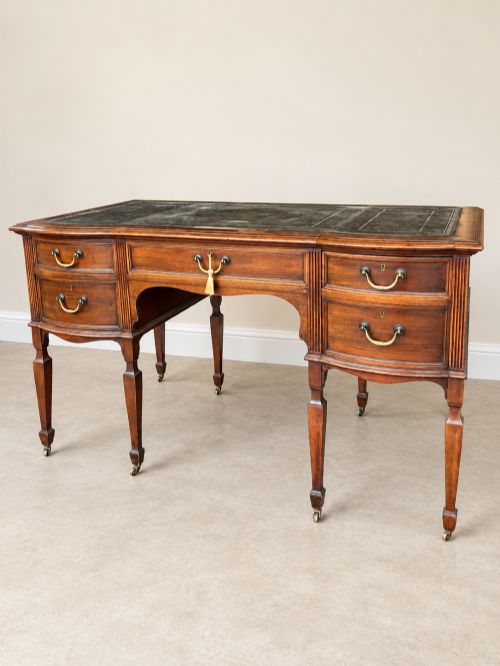
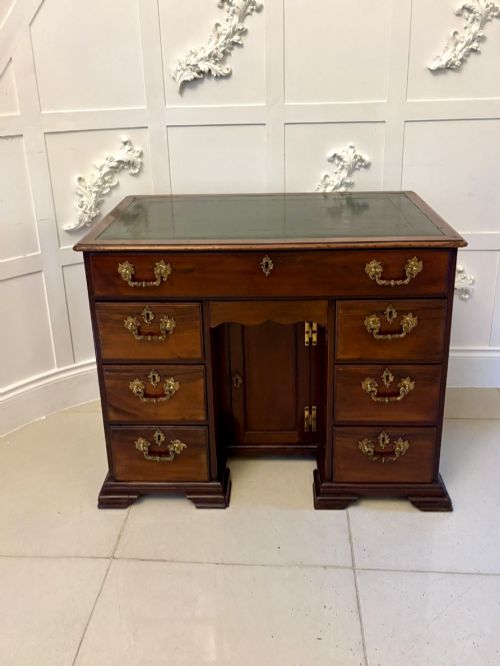
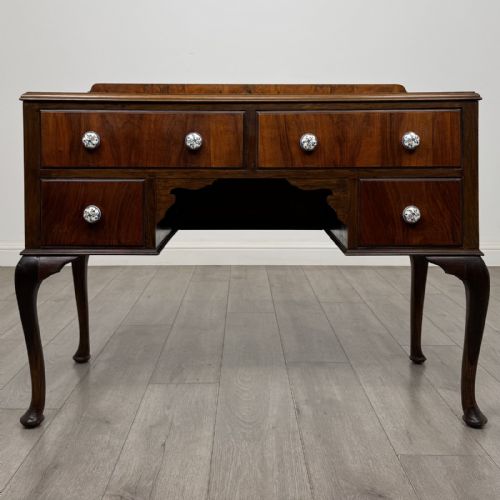
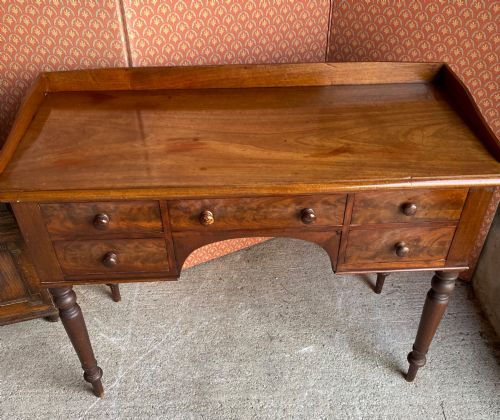
A vintage kneehole table provides a sturdy workspace with central leg room, combining traditional timber construction with practical storage.
Vintage Kneehole Table
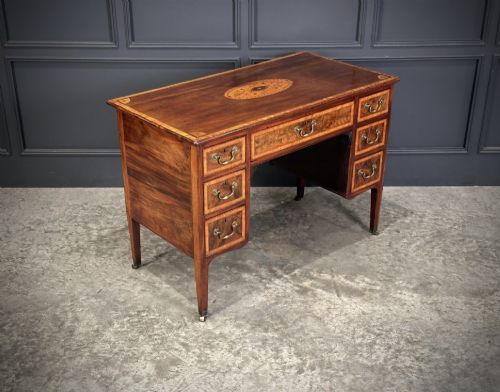
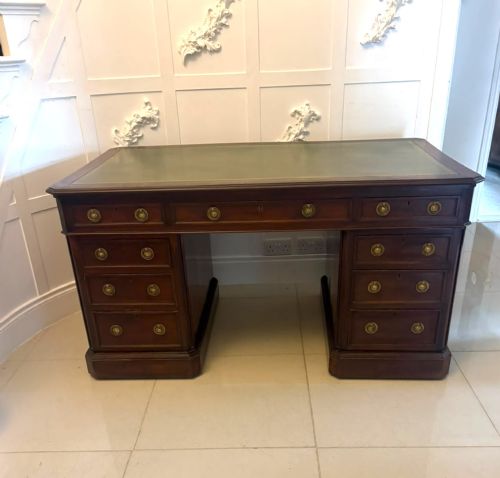
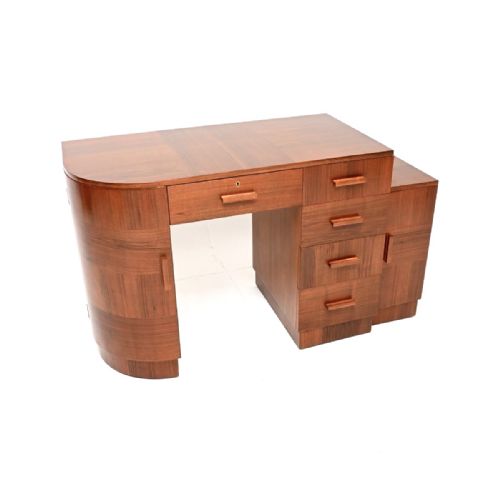
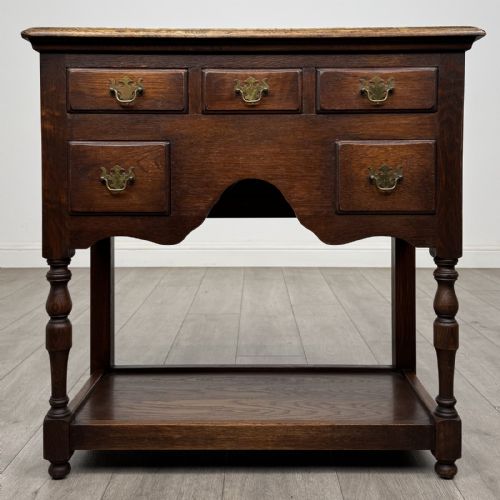
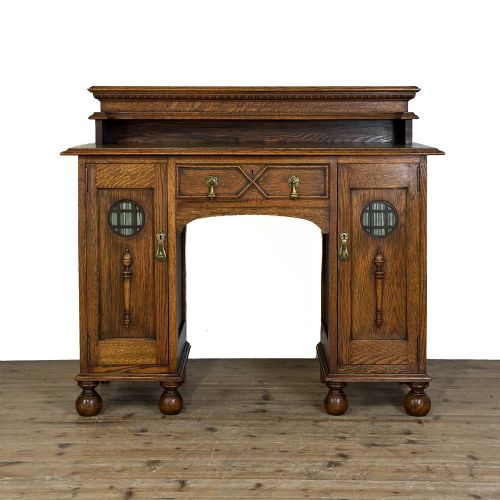
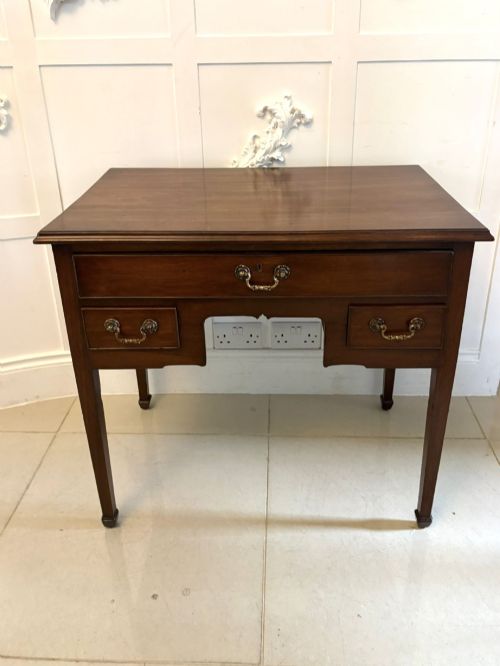
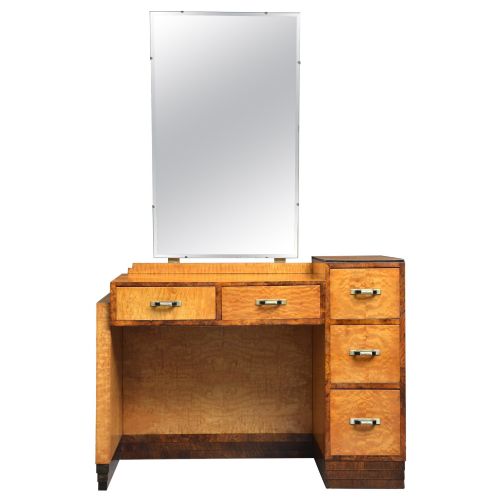
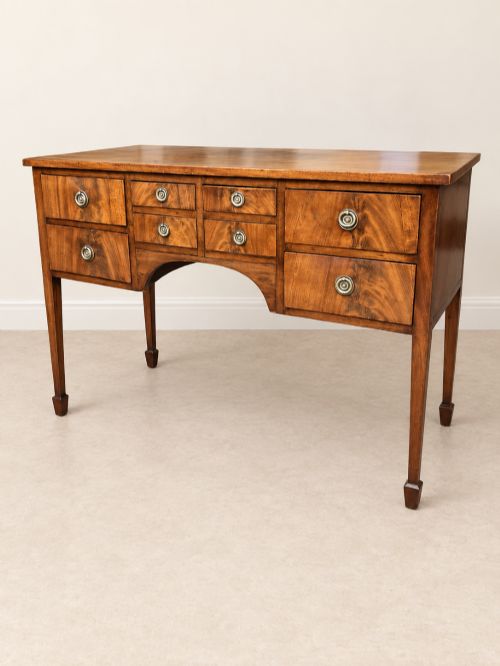
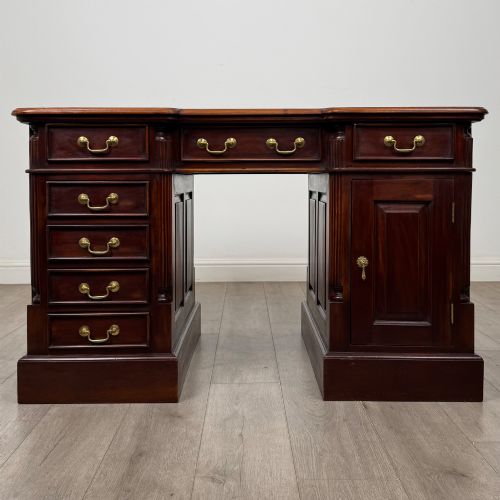
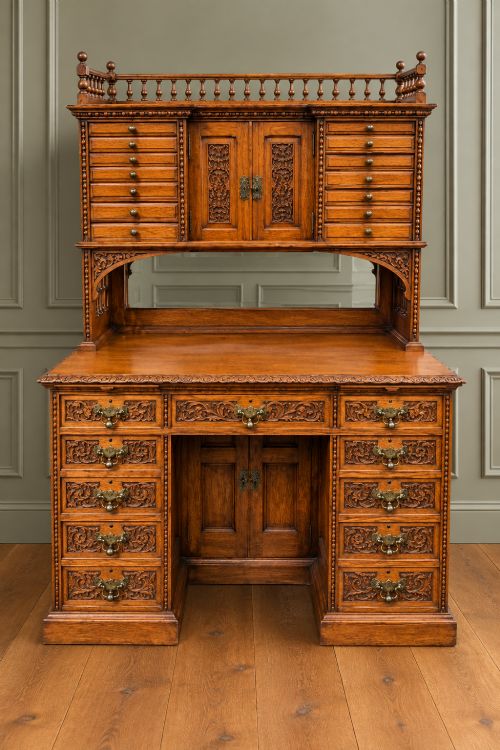
A vintage kneehole table serves primarily as a desk or dressing table, featuring a central recess flanked by banks of drawers. Buyers encounter pieces spanning the nineteenth century through the art deco period, constructed in forms ranging from pedestal desks to vanity tables.
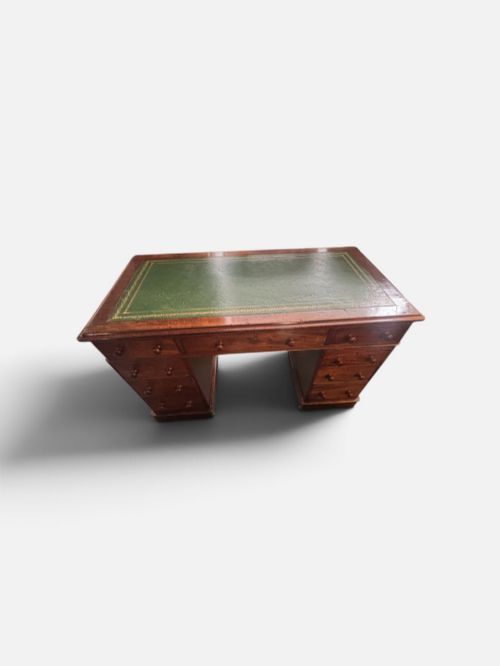
The materials reflect traditional cabinet making, with solid and veneered timbers such as mahogany, walnut, oak, and pine. Many examples incorporate leather writing surfaces and brass hardware, characteristic of nineteenth century and Edwardian designs.
Revival styles heavily influence the selection, including Georgian, Regency, Chippendale, and Queen Anne interpretations alongside original Victorian and Edwardian pieces. These tables function effectively in modern studies and bedrooms while retaining period character.
Materials and Construction Methods
Cabinet makers utilised dense hardwoods like mahogany and walnut, frequently applying burr walnut or figured maple veneers to display intricate grain patterns. Oak and pine served both as primary timbers for sturdy construction and as secondary woods for drawer linings.
Traditional joinery techniques ensured structural stability across multi drawer pedestal forms and writing tables. Brass handles, escutcheons, and leather inserts added functional detail to the finished pieces.
Listings feature pieces spanning the nineteenth century, Edwardian era, and art deco period, utilising mahogany, walnut, oak, and pine.
Distinctions in Quality
Quality rests upon the selection of timber veneers and the precision of the cabinet work, particularly in the alignment of multiple drawers and pedestal structures. Finer examples display carefully matched burr walnut or figured mahogany grains across the top and drawer fronts.
Maker attribution elevates certain pieces, with workshops such as Maple & Co., Holland & Sons, and Trollope & Sons demonstrating superior craftsmanship in proportions and internal construction.
Trollope & Sons·Maple & Co·Holland & Sons·Wylie & Lochhead Glasgow
The Vintage Kneehole Table Glossary
- Kneehole
- A desk or table featuring a central recess beneath the writing surface, allowing the user to sit comfortably with drawers positioned to either side.
- Pedestal desk
- A heavy piece of furniture comprising two independent drawer pedestals supporting a wide writing top.
- Burr walnut
- Timber taken from a tree growth that produces intricate, swirling patterns, highly prized for furniture veneers.
- Tooled leather
- Leather treated with gold leaf or blind tooling to create a decorative border around a writing surface.
- Dovetail joint
- A traditional interlocking woodworking joint used to secure drawer corners with high tensile strength.
Vintage Kneehole Table: Frequently Asked Questions
How do I date a vintage kneehole table?
Dating relies on identifying timber types, construction methods, and stylistic revival influences. Pieces from the nineteenth century often feature solid mahogany and hand-cut dovetails.
Later Edwardian and art deco examples introduce lighter pine cores, different veneer cuts, and distinct hardware designs that separate them from earlier periods.
Can I use a kneehole table as a desk?
Most kneehole tables function very well as daily writing desks because their pedestal design incorporates numerous drawers for storage. Many nineteenth and twentieth century examples were built specifically for this purpose.
Consider checking the kneehole clearance height to ensure comfortable seating before placing the table into regular service.
What is the difference between a desk and a dressing table?
Kneehole desks usually feature deep drawers suited for papers and books alongside flat writing surfaces. Dressing tables often incorporate similar pedestal layouts but frequently include attached mirrors or compartments for cosmetics.
Both forms utilise comparable timbers like mahogany and burr walnut, making the internal drawer configuration the key distinguishing feature.
How do I care for a walnut veneer surface?
Walnut veneers require protection from direct sunlight and excessive moisture to prevent fading and lifting. Regular dusting with a soft cloth maintains the natural sheen of the polished wood.
Applying occasional specialist wax helps preserve the timber without damaging historical finishes found on Victorian and Edwardian pieces.