





Vintage Kneehole Cupboard
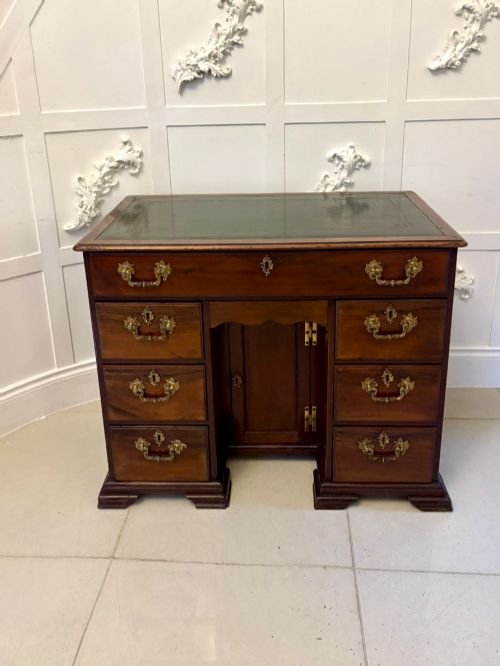
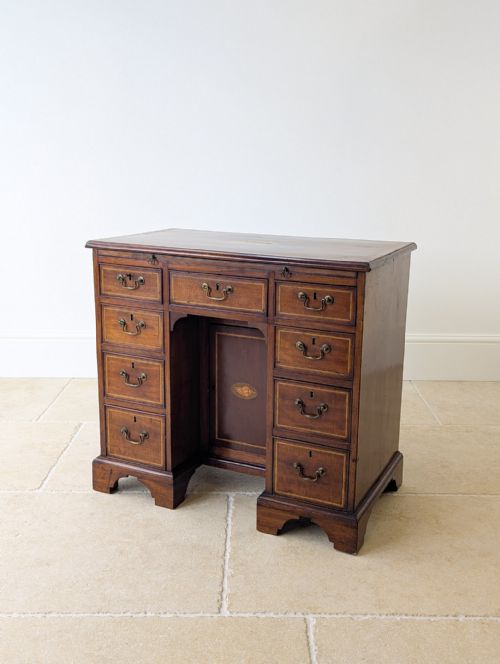
A vintage kneehole cupboard offers a compact writing station with central recessed space flanked by banks of drawers, highly prized for period workspace utility.
Vintage Kneehole Cupboard
A vintage kneehole cupboard combines traditional desk storage with a central recessed space, providing a compact writing or dressing surface. These pieces appear across Georgian, Victorian, Edwardian, and later periods in diverse woods.
The selections on this page span several centuries, featuring forms ranging from formal Georgian mahogany pieces to later oak and pine variations. Buyers encounter various designations including desks, bureaus, and dressing tables sharing this distinctive configuration.
Materials and Construction
Cabinetmakers utilised primary timbers like mahogany, oak, and pine, frequently pairing them with secondary woods for drawer linings and internal divisions. Marquetry inlay, burr walnut veneers, and brass hardware provide decorative detail.
Joinery methods reflect the period of manufacture, utilising traditional dovetailing for drawers and mortise and tenon joints for the structural frames.
Vintage Kneehole Cupboard Retail Price Guide 2026
Typical asking prices for vintage kneehole cupboard among the pieces listed under this phrase on Sellingantiques today, from the lower quarter to the upper quarter. They describe what is for sale here now, not the wider market.
Secret central compartments hidden behind kneehole doors rewarded owners who needed to secure private correspondence.
Markers of Distinction
Quality rests in the selection of timber figures, such as figured mahogany or burr walnut, and the crispness of any marquetry inlay or brass mountings. Finer examples display meticulous dovetail construction and retain their original hardware and leather writing surfaces.
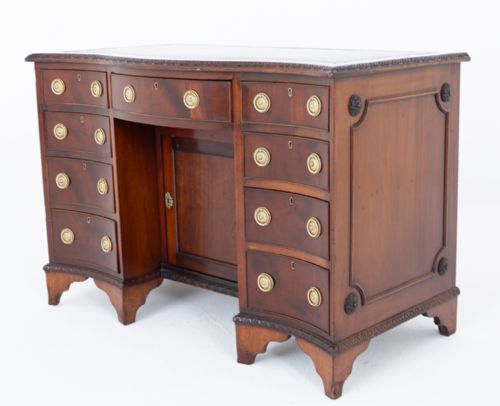
Proportion and execution distinguish standard utilitarian items from sophisticated cabinetwork, particularly in pieces featuring serpentine fronts or complex internal configurations.
Johnstone & Jeanes
The Vintage Kneehole Cupboard Glossary
- Kneehole
- A recessed space beneath the central section of a desk or dressing table, designed to accommodate the user's legs.
- Marquetry inlay
- Decorative patterns formed by fitting contrasting pieces of wood veneer into a prepared surface. This technique creates elaborate geometric or floral motifs.
- Serpentine
- A curved shape featuring a convex centre flanked by concave curves, often seen on drawer fronts. It demands high skill from the cabinetmaker.
- Pedestal desk
- A heavy freestanding desk supported by two pedestals of drawers rather than four legs. They offer substantial storage capacity.
Vintage Kneehole Cupboard: Frequently Asked Questions
What is a kneehole cupboard?
A kneehole cupboard is a form of furniture featuring a central recessed space flanked by pedestals containing drawers or small cupboards. It serves primarily as a desk or dressing table.
The configuration allows the user to sit comfortably close to the work surface while keeping storage within arm's reach on both sides.
How do I date a vintage kneehole desk?
Dating involves examining the primary and secondary timbers, the style of the brass hardware, and the construction methods used for the drawers. Georgian pieces typically show fine dovetails and rich mahogany, while Victorian examples often feature heavier proportions.
Secondary woods inside the drawers and the presence of makers' marks or stamps provide further clues to the exact period of manufacture.
Can I use this as a modern desk?
Many people use these pieces as working desks in studies or living rooms, though historical desk heights can occasionally require careful chair selection. The internal drawer space accommodates modern stationery while maintaining period character in a room.
Writing surfaces often feature leather inserts that provide a suitable texture for everyday writing tasks.
What woods were used?
Makers relied heavily on mahogany, oak, and pine, depending on the period and the intended formality of the piece. Finer examples incorporate decorative veneers such as burr walnut and detailed marquetry inlay.
Secondary timbers like deal or oak appear inside drawer boxes and carcases to provide structural stability.