

Vintage Jacobean Table
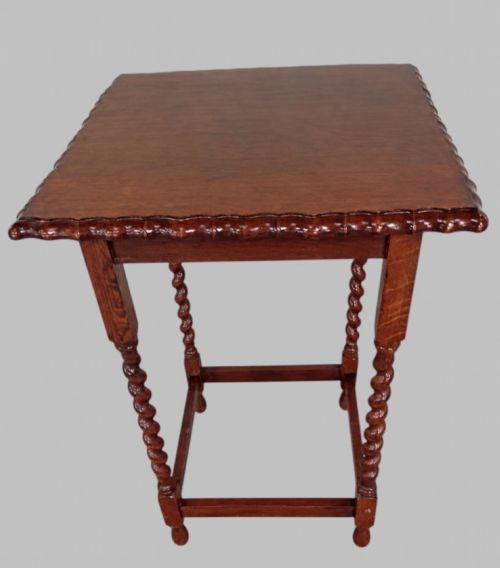
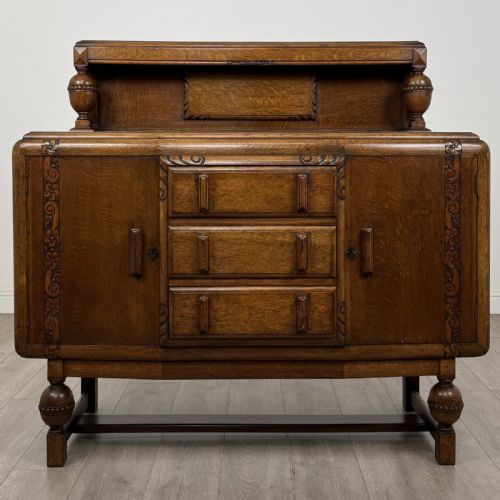
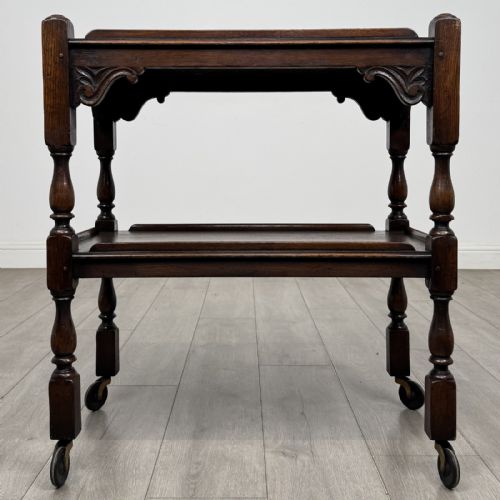
A vintage jacobean table brings sturdy timber and historic revival character into a room.
Vintage Jacobean Table
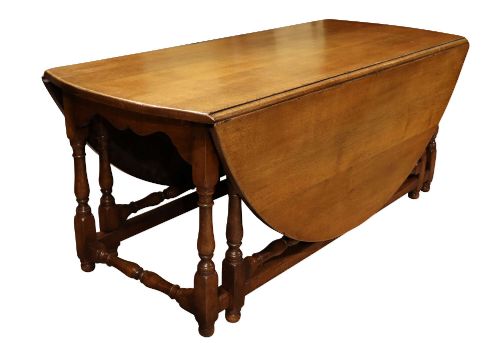
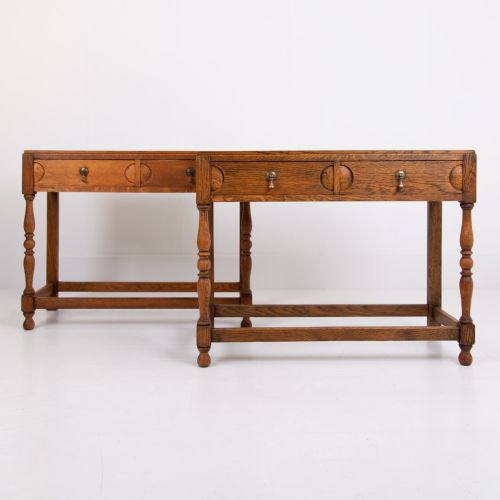
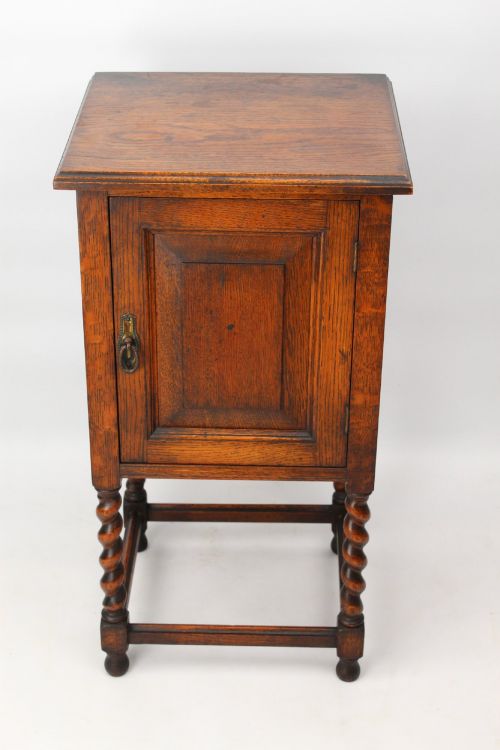
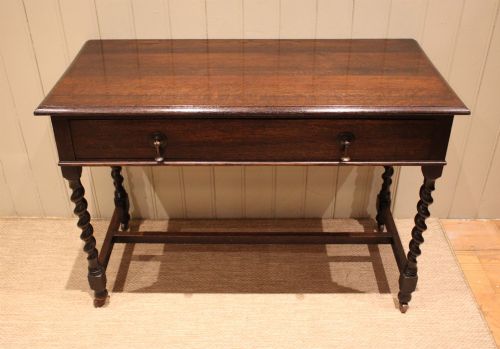
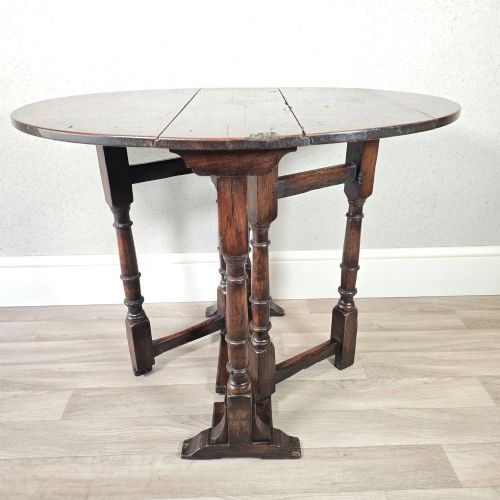
A vintage jacobean table draws on seventeenth century English forms, though most examples date from the late nineteenth and early twentieth centuries under the Jacobean revival style. Buyers looking for this phrase meet refectory dining tables, gateleg tables, and side tables built with sturdy proportions.
The material palette centres on solid oak, alongside golden oak, fruitwood, and yew wood, often complemented by brass or iron hardware. These tables serve daily utility in dining rooms and living spaces while displaying traditional carved details.
Most pieces on this page emerge from the Edwardian period and the 1920s or 1930s, offering domestic scale versions of older forms. They balance robust construction with accessible proportions for modern interiors.
What varies in quality
Quality rests upon the selection of timber and the depth of hand carving rather than machine routing. Solid oak assemblies with tight joints and well proportioned turned legs command attention over lighter utility pieces.
The execution of joinery in gateleg and draw leaf mechanisms dictates long term durability. Finer examples retain crisp mouldings and harmonious proportions true to their seventeenth century inspiration.
Vintage Jacobean Table Retail Price Guide 2026
Typical asking prices for vintage jacobean table among the pieces listed under this phrase on Sellingantiques today, from the lower quarter to the upper quarter. They describe what is for sale here now, not the wider market.
Listings span the 17th century through the 1930s, showing a strong concentration of 1920s revival oak.
G T Rackstraw
The Vintage Jacobean Table Glossary
- Jacobean Revival
- A nineteenth and twentieth century design movement replicating the heavy carved forms of the early seventeenth century. It draws heavily on oak and symmetrical geometric decoration.
- Barley Twist
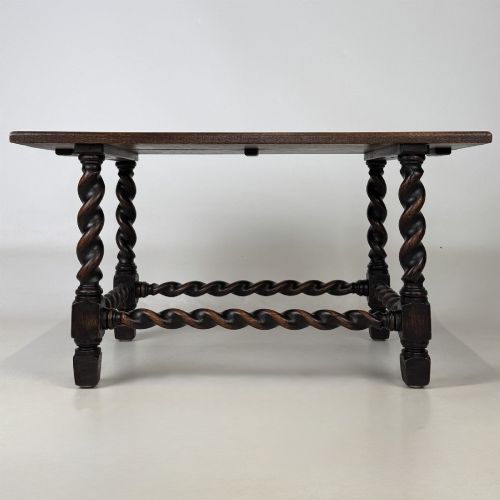
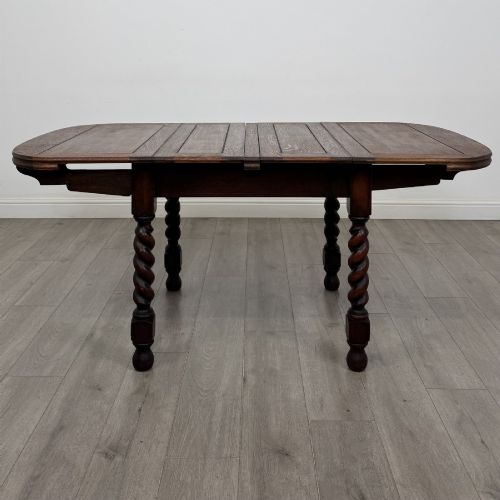
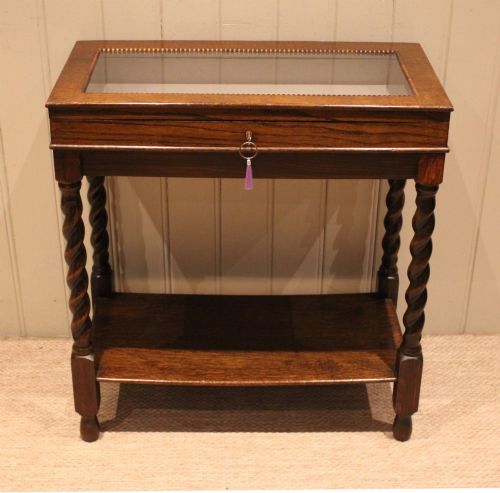
- A turned wooden leg resembling a spiral rope. This technique appeared widely on furniture from the seventeenth century onward.
- Gateleg Table
- A drop leaf table where hinged legs swing outward to support the raised flaps. This design saved space in older homes.
- Refectory Table
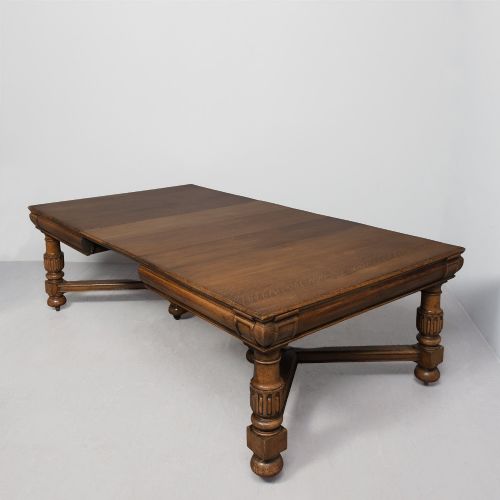
- A long, narrow dining table traditionally used in monastic dining halls. Revival versions feature thick legs connected by low stretchers.
- Draw Leaf Table
- An extending table with pull out leaves stored beneath the main top. It allows the surface area to expand without removing components.
Vintage Jacobean Table: Frequently Asked Questions
What is a jacobean style table?
A jacobean style table replicates seventeenth century English furniture design, typically featuring dark oak timber and turned supports. Most pieces found today date from the revival periods of the late nineteenth and early twentieth centuries.
These tables range from small side tables to large refectory dining furniture, designed to bring historic character into domestic interiors.
How do you use a gateleg table?
A gateleg table provides a flexible surface through hinged flaps supported by swinging legs. Drop leaf versions fold down compactly against a wall when floor space is limited.
Opening the leaves and swinging the wooden gate into position creates a full dining or work surface for daily use.
Are these tables made of solid oak?
Many tables from these periods utilise solid oak, golden oak, or related hardwoods like fruitwood and yew wood. Cabinet makers selected sturdy timber to support heavy structural elements and carved details.
Construction methods prioritised durability, resulting in heavy frames designed to withstand generations of domestic use.
How do I identify the age of an oak table?
Dating relies on construction marks, hardware types, and stylistic indicators such as turning styles and joint construction. Pieces built in the early twentieth century often display revival characteristics alongside twentieth century mechanical fixings.
Examining the underside and drawer linings reveals how the timber was prepared and assembled by period craftsmen.