




Vintage Ironstone Jug
These vintage ironstone jug examples bring heavy, robust utility and striking transfer-printed or hand-painted decoration straight to your kitchen or table.
Vintage Ironstone Jug
When you search for a vintage ironstone jug, you are looking at sturdy, opaque ceramic vessels intended for heavy domestic use across the 19th Century. The versions you are most likely to meet on this page include decorative jugs, pitchers, and large washbasin sets originating from the Georgian, Regency, and Victorian eras.
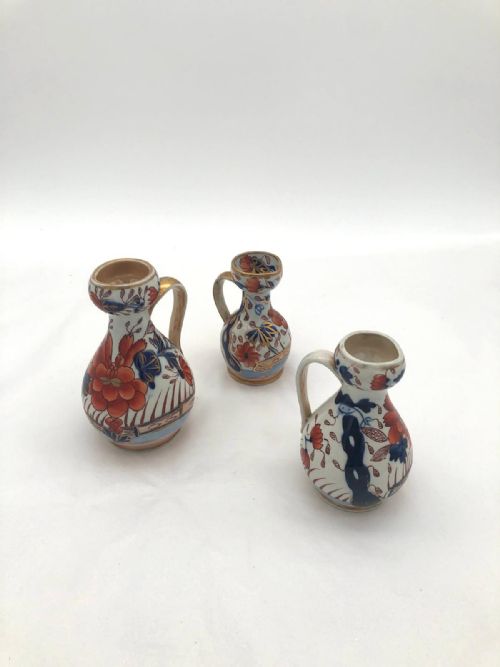
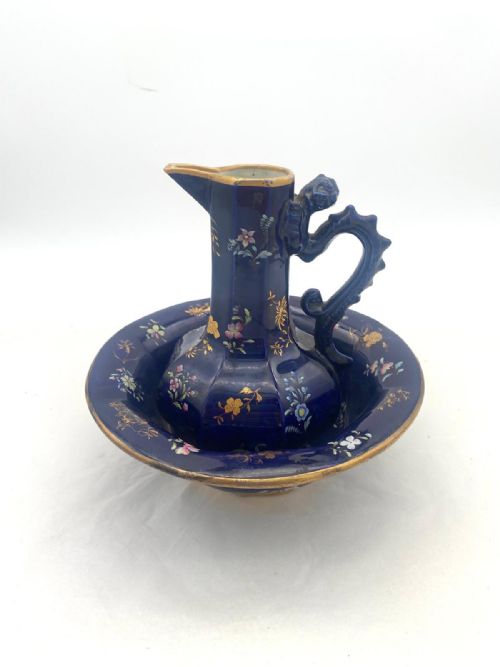
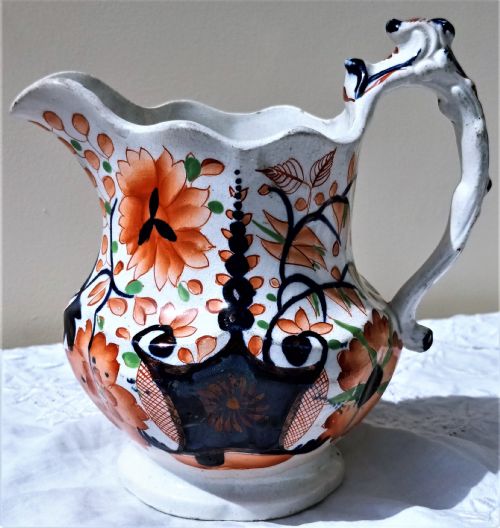
Many examples showcase distinct regional patterns and shapes, such as the Gaudy Welsh Bethesda and Pagoda patterns, or the octagonal Mazarine and Hydra forms. These pieces bridge the gap between utilitarian kitchenware and display pieces, often surviving in sets or as individual statement items.
How they were made
Potters built these vessels using thick ironstone ceramic, a dense and durable body designed to withstand daily household demands. Potters then coated the hardened ceramic in a smooth glaze to seal the porous body.
Makers applied ornamentation using enamel colours, transfer-printing techniques, and touches of gold leaf or gilt. Specific workshops utilised distinct mouldings, such as the characteristic serpent-handled Hydra shape or panelled octagonal geometry.
Vintage Ironstone Jug Retail Price Guide 2026
Typical asking prices for vintage ironstone jug among the pieces listed under this phrase on Sellingantiques today, from the lower quarter to the upper quarter. They describe what is for sale here now, not the wider market.
Serpent handles on Hydra jugs give ferocious reptilian bite to your morning milk.
What varies in quality
The sophistication of the painted or printed pattern drives the distinction between standard utilitarian vessels and high-end display pieces. Elaborate hand-applied enamels and crisp transfer printing indicate superior workshops.
Form and scale also determine the calibre of a piece, with complex moulded handles, octagonal geometry, and matching basin sets representing the upper tier of production.
Mason's Ironstone·Livesley Powell and Co·Davenport
The Vintage Ironstone Jug Glossary
- Ironstone
- A dense, heavy ceramic developed in the 19th Century as a durable alternative to porcelain. It takes glazes and enamels exceptionally well.
- Hydra jug
- A specific vessel shape characterised by a serpent-form handle and a wide spout. It appeared frequently in early 19th Century pottery production.
- Gaudy Welsh
- A style of brightly coloured enamel decoration featuring cobalt blue, iron red, and copper lustre. It adorned domestic earthenware during the Victorian period.
- Octagonal jug
- A vessel with an eight-sided body profile. This geometric form required careful moulding during the manufacturing process.
- Lusterware
- Pottery finished with a metallic glaze that produces an iridescent sheen. Makers achieved this effect by firing metallic oxides onto the glazed surface.
Vintage Ironstone Jug: Frequently Asked Questions
What is ironstone?
Ironstone is a heavy, durable ceramic material patented in the early 19th Century. It was formulated to mimic Chinese porcelain while offering greater resistance to daily wear.
Potters valued the material for its ability to hold crisp moulded shapes and thick glazes.
How were these jugs used?
These vessels served practical functions in 19th Century homes, from pouring liquids at the dining table to supplying water in washbasin sets. Larger pieces carried heavy volumes for kitchen and bedroom tasks.
Many examples were also displayed on dressers when not in active service.
How do I date an ironstone jug?
Dating relies on maker's marks, stylistic clues, and the weight of the ceramic body. Earlier Georgian and Regency pieces often feature distinct octagonal forms and hand-painted motifs.
Victorian pieces frequently incorporate transfer-printed patterns or rich enamel colour palettes.
How should I display my jug?
These sturdy ceramic pieces suit kitchen dressers, sideboards, or open shelving where their weight and form remain stable. Grouping graduated sets creates a strong visual impact.
Keep them away from high-traffic edges due to their heavy ceramic construction.