



Vintage Iron Floor Light
These vintage iron floor light pieces bring practical height and heavy industrial character to a room.
Vintage Iron Floor Light
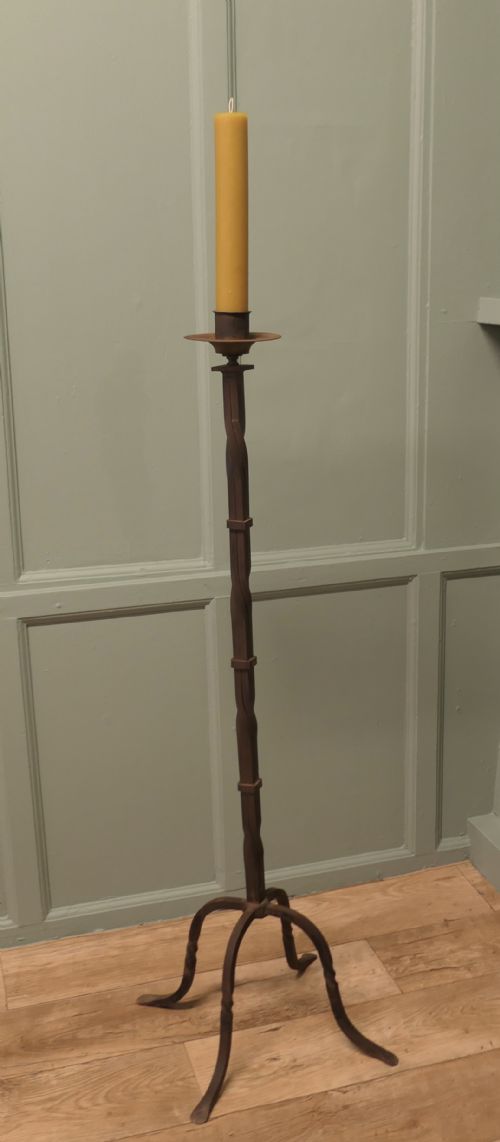
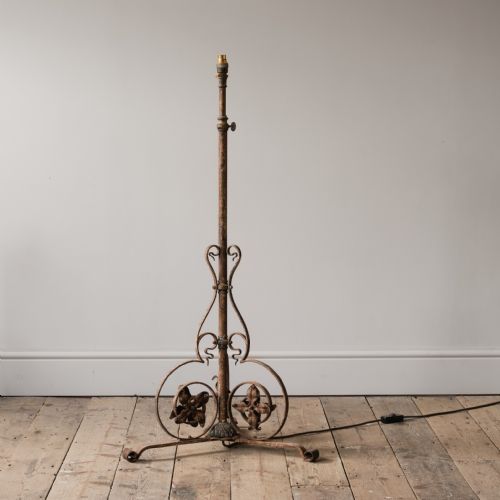
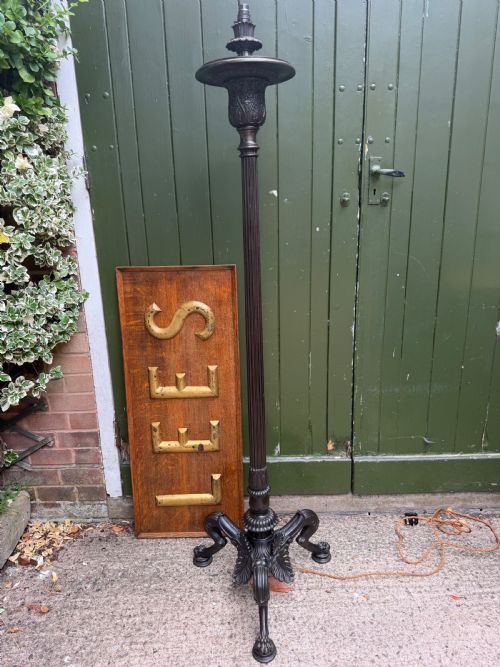
When you search for a vintage iron floor light, you find heavy upright standards designed to hold candles, oil lamps, or electric bulbs. The pieces on this page span from the eighteenth century through the Victorian period and into the early twentieth century, taking forms such as standard lamps, lantern stands, and floor candelabra.
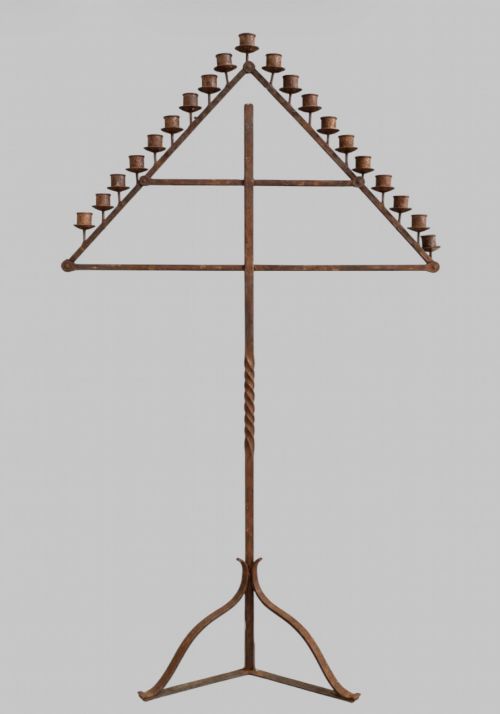
You are most likely to meet wrought iron and cast iron examples featuring adjustable arms, telescopic columns, or architectural multi-candle mounts. These items originate from periods influenced by Gothic Revival, Arts and Crafts, and Art Deco styles, alongside simpler industrial and country utilitarian forms.
How they were made
Blacksmiths and metalworkers shaped these objects using wrought iron, cast iron, and steel, often combining them with bronze patinas and brass fittings. Many pieces rely on hand-forged scrollwork, riveted joints, and heavy weighted bases to support tall vertical stems.
Certain lighting forms incorporate functional mechanisms such as telescopic height adjustment or pivoting arms for directing light or flame. Glass shades, fabric elements, and specialised lanterns complete the construction where illumination was primary.
Listings feature items from the eighteenth century up through the nineteen-thirties, using wrought iron, cast iron, and brass.
What varies in quality
Quality rests in the integrity of the metalwork, distinguishing the hand-forged touches of a skilled blacksmith from mass-produced foundry castings. The crispness of detail on classical Grecian designs or Gothic Revival motifs separates utilitarian shop stock from ambitious decorative commissions.
The sophistication of the mechanical parts, such as smooth telescopic actions and original adjustable brass fittings, dictates the standing of the piece. Heavier gauge iron and stable tripod or weighted circular bases show superior design.
Bleriot
The Vintage Iron Floor Light Glossary
- Wrought iron
- Iron that has been heated and worked with tools by a blacksmith rather than cast in a mould. This material shows distinct hammer marks and fibrous textures.
- Torchere
- A tall stand or floor candlestick designed to carry a light source high above the floor. These pieces often feature decorative classical or Gothic motifs.
- Standard lamp
- A term for a floor-standing lamp base designed to support a shade and bulb. They frequently include weighted bases for stability.
- Telescopic
- A construction method allowing the vertical shaft of the lamp or stand to extend and lock at different heights. This feature provided practical adjustability for reading or ambient lighting.
- Candelabrum
- A large branched candlestick or holder designed to support multiple candles simultaneously. Wrought iron versions often serve as architectural statements in large spaces.
Vintage Iron Floor Light: Frequently Asked Questions
What is a vintage iron floor light?
A vintage iron floor light is a tall metal standard designed for illumination, ranging from early candle stands and oil lamps to electrified standard lamps.
These pieces use heavy iron bases and adjustable frames to provide steady, elevated light in large rooms or hallways.
How were these floor lights used originally?
They were positioned beside seating areas or along corridors to provide localized illumination before widespread electrical wiring.
Many incorporated multi-candle holders, searchlights, or adjustable arms so users could direct the flame or light downward for reading and work.
How do I date a Victorian iron standard lamp?
Dating relies on identifying stylistic markers like Gothic Revival or Arts and Crafts motifs combined with construction methods like hand-forged wrought iron.
Earlier nineteenth-century examples often feature telescopic mechanisms and candle or oil fittings, while later pieces show early electrical adaptations.
Can these floor lights be used with modern bulbs?
Electrified pieces that have been properly wired can accommodate modern bulbs, while non-electrified candle stands require appropriate wax candles.
Buyers should inspect the internal wiring of electrified pieces to ensure they meet contemporary safety standards before daily use.