






Vintage Inlaid Sofa
A vintage inlaid sofa brings together period timber and precise decorative marquetry to anchor a sitting room with historic character.
Vintage Inlaid Sofa
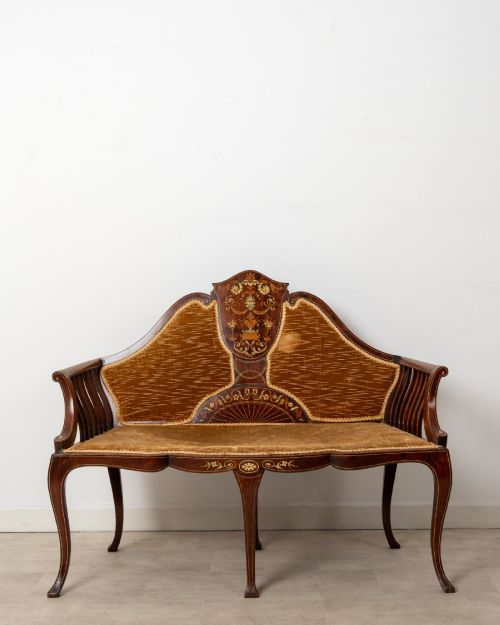
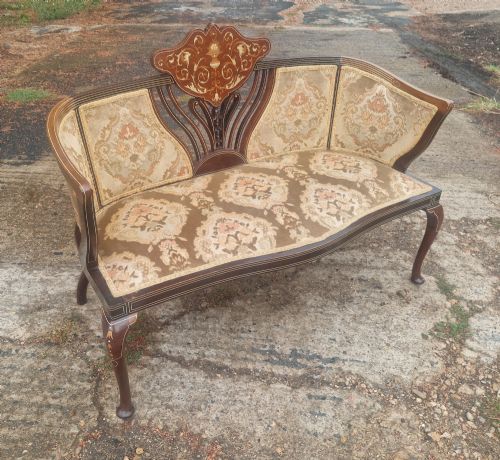
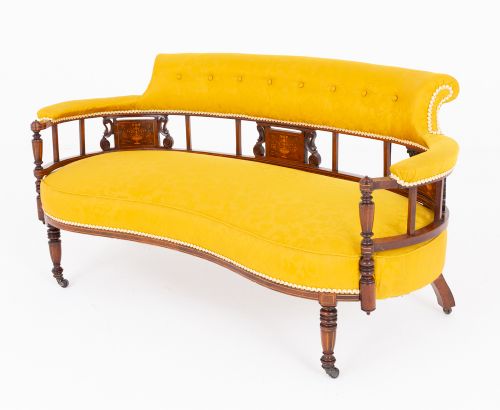
When you search for a vintage inlaid sofa, you are looking at seating pieces that predominantly date from the Edwardian period, along with examples spanning the Victorian era and the early twentieth century. These settees and two-seater salon chairs combine functional seating with detailed decorative surface work on wooden frames.
The version you are most likely to meet on this page is the Edwardian mahogany inlaid settee, frequently featuring slender tapered legs and delicate contrasting wood details. Alongside standard two-seater sofas, the selection includes salon pieces designed for formal reception rooms and occasional seating.
The forms range from compact end-of-bed sofas and two-seater settees to larger salon suites, reflecting the domestic habits of the late nineteenth and early twentieth centuries. These pieces demonstrate how makers adapted classical furniture shapes to suit smaller Edwardian drawing rooms.
Materials and Construction
Makers relied heavily on mahogany as the primary structural timber, often pairing it with satinwood, rosewood, and walnut for contrasting decorative effects. Wood inlay and marquetry techniques allowed craftsmen to create intricate floral, ribbon, or geometric motifs embedded directly into the solid wood and veneer surfaces.
Brass fittings and occasional mother of pearl details appear as subsidiary elements, enhancing key structural points or surface designs. The framework construction typically involves traditional joinery, supporting upholstered seat pads designed for domestic reception spaces.
Listings feature mahogany, satinwood, rosewood, and walnut frames decorated with wood inlay and marquetry, spanning the Victorian and Edwardian periods.
Assessing Quality and Execution
The distinction between standard output and finer pieces lies in the precision of the timber selection and the crispness of the marquetry work. Superior examples exhibit tightly grained mahogany and finely cut satinwood or walnut inlays that sit completely flush with the surrounding surface.
Structural integrity and the retention of original timber components rather than later replacements separate better-preserved seating from heavily restored alternatives. The subtlety of the decorative motifs and the balance of the frame proportions ultimately dictate the standing of an individual settee.
The Vintage Inlaid Sofa Glossary
- Marquetry
- Decorative veneer work arranged in pictorial or geometric patterns across a furniture surface. This technique uses different coloured timbers to create contrast and visual depth.
- Satinwood
- A lustrous, hard timber featuring a yellow or golden hue, frequently utilised for contrasting inlay work and banding on dark woods.
- Edwardian
- Pertaining to the period of the British monarchy from 1901 to 1910, characterised by lighter, more refined furniture forms derived from earlier revival styles.
- Settee
- A medium-sized upholstered seat with a back and arms, designed for two or more people. These pieces formed standard seating arrangements in nineteenth and early twentieth-century reception rooms.
- Sheraton Revival
- A late nineteenth-century design style emulating the neoclassical furniture forms of the eighteenth-century designer Thomas Sheraton. Pieces in this style often feature delicate inlay and tapered supports.
Vintage Inlaid Sofa: Frequently Asked Questions
How do I identify an Edwardian sofa?
Edwardian sofas typically feature lighter mahogany frames combined with satinwood inlay, slender tapered legs, and refined proportions suited to smaller reception spaces.
They often incorporate neoclassical revival motifs such as bellflowers, ribbons, or urns executed in contrasting wood veneers.
Are these sofas comfortable for daily seating?
These pieces were originally designed for formal drawing rooms rather than heavy lounging, meaning seat depths and springing differ from modern furniture.
Many period settees require careful consideration of their internal padding and support if intended for frequent daily use.
How should I care for inlaid wood?
Inlaid wooden furniture requires protection from direct sunlight and steady indoor humidity levels to prevent timber shrinkage and veneer lifting.
Routine maintenance involves gentle dusting with a dry cloth and avoiding harsh chemical polishes that can degrade the historic finish.
What is the difference between inlay and marquetry?
Inlay involves inserting pieces of contrasting material into recesses carved directly into a solid wooden surface.
Marquetry applies an entire assembled sheet of decorative veneer composed of various timbers to the structural carcase.