







Vintage Inlaid Sofa Table
A vintage inlaid sofa table brings together rich timber and delicate marquetry, offering both surface space and classic proportion for the home.
Vintage Inlaid Sofa Table
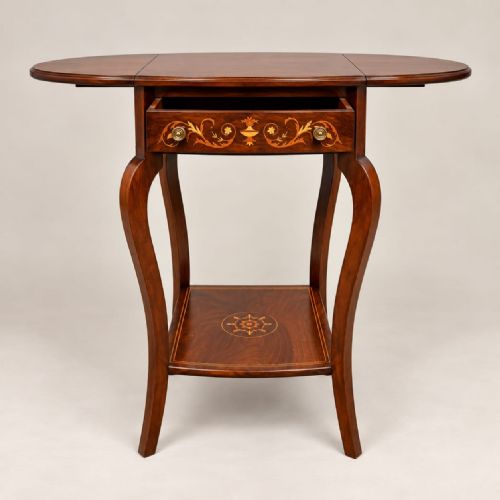
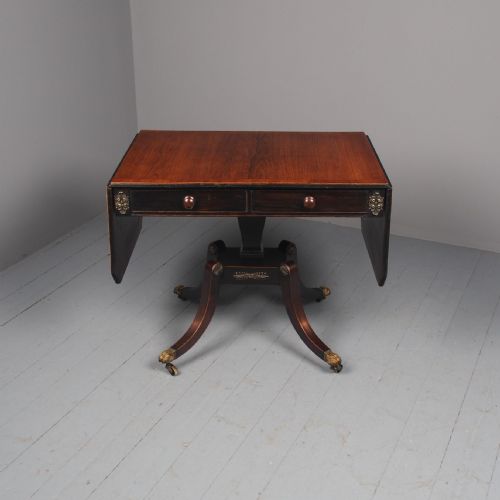
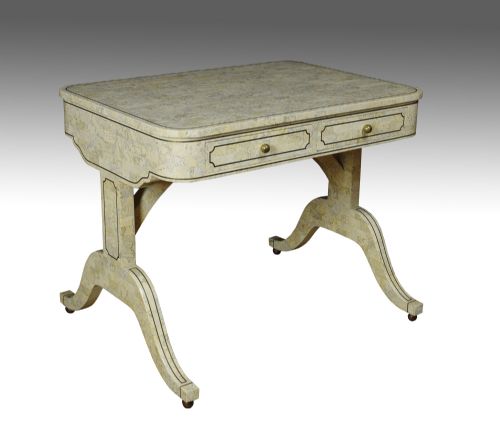
A vintage inlaid sofa table typically presents a slender rectangular top flanked by drop leaves, designed originally to sit comfortably behind a drawing room sofa. These pieces emerge across several distinct periods, with Edwardian and Victorian examples appearing most frequently alongside earlier Georgian and Regency roots.
Makers fashioned these versatile tables in forms ranging from traditional Pembroke and Sutherland designs to compact coffee tables and games surfaces. The primary function remains centered on display and occasional utility, supported by brass castors and slender legs that keep the floor plan feeling open.
Materials and construction methods
Cabinet makers relied heavily on dense hardwoods such as mahogany, walnut, and rosewood, often selecting burr walnut and satinwood for contrasting visual depth. Timber selection determined the structural integrity of the drop leaves and the stability of the central pedestal or four-leg base.
Surface decoration involved meticulous wood inlay, marquetry, and banding, where contrasting veneers formed geometric or floral motifs. Brass fittings, including castors, hinges, and small drawer pulls, completed the construction details across both nineteenth and early twentieth century workshops.
Vintage Inlaid Sofa Table Retail Price Guide 2026
Typical asking prices for vintage inlaid sofa table among the pieces listed under this phrase on Sellingantiques today, from the lower quarter to the upper quarter. They describe what is for sale here now, not the wider market.
The listings span from the eighteenth century through the Edwardian era, showing a strong representation of mahogany, walnut, and satinwood.
Distinguishing quality across examples
Superior execution shows in the precision of the wood inlay and the continuity of the grain across the Pembroke or drop leaf joints. Finer pieces demonstrate careful timber selection, particularly in burr walnut and satinwood surfaces, where natural figuring remains crisp and unblemished.
Structural refinement separates standard production from exceptional work, seen in the smooth operation of drawers and drop-leaf supports. Original brass hardware and well-proportioned undercarriages further elevate an example above simpler utility pieces.
The Vintage Inlaid Sofa Table Glossary
- Drop leaf
- A table top featuring hinged flaps that fold down to save space or extend for use. This mechanism allows the surface area to adapt quickly to different rooms.
- Marquetry
- Elaborate patterns created on a wooden surface using fitted pieces of coloured veneer. Artisans carefully cut these pieces to form floral or geometric scenes.
- Sutherland table
- A narrow drop-leaf table with exceptionally slim folding leaves supported by pivoting gatelegs. It was designed to occupy minimal space when closed.
- Pembroke table
- A small rectangular table with two hinged drop leaves on opposing sides, often equipped with a single drawer. It gained popularity during the eighteenth century.
- Banding
- A narrow strip of contrasting timber inlaid around the border of a table top or drawer front. This technique frames the primary veneer to create a refined border.
Vintage Inlaid Sofa Table: Frequently Asked Questions
What is a sofa table used for?
A sofa table serves as a versatile surface for lamps, books, and decorative objects within a living space. Originally placed behind a sofa, its drop leaves allow the footprint to expand when extra surface area is needed.
Today, these tables function equally well as compact desks, hallway consoles, or lamp tables. Their narrow profile makes them suitable for rooms where floor space is at a premium.
How do I identify an Edwardian inlaid table?
Edwardian inlaid tables typically feature light mahogany or satinwood timbers decorated with delicate floral or ribbon marquetry. The construction tends to feel lighter and more refined than heavier Victorian counterparts.
Many examples from this period incorporate subtle stringing around the edges and slender tapered legs terminating in brass castors. These details reflect the revival of eighteenth-century neoclassical tastes.
How should I care for a mahogany and satinwood table?
Protect the polished wood surfaces by avoiding direct sunlight and placing felt pads under heavy objects. Regular dusting with a soft, dry cloth helps maintain the sheen of the French polish or wax finish.
Keep the furniture away from direct heat sources and sudden humidity changes to prevent the timber and delicate inlay veneers from warping or splitting over time.