


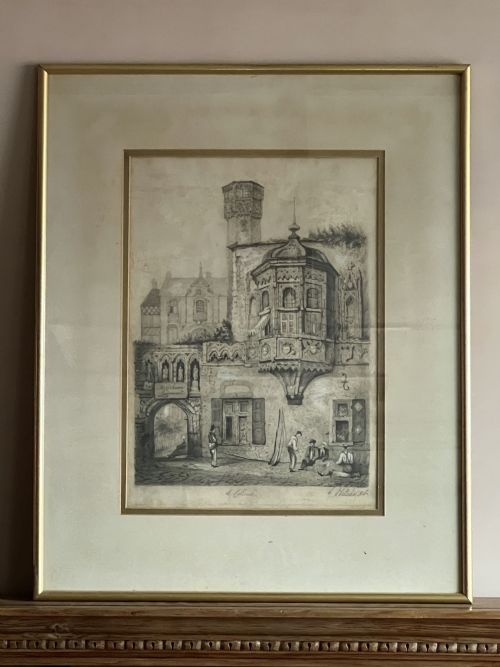


Vintage Ink Wash Drawing
A vintage ink wash drawing captures direct artistic intent on paper through fluid line and tonal depth.
Vintage Ink Wash Drawing
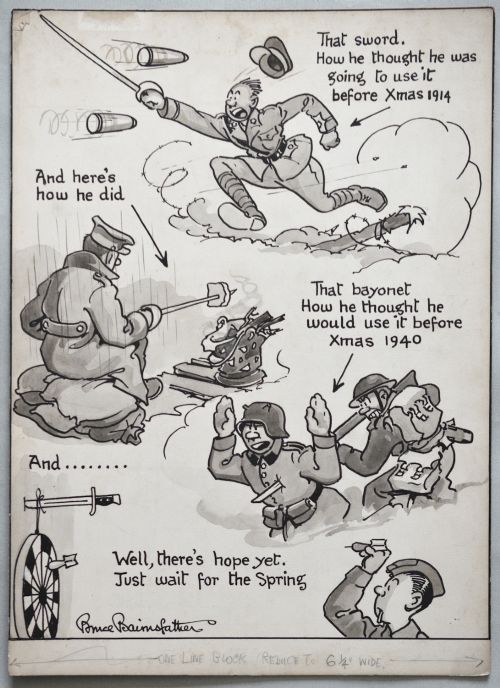
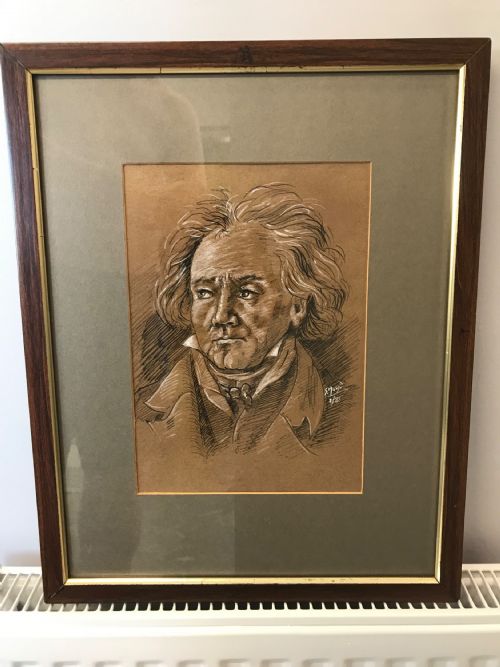
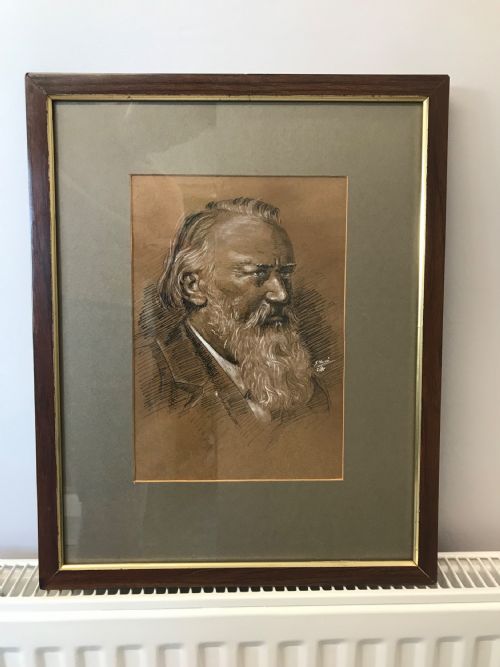
A vintage ink wash drawing brings together delicate line work and tonal shadow on paper, often paired with watercolour or gouache. You find landscape studies, townscapes, portraits of composers, and satirical illustrations among these works on paper.
The selection spans from the eighteenth century through the Victorian era into the twentieth century, with British, Irish, Dutch, and French examples. Pieces range from early nineteenth-century battle scenes and pastoral views to nineteen-thirties townscapes and later composite portraiture.
Materials and techniques
Artists apply ink using pens or fine brushes to establish the primary composition and contours on paper. They then introduce diluted washes of ink, sepia, or watercolour to build shadow and atmospheric depth.
Gouache often appears alongside ink and wash to add opaque highlights and dense colour accents. Works are typically framed behind glass, sometimes utilising wood moulding to protect the delicate paper surface.
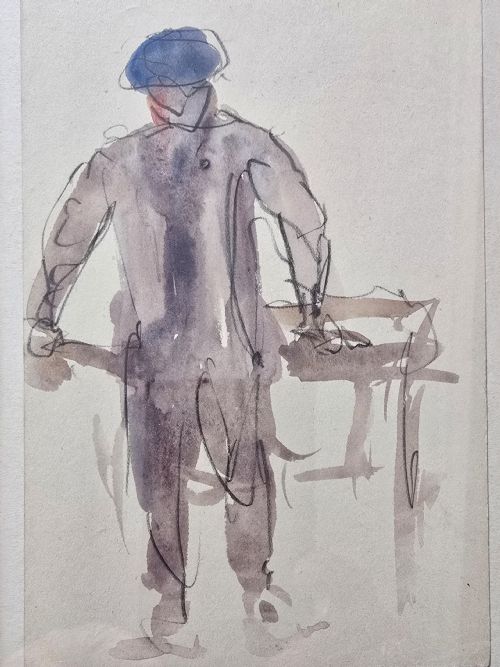
Several artists preferred documenting mundane farmyard labour and timber loading over grand historical scenes, leaving charming records of ordinary historic days.
Qualities that distinguish the works
Quality rests in the economy and confidence of the initial ink line alongside the control of the wash. A successful sheet shows sureness of hand where tonal gradations create three-dimensional form without muddying the paper.
The sophistication of the composition and the fidelity of the historical context separate routine studies from accomplished gallery pieces. The relationship between the dry line and the fluid wash defines the visual success of each drawing.
Bruce Bairnsfather·Michael Healy·Edward Dayes·Johan Noah Bemmel·Fred Lawson·Thomas Monro·Thomas Lound·John Stanton Ward
The Vintage Ink Wash Drawing Glossary
- Wash
- A technique where diluted ink or watercolour is brushed across paper to create smooth, transparent areas of tone. This builds shadow and depth behind the primary ink lines.
- Gouache
- An opaque watercolour medium used to add solid highlights and body to a drawing. It sits on top of the ink and wash layers.
- Sepia
- A brownish pigment traditionally derived from the ink sac of the cuttlefish. It appears frequently in nineteenth-century monochrome landscape studies.
- Works on paper
- A broad umbrella category for drawings, watercolours, prints, and sketches executed on paper supports. This encompasses most items found in this category.
- Townscape
- A genre of art depicting urban views, street scenes, and architectural settings. Examples in this medium record historical localities with direct observation.
Vintage Ink Wash Drawing: Frequently Asked Questions
How do I care for a vintage ink wash drawing?
Keep works on paper away from direct sunlight to prevent the ink and wash from fading over time. Maintain stable humidity levels to protect both the paper and any historic framing materials.
Ensure the drawing remains behind glass with adequate spacing between the paper and the glazing. Professional framing with acid-free backing materials preserves the integrity of the sheet.
How do I distinguish an original drawing from a reproduction?
Examine the surface under magnification to check for the continuous lines of pen work and the feathered edges of liquid wash. Original ink displays subtle pooling and variations in tone impossible in photomechanical prints.
Check the reverse of the paper or edges visible within the mount for watermarks, artist notes, or age toning. Paper stock from earlier centuries often exhibits distinct laid lines and tactile texture.
What is the difference between ink wash and watercolour?
Ink wash relies primarily on monochrome or tinted fluid pigments to establish light and shadow through tonal graduation. The emphasis remains on the interplay between linear ink work and tonal depth.
Watercolour employs a wider palette of transparent pigments where colour carries the primary descriptive weight. Many pieces on this page combine both techniques on a single sheet of paper.
How can I tell the period of an undated drawing?
Look closely at the paper stock, watermark evidence, and framing style for clues to the date of execution. Stylistic conventions in costume, architecture, and landscape rendering also point toward specific decades.
Compare the handling of line and wash to documented works by known artists from the same school or period. Secondary inscriptions on the mount or reverse often record former attributions.