


English Architectural Painting
English architectural painting captures historic buildings and streetscapes in watercolour and oil across various periods.
English Architectural Painting
When searching for English architectural painting, collectors encounter framed watercolours and oil paintings depicting historic buildings, townscapes, and country houses. These works record cathedrals, castles, bridges, and domestic structures from the nineteenth and early twentieth centuries.
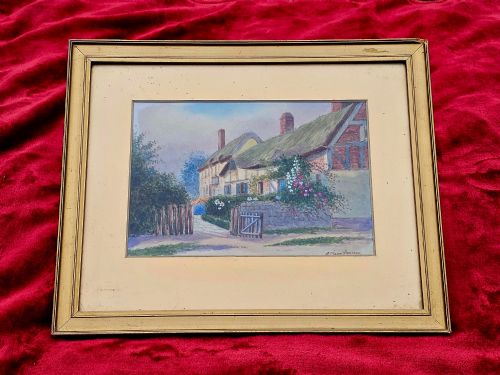
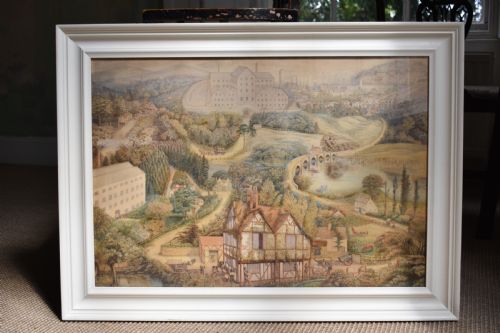
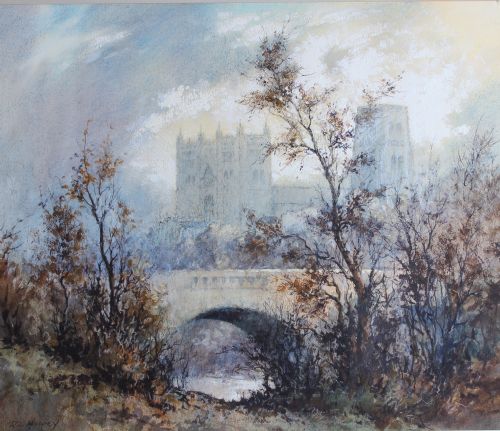
The watercolours and oils on this page range from detailed topographical studies by named artists to atmospheric depictions of urban street scenes and rural churches. Many pieces document specific locations across England, including Yorkshire, London, and Durham.
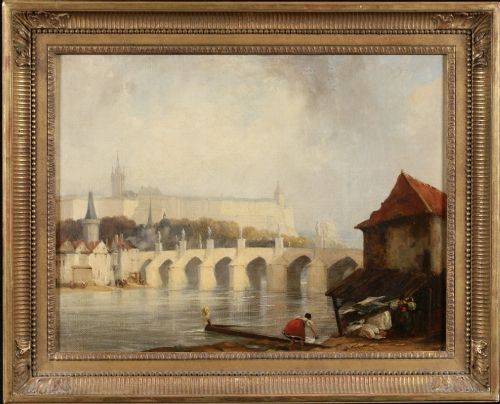
Nineteenth-century oils on canvas and panel sit alongside early twentieth-century watercolours on paper. The selection reflects diverse periods from the Georgian era through to the mid-twentieth century.
How they were made
Artists utilised watercolour pigment and ink on paper, or oil paint applied to canvas, wood panels, and glass. Many works combine monochrome ink with watercolour washes to define building facades and perspective.
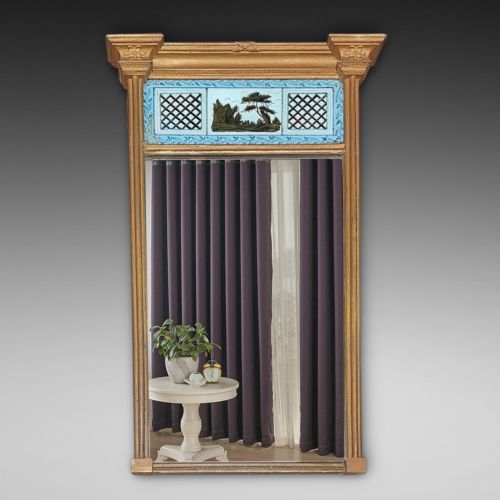
Finished paintings typically reside within period wooden frames, occasionally featuring giltwood mouldings, gesso, or verre eglomise glass elements.
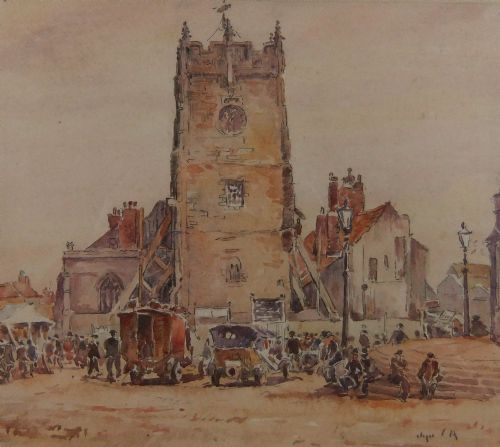
Several watercolours record bustling historic street scenes where artists stood to paint everyday life unfolding beside ancient stone walls.
What varies in quality
Quality rests in the precision of perspective, the handling of architectural detail, and the artist's ability to render light upon masonry and stone. Skilled brushwork distinguishes a topographical record with atmosphere from a rigid linear drawing.
The condition of the pigment, the preservation of the paper or canvas surface, and the originality of the accompanying frame contribute to the standing of each piece.
A. Marie Parsons·John Smith Atherton·Robert Leslie Howey·Fred Lawson·Stanley Orchart·Louie Stanley Maurice Prince·George Whyatt·Florence Hess·A.A. Finch·John Lovibond and Sons·John Sowden·Tom Dudley·George Lambert·Ernest Cox·John Cawthorn·Rowland Henry Hill·Beatrice Parsons·Peter De Wint·George Fall
The English Architectural Painting Glossary
- Watercolour
- A paint consisting of colour suspended in a water-soluble vehicle, frequently applied to paper for architectural studies. It allows for transparent washes and fine line work.
- Oil painting
- Pigments bound in a drying oil medium, applied to canvas or wood panels. This technique offers rich depth and texture.
- Verre eglomise
- Cold gilding and painting applied to the rear of glass. It creates a reflective, decorative border often found on pier mirrors.
- Topographical
- Representing a specific locality or building with accuracy. These works serve as visual records of historic English architecture.
- Gesso
- A plaster-like mixture applied to wood frames before gilding or painting. It provides a smooth base for ornate decorative moulding.
English Architectural Painting: Frequently Asked Questions
What subjects appear in these paintings?
The artworks depict notable English structures including cathedrals, castles, bridges, churches, and historic town streets. Scenes range from rural rectories to prominent London landmarks.
Many pieces focus on specific regional architecture, recording buildings as they appeared during the nineteenth and early twentieth centuries.
Which materials did artists use?
Painters worked primarily with watercolour pigments on paper, or oil paint applied to canvas and wooden panels. Some works incorporate ink for detailed line work.
Surviving pieces usually retain their original frames, which frequently feature carved wood, giltwood, or gesso decoration.
How do I date an architectural painting?
Dating relies on stylistic evidence within the depicted architecture, costume of any figures present, and the physical materials of the support and frame. Signatures, artist records, and inscriptions on the reverse also provide chronological markers.
Paintings often reflect the aesthetic preferences of periods such as the Georgian, Victorian, and Edwardian eras.
How should I display these artworks?
Hang paintings away from direct sunlight and excessive moisture to protect watercolours on paper and oil paints on canvas. Maintaining stable indoor temperatures preserves both the artwork and its original frame.
Pairing pieces with complementary architectural elements creates a cohesive period display.