


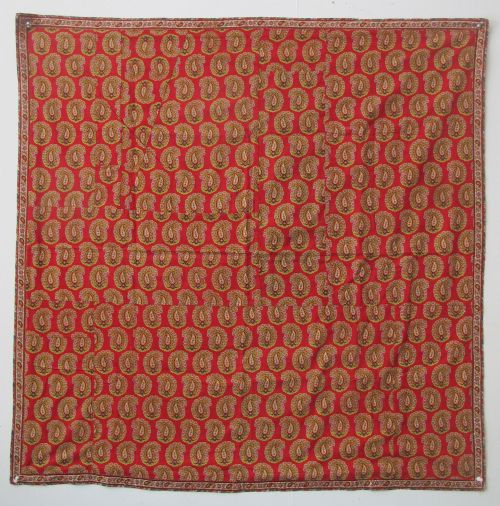


Vintage Indian Textile
A vintage indian textile brings centuries of rich dye work, intricate embroidery, and handloom weaving directly into your interior.
Vintage Indian Textile
A vintage indian textile encompasses everything from framed temple paintings and blockprint panels to embroidered wedding shawls and heavy silk hangings. These pieces span the nineteenth century through the early twentieth century, capturing regional traditions across the subcontinent.
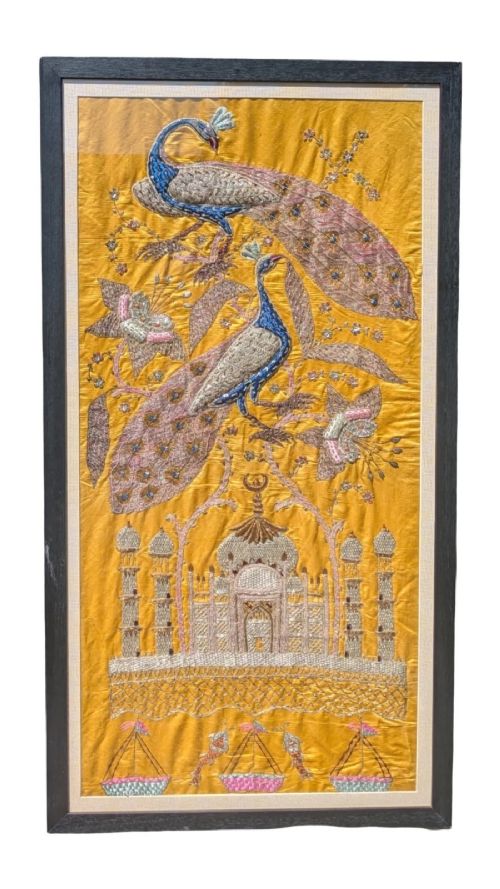
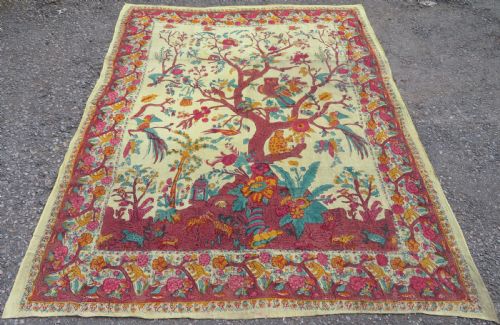
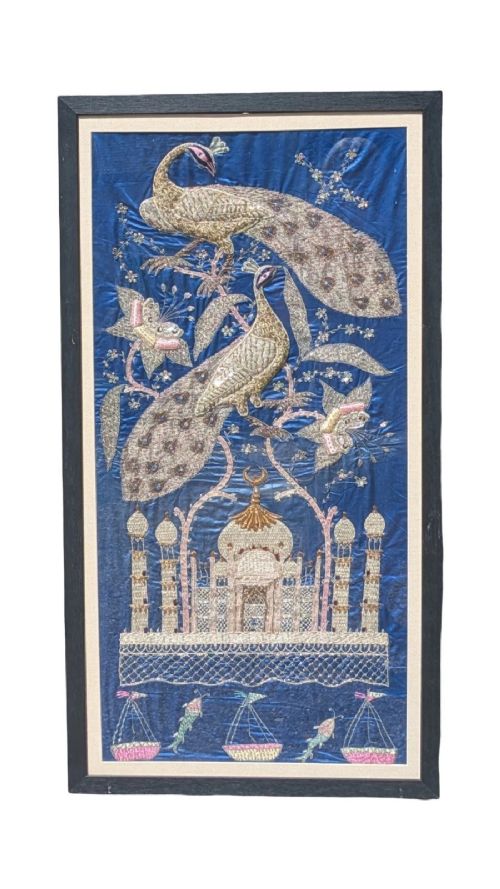
You are most likely to encounter embroidered silks depicting scenes like the Taj Mahal and peacocks, alongside blockprinted cotton palampores and painted wall cloths portraying figures such as Krishna. Materials shift from humble cotton grounds to plush green velvet and metallic thread enrichments.
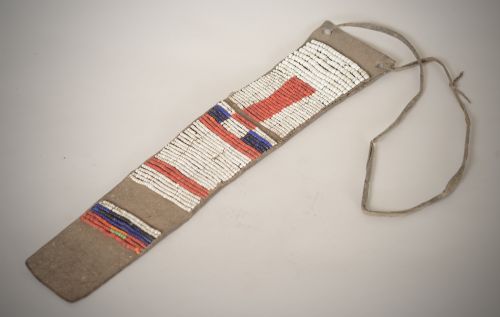
The selection also reaches into tribal artistry, including fine Banjara gala textiles and Sindh embroidered shawls. Each form reflects distinct domestic, ceremonial, or decorative origins passed down through generations of makers.
Materials and construction
Makers utilised natural materials including cotton, silk, wool, and velvet as the foundation for intricate needlework and blockprinting. These textiles often incorporate metallic threads alongside natural dyes to create shimmering contrasts and lasting colour.
Artisans applied woodblock printing techniques and hand-painting methods to cotton panels, while others employed dense needlework using silk and metal thread on velvet or woven grounds.
Vintage Indian Textile Retail Price Guide 2026
Typical asking prices for vintage indian textile among the pieces listed under this phrase on Sellingantiques today, from the lower quarter to the upper quarter. They describe what is for sale here now, not the wider market.
Peacocks stitch their eternal dance across silk grounds, keeping company with miniature marble monuments.
Defining quality
Quality rests upon the density and precision of the hand embroidery, the clarity of blockprinted or painted details, and the integrity of the base fabric. Pieces featuring fine silver and gold metallic thread work or well-preserved natural dyes stand apart.
The depth of narrative detail in pictorial panels, such as complex temple stories or architectural depictions, also signals superior craftsmanship and artistic execution.
The Vintage Indian Textile Glossary
- Palampore
- A large, hand-painted or blockprinted cotton bed cover or hanging, traditionally produced for trade. These textiles often display intricate tree of life motifs.
- Kalamkari
- A type of hand-painted or block-printed cotton textile produced in India, often depicting Hindu stories and temple scenes. The term derives from penwork techniques.
- Dochala
- A traditional paired shawl from Kashmir, typically finely embroidered for weddings and ceremonial use. These garments showcase exceptional needlework skill.
- Banjara
- Associated with nomadic communities in India, known for vibrant tribal textiles incorporating beadwork and intricate embroidery. These pieces carry distinct cultural identities.
Vintage Indian Textile: Frequently Asked Questions
How do I hang a textile safely?
Support heavy pieces by mounting them onto padded boards covered in neutral fabric, distributing the weight evenly across the entire surface rather than hanging them from single points.
Keep textiles away from direct sunlight to prevent natural dyes from fading over time.
How do I clean an antique textile?
Surface dust can be removed very gently using a low-suction vacuum through a protective mesh screen. Avoid washing or applying moisture yourself, as fragile metallic threads and natural dyes react poorly to water.
Consult a professional textile conservator for deep cleaning or restoration needs.
Are these pieces meant for daily use?
Most vintage textiles on this page function best as wall art, framed displays, or decorative panels rather than items subject to heavy physical wear. Silk embroidery and metallic threads require careful handling to remain intact.
Heavier items like cotton bed covers can adorn low-traffic spaces where friction is minimal.
How do I date an Indian textile?
Dating relies on examining the type of dyes used, the mechanical or hand-spun nature of the cotton or silk base, and stylistic markers specific to the nineteenth or early twentieth century. Comparing embroidery motifs against documented regional examples helps narrow the period.
Wear patterns and the composition of metal threads also provide clues to age.