
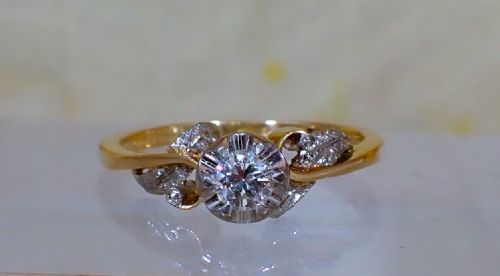


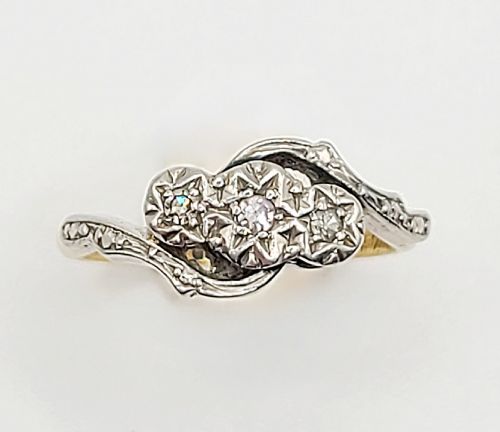


Vintage Illusion Setting Ring
A vintage illusion setting ring uses clever metalwork to make a diamond look substantially larger than it actually is.
Vintage Illusion Setting Ring
When you search for a vintage illusion setting ring, you encounter pieces designed to maximise visual impact through meticulous metal shaping around the stone. The selection spans several distinct eras, bringing together Victorian craftsmanship alongside creations from the Edwardian period and the Art Deco years.
Art Deco examples frequently combine yellow gold bands with platinum settings to frame the diamonds securely. Mid-century interpretations and pieces from the 1950s and 1960s also appear, offering brilliant cut diamonds in solitaire and cluster arrangements.
The most common forms on this page are engagement rings featuring single stones or trilogies. These designs capture the aesthetic of twentieth-century jewellery production without relying on overly ornate embellishments.
Materials and construction techniques
The construction of these rings relies on combining durable precious metals with securely mounted diamonds. Goldsmiths utilised 18ct gold, 9ct gold, and white gold for the shanks, often pairing them with platinum heads.
The illusion effect itself is achieved by faceting or milling the surrounding metal plate to reflect light outward, tricking the eye into reading the diamond as a larger spread. Platinum on 9ct gold and multi-metal combinations demonstrate how makers balanced structural strength with aesthetic brightness.
The inventory spans the Victorian era through the 1960s, uniting platinum, 18ct gold, 9ct gold, and palladium.
What separates the grades of quality
Quality in these rings rests upon the precision of the metalwork surrounding the stone and the clarity of the diamond. Finer pieces show crisp geometric lines in the illusion plates without excessive wear to the prongs or shoulders.
The harmony between the gold shank and the platinum top also dictates the standard of the piece. Well-preserved examples retain their original proportions and secure stone settings through decades of wear.
The Vintage Illusion Setting Ring Glossary
- Illusion setting
- A metal mounting technique designed to make a diamond appear larger by surrounding it with a faceted, reflective plate. This method was particularly popular during the early to mid-twentieth century.
- Solitaire
- A ring featuring a single prominent diamond. It remains the most traditional choice for engagement rings across multiple decades.
- Trilogy ring
- A ring set with three diamonds, often interpreted symbolically to represent the past, present, and future. These frequently feature platinum illusion heads on gold bands.
- Transition cut
- A diamond cut used during the period when old European cuts were evolving into modern brilliant cuts. It bridges nineteenth-century proportions and twentieth-century brilliance.
Vintage Illusion Setting Ring: Frequently Asked Questions
What is an illusion setting?
An illusion setting uses a specially shaped metal collar around a diamond to catch the light and expand its apparent visual size.
This technique allowed makers to offer striking engagement rings with smaller carat weights without sacrificing presence on the hand.
How do I care for my ring?
These vintage pieces benefit from gentle cleaning with warm soapy water and a soft brush to remove everyday oils from beneath the setting.
Regular checks by a jeweller ensure the claws and metal plates holding the diamond remain secure.
Can these rings be resized?
Most gold and platinum bands can be adjusted by a skilled jeweller depending on the construction of the shoulders.
Intricate Art Deco engraving near the band requires careful handling to preserve the original design during alteration.
How do I identify the period?
Hallmarks, metal combinations, and stone cuts offer the clearest clues to a ring's age and manufacturing era.
Art Deco pieces often pair platinum with yellow gold, whereas mid-century examples feature distinct brilliant cuts.