

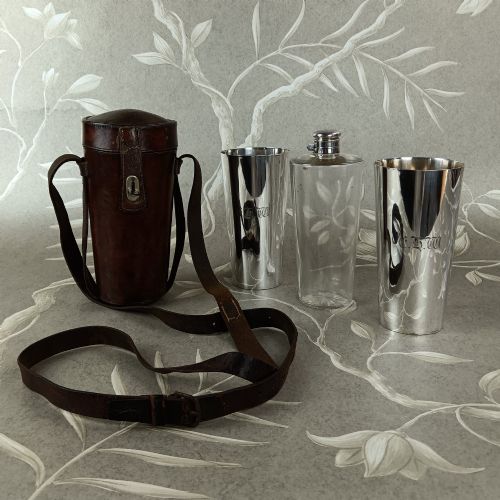
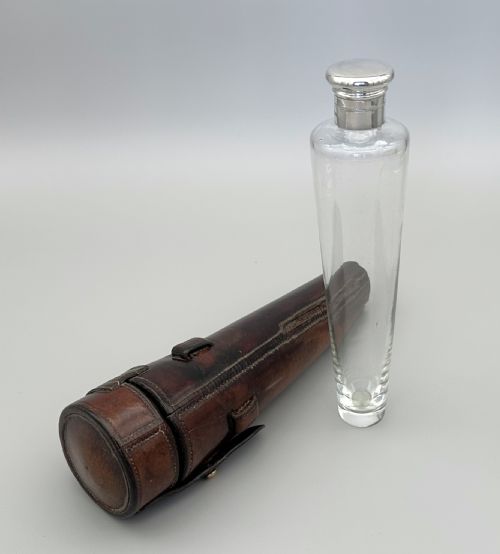


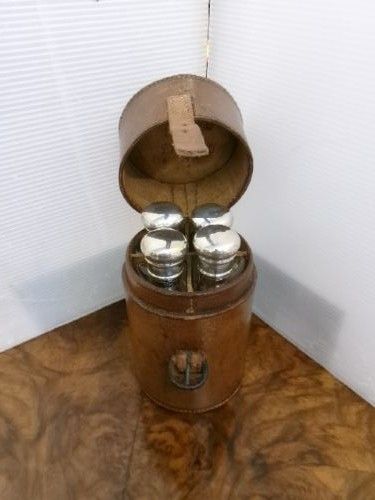
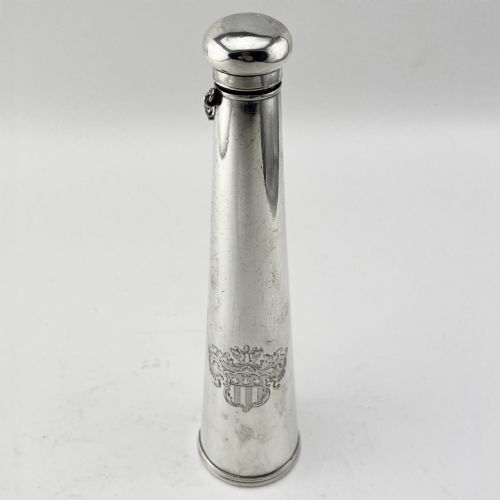


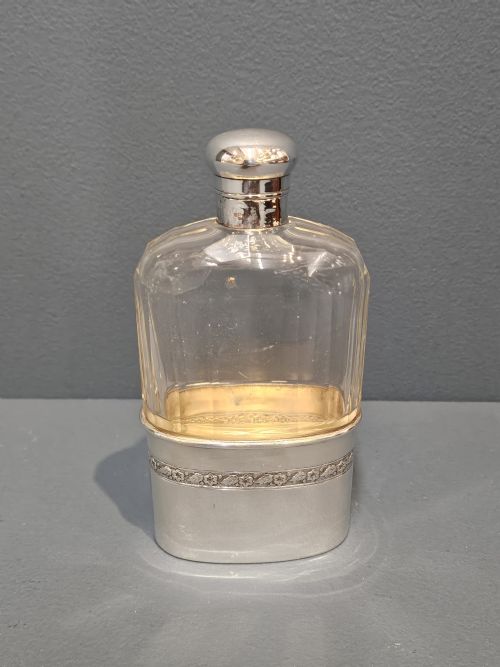


Vintage Hunting Spirit Flask
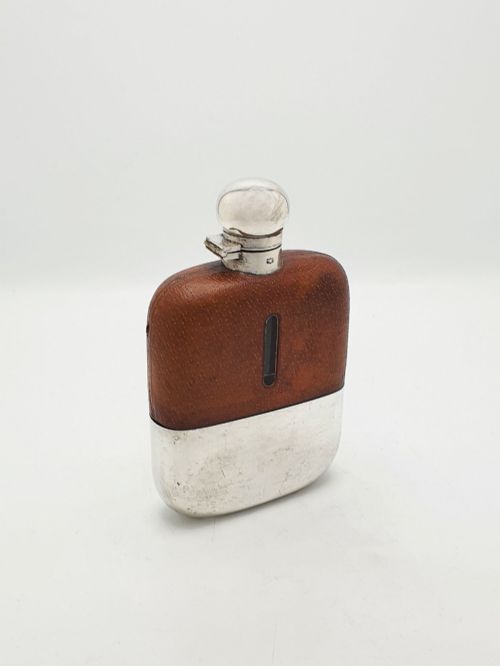
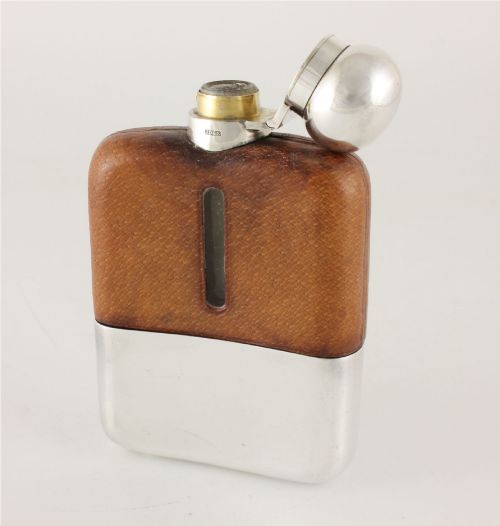
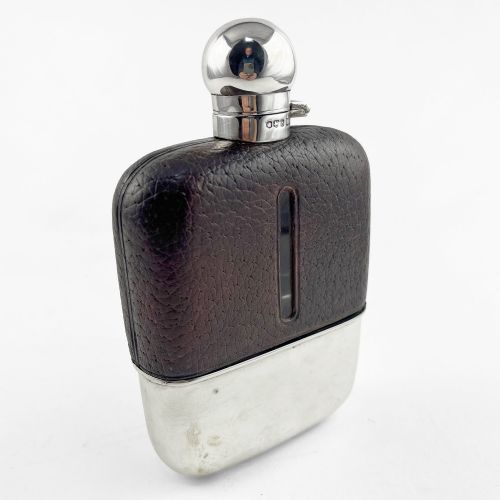
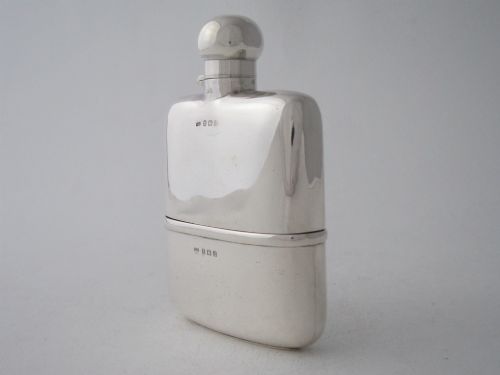
These vintage hunting spirit flask examples combine glass, leather and precious metal to survive field pursuits from the Victorian era onward.
Vintage Hunting Spirit Flask
A vintage hunting spirit flask serves as a portable container for liquor, traditionally used during outdoor pursuits and equestrian events. Buyers encounter forms ranging from simple pocket hip flasks to elaborate field campaign sets and saddle flasks housed in protective cases.
The selections span periods including the Victorian and Edwardian eras, George V reigns, and Art Deco designs. Pieces appear in object types such as hip flasks, barware, flasks and decanters, and saddle flasks.
Most specimens combine glass or cut crystal bodies with metal components like sterling silver, silver plate, and nickel silver. Leather elements frequently wrap the lower body or form dedicated carrying cases.
How they were made
Makers fashioned the bottle bodies from blown glass or cut crystal, often shaping them to fit a pocket or a leather saddle case. Metal smiths then applied sterling silver or silver plate to caps, collars, and drinking cups.
Leather workers constructed fitted cases and wrapped flask bodies using materials like crocodile leather and standard hide. Securing mechanisms utilised locking hinges, screw tops, and removable captive cups.
Vintage Hunting Spirit Flask Retail Price Guide 2026
Typical asking prices for vintage hunting spirit flask among the pieces listed under this phrase on Sellingantiques today, from the lower quarter to the upper quarter. They describe what is for sale here now, not the wider market.
What varies in quality
The distinction between standard production and superior craftsmanship rests in the integration of materials, such as hammered sterling silver finishes paired with heavy cut crystal. Complete sets featuring original leather cases and matching collapsible cups elevate a piece above solitary flasks.
Makers' marks and London hallmarks provide definitive evidence of origin, distinguishing marked sterling silver works from general silver-plated alternatives.
James Dixon & Sons·Hukin & Heath·Asprey London·W A Ellwick Ltd
The Vintage Hunting Spirit Flask Glossary
- Saddle flask
- A curved or captive bottle designed specifically to slide into a leather case attached to an equestrian saddle. These items often feature a rounded or boot-like bottom.
- Campaign set
- A portable collection of spirit containers and beakers housed together for travel or field use. They frequently utilise fitted leather cases to keep multiple elements secure.
- Silver plate
- A base metal such as nickel silver covered with a thin layer of pure silver. This technique offered an accessible alternative to solid precious metal.
- Cut crystal
- High-grade glass cut with decorative facets that catch the light. It provides a heavy, durable body for holding spirits.
Vintage Hunting Spirit Flask: Frequently Asked Questions
What is a vintage hunting spirit flask?
A vintage hunting spirit flask is a portable glass container encased in leather or mounted in silver, designed to carry liquor during outdoor sports. These pieces range from curved pocket models to larger saddle flasks.
They reflect the social traditions of horseback riding and field sports across the Victorian and Edwardian periods.
How were these flasks used?
Participants carried them during hunts and outdoor excursions to provide quick access to spirits. The attached cups or removable bottom beakers allowed the contents to be shared.
Fitted leather cases protected the glass bottles from shattering during active movement on horseback.
How do I identify the period?
Period identification relies on maker marks, hallmarks, and stylistic indicators such as Edwardian proportions or Art Deco geometric patterns. Materials like crocodile leather and specific plating techniques also point to manufacturing eras.
Documented examples span from the eighteenth century through the early twentieth century.
How do I care for my flask?
Gentle cleaning preserves the original silver and leather surfaces without stripping historical patina. Glass interiors require careful rinsing to remove residue from stored spirits.
Leather cases benefit from minimal moisture exposure and standard conditioning suited to antique hides.