



Vintage Hunting Cup
These vintage hunting cup pieces combine solid silver, leather and glass to serve a spirit out on horseback or commemorate a day in the field.
Vintage Hunting Cup
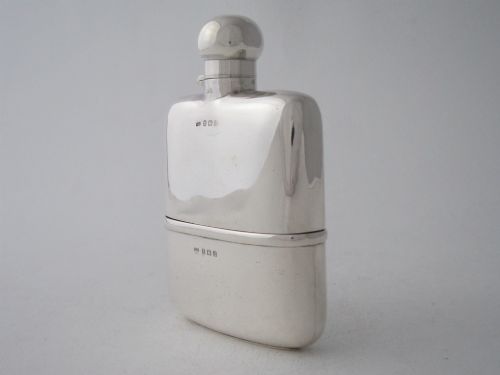
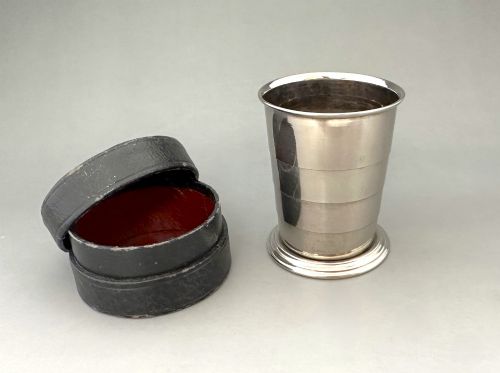
When you search for a vintage hunting cup, you encounter drinking vessels and portable flasks designed for the field, spanning the Victorian and Edwardian eras up to the 1930s. The selection relies heavily on hip flasks with captive or detachable cups, alongside stirrup cups, tankards, beakers and harvest vessels.
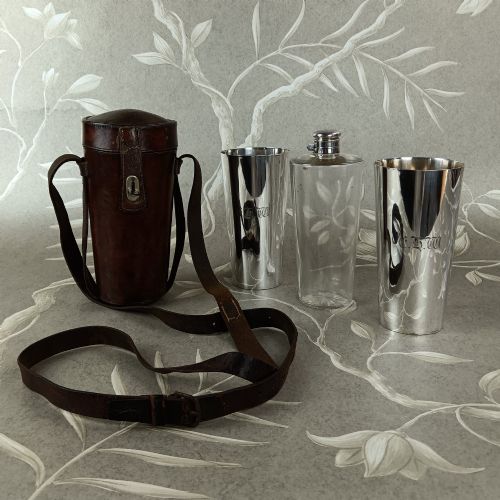
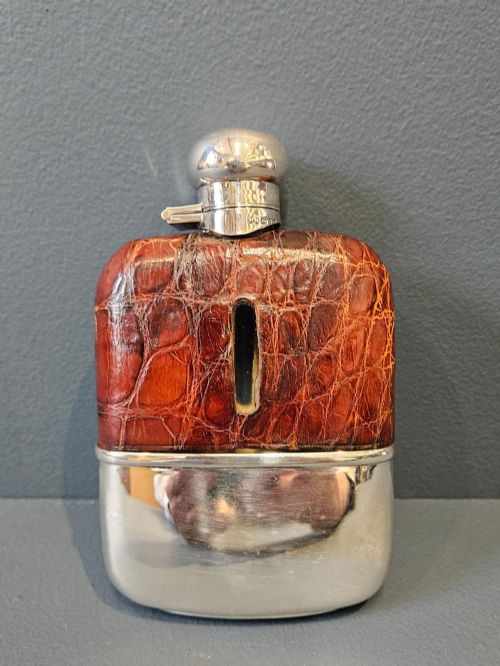
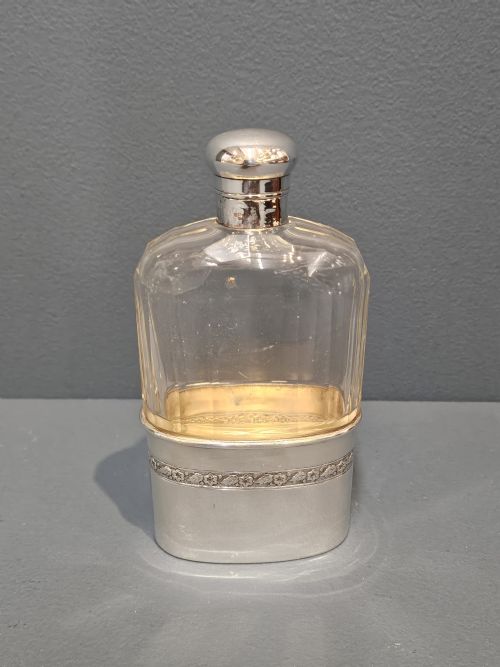
The most common format on this page is the silver-plated or sterling silver hip flask, frequently bound in leather or crocodile skin to ensure a secure grip in wet weather. These pocket vessels often pair glass bodies with metal cups that slip over the base.
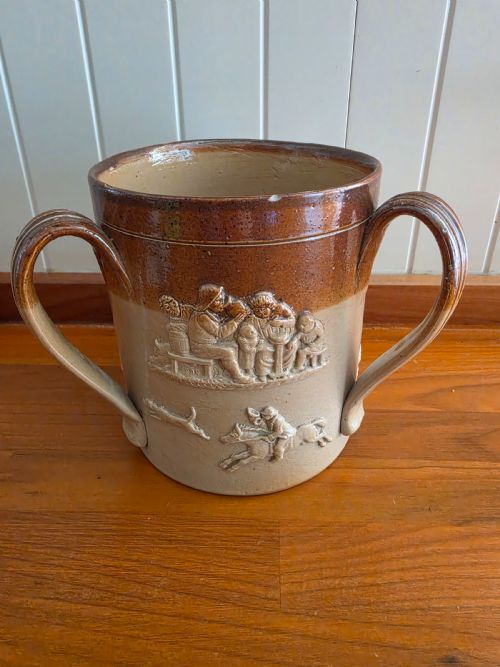
Alongside portable flasks, the category includes sturdy stoneware tygs, carved coconut vessels and traditional trophy cups associated with British sporting art. Each piece reflects the social habits of rural pursuits from the nineteenth and early twentieth centuries.
How they were made
Silversmiths shaped sterling silver and silver plate into curved bodies and interlocking cups, often applying hammered finishes or hinged screw caps to prevent leaks. Glass bodies were blown and cut to fit snugly inside metal and leather cases.
Tanners prepared crocodile leather and cowhide, stitching and gluing the pelts tightly around glass or metal flasks for field durability. Potters threw stoneware on wheels, attaching multiple handles to form drinking tygs for communal toasts.
Vintage Hunting Cup Retail Price Guide 2026
Typical asking prices for vintage hunting cup among the pieces listed under this phrase on Sellingantiques today, from the lower quarter to the upper quarter. They describe what is for sale here now, not the wider market.
Several flasks include captive cups that slide off with a satisfying click, ready for a roadside sip.
What varies in quality
The distinction between standard utility items and finer pieces rests on the weight of the silver, the precision of the hinge mechanism and the integrity of the internal cork or washer. Maker marks from established firms indicate higher standards of metalwork and design.
The quality of the organic materials also sets pieces apart, particularly the grain and stitching condition of crocodile or bridle leather sleeves. Clean, well-fitted glass inserts and crisp hallmarks elevate a piece above ordinary utilitarian examples.
James Dixon & Sons·Hukin & Heath·Asprey London·W A Ellwick Ltd
The Vintage Hunting Cup Glossary
- Hip flask
- A small, curved container designed to hold spirits in a pocket. These vessels often feature a screw-down cap and a matching metal cup that fits over the lower half.
- Stirrup cup
- A drinking vessel handed to a rider while mounted in the saddle before or during a hunt. They frequently lack flat bases so they cannot be set down until emptied.
- Tyg
- A large drinking mug with three or more handles designed to be passed around a company. Early versions appeared in earthenware and stoneware during previous centuries.
- Campaign set
- Portable equipment configured for travel and outdoor living. These sets typically pack spirit bottles and cups into compact leather or wooden cases.
- Sterling silver
- An alloy containing a high proportion of pure silver combined with other metals for durability. British pieces carry assay office marks confirming this standard.
Vintage Hunting Cup: Frequently Asked Questions
What is a stirrup cup?
A stirrup cup is a traditional drinking vessel handed to riders while they remain seated in the saddle. They often feature rounded or conical bottoms that prevent them from resting on a flat surface.
In this collection, these pieces appear in silver plate designed for field use. They reflect the equestrian traditions of the nineteenth and early twentieth centuries.
How do I identify a hip flask?
A hip flask is a curved container built to fit comfortably against the body in a coat pocket. Most examples include a secure screw cap and a detachable metal cup that covers the base.
Many listings combine glass bodies with sterling silver mounts and leather outer sleeves. This construction protected the vessel during outdoor pursuits.
What are stoneware tygs?
A tyg is a heavy ceramic drinking vessel fitted with multiple handles for communal passing. Early examples appeared in British country pottery during past centuries.
These ceramic pieces feature robust stoneware bodies designed for hearty toasts. Their multiple handles allowed several people to hold the vessel securely.
How do I date these pieces?
Dating relies on maker marks, assay office stamps, and stylistic details associated with specific reigns. Pieces from the Victorian, Edwardian, and George V periods carry distinct manufacturing traits.
Matching hallmarks to specific years provides precise creation dates for silver items. Leatherwork and glass-cutting styles help date unmarked or plated pieces.