



Vintage Howard Sofa
A vintage howard sofa brings deep upholstery and classic English country house comfort to a room, built by makers who defined nineteenth-century seating.
Vintage Howard Sofa
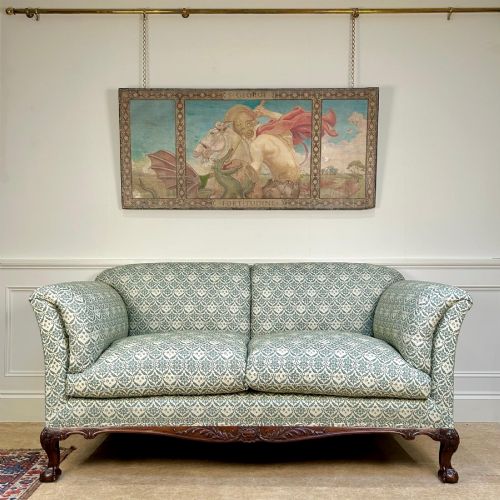
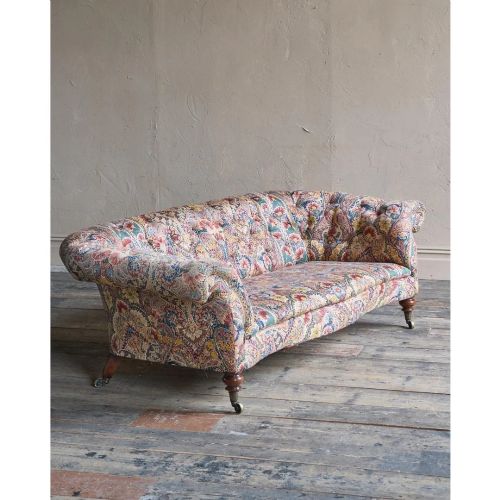
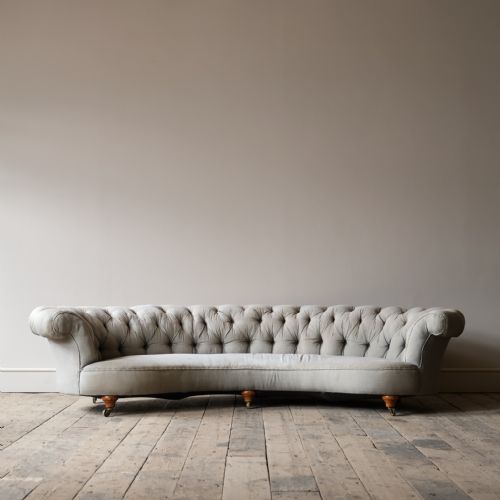
A vintage howard sofa represents the pinnacle of nineteenth-century and early twentieth-century British seating, combining generous proportions with traditional sprung construction. Buyers searching for a vintage howard sofa typically encounter pieces spanning the Victorian, Edwardian, and later periods, including specific forms such as Chesterfields, daybeds, and drop-arm settees.
The selection ranges from marked pieces by the founding firm to later interpretations in the English country house style. Forms include standard two-seaters, large portarlington models, and specialised daybeds featuring brass castors and turned hardwood legs.
How they were made
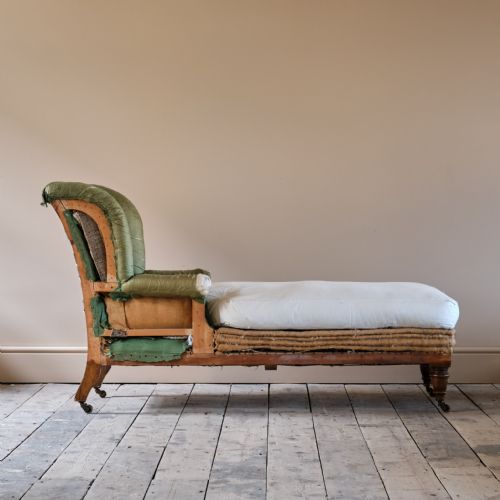
Construction relies on sturdy hardwood frames, typically mahogany or walnut, providing a rigid skeleton for the complex internal springing. Upholsters used traditional materials such as hessian, cotton, and calico beneath top coverings of ticking fabric, leather, or printed textiles.
Detailing often involved exposed mahogany or walnut legs terminated with brass castors, alongside specialised elements like claw and ball feet found on aesthetic movement variants.
Vintage Howard Sofa Retail Price Guide 2026
Typical asking prices for vintage howard sofa among the pieces listed under this phrase on Sellingantiques today, from the lower quarter to the upper quarter. They describe what is for sale here now, not the wider market.
Some daybeds feature clever drop arms designed for afternoon naps in Victorian libraries.
What varies in quality
Quality in these pieces is dictated by the integrity of the original frame and the retention of traditional stuffing materials beneath the upholstery. Examples retaining their initial ticking or early fabric layers demonstrate a higher degree of preservation than those subjected to modern re-webbing.
Proportion and execution of the woodwork also divide standard production from exceptional examples, particularly where carved details or specialised forms like reclining mechanisms are present.
Howard and Sons
The Vintage Howard Sofa Glossary
- Ticking
- A tightly woven cotton or linen fabric historically used as a durable base layer for stuffing and springs. It frequently appears as the outermost upholstery on untouched workshop pieces.
- Chesterfield
- A traditional sofa design characterised by deep buttoning, rolled arms of the same height as the back, and substantial overall depth. It forms a primary shape within this maker's output.
- Daybed
- An elongated seating form designed for reclining, combining elements of a sofa and a chaise longue. Surviving examples often incorporate adjustable drop arms.
- Hessian
- A coarse woven fabric made from jute fibres, utilised internally as a foundation for supporting horsehair and stuffing. It remains visible in unrestored or lined examples.
Vintage Howard Sofa: Frequently Asked Questions
What defines a genuine piece?
Authentic pieces typically display maker stamps on the castors, specific numbering on the frame, and traditional stuffing methods utilising hessian and ticking.
Construction standards from the Victorian and Edwardian eras involve robust hardwood frames and hand-tied springs that distinguish them from later reproductions.
How should I care for vintage upholstery?
Protect original fabrics like antique ticking or leather from direct sunlight to prevent fading and textile degradation over time.
Vacuum gently using a low suction attachment and consult specialist conservators for deep cleaning to preserve internal stuffing layers.
Are these sofas comfortable for daily use?
These seating designs are renowned for deep proportions and resilient internal springing engineered for long periods of relaxation.
Their ergonomic shape supports varied seating postures, making them practical for modern living rooms and studies alike.
How do I identify the period?
Dating relies on stylistic markers such as aesthetic movement decorative motifs, Victorian proportions, or Edwardian leg turnings.
Material choices like mahogany versus walnut and the presence of specific patent stamps also help narrow down the decade of manufacture.