

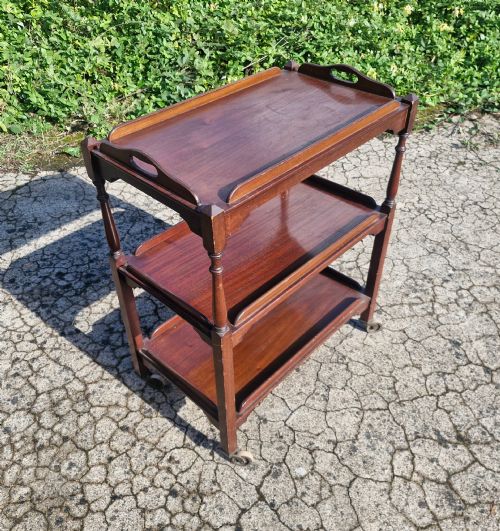
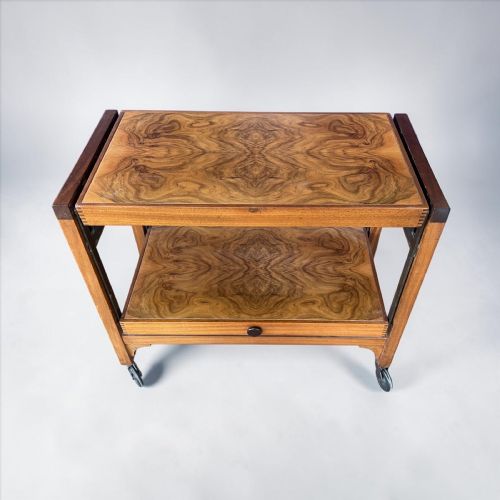
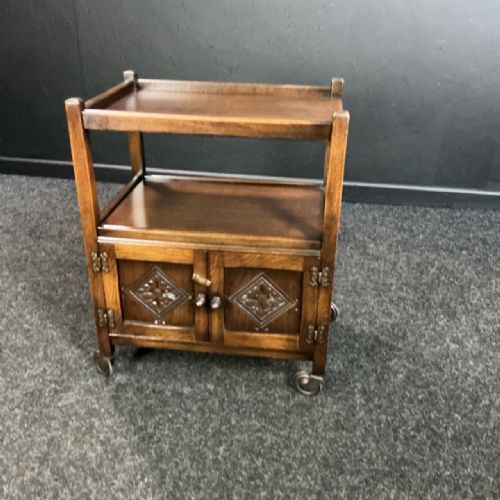
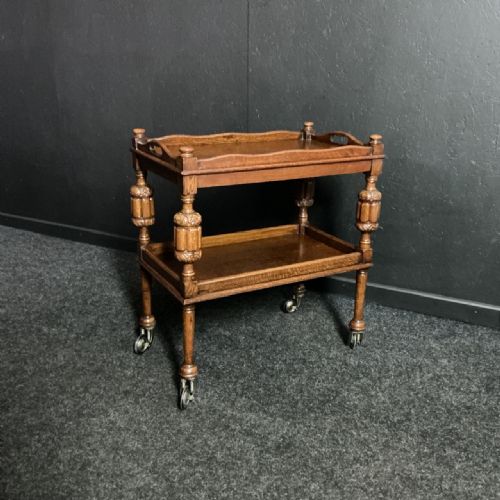






Vintage Hostess Cart
A vintage hostess cart brings mobile charm to serving drinks and afternoon tea, offering a practical piece with period character.
Vintage Hostess Cart
A vintage hostess cart serves as a mobile surface for drinks, tea, and dining accessories, taking various forms from Edwardian tea trolleys to Art Deco bar carts. You encounter these pieces across multiple periods including Victorian, Edwardian, 1920, 1930, and 1960.
The versions most common on this page span styles such as Art Deco, Jacobean Revival, Edwardian, Victorian, Mid-Century British, and Mid-Century Modern. Object types include drinks trolleys, tea trolleys, bar carts, and etageres.
Makers and materials vary widely, but standard configurations feature wheels, multiple tiers, and removable trays or folding tops designed for easy entertaining.
Materials and construction
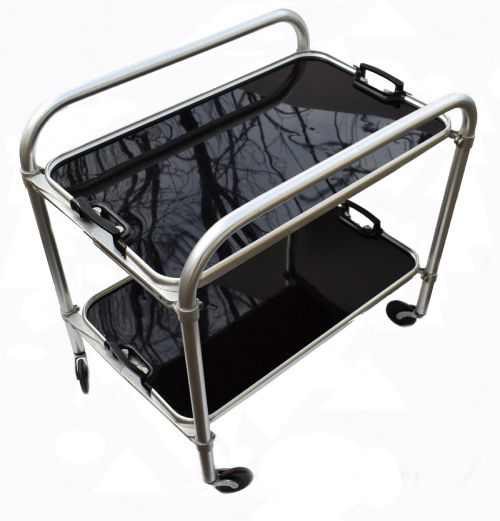
Industrial materials enter the repertoire during the 1930s, pairing chrome, aluminium, and iron with glass, mirror, and black glass surfaces.
Alternative construction techniques appear in specialist pieces, such as cane bound beech frames utilised by specific makers.
Assessing quality in service trolleys
The standard of timber selection and joinery defines the foundational quality of wooden examples, separating robust construction from lesser builds.
Metal and glass combinations depend on the integrity of the chrome finish and the clarity of fitted mirror or glass tiers.
Mechanisms such as removable trays, folding tops, dropleaf hinges, and original wheels distinguish functional design from purely decorative pieces.
Lusty of Leicester
The Vintage Hostess Cart Glossary
- Barley twist
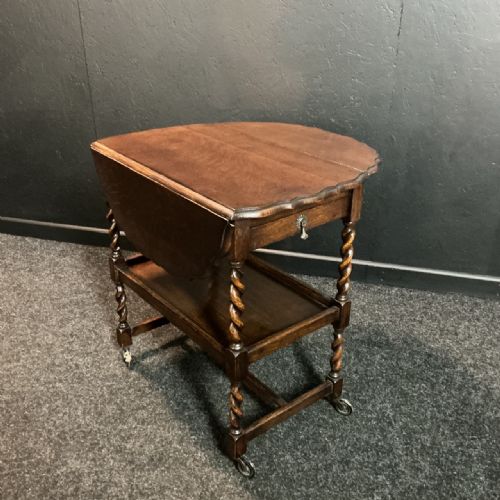
- A turned wooden furniture leg resembling a spiral or twist. This style appears frequently on Edwardian and 1920s oak tea trolleys.
- Etagere
- A set of open shelves or tiers used for displaying small objects or serving. This form crosses over into Victorian trolley designs.
- Metamorphic
- Furniture that transforms from one function to another, such as a serving trolley converting into a card table with baize lining.
- Art Deco
- A design style characterised by sleek lines, geometric shapes, and modern industrial materials. It dominates the 1930s drinks trolley selection.
- Dropleaf
- A table or trolley top with hinged flaps that fold down to save space. This mechanism provides flexibility in smaller rooms.
Vintage Hostess Cart: Frequently Asked Questions
What is a vintage hostess cart?
A vintage hostess cart is a mobile trolley designed for serving drinks, afternoon tea, and food. These pieces typically feature wheels, multiple tiers, and sometimes removable trays for easy transport between rooms.
They emerged in various forms across the Victorian, Edwardian, and mid-century periods, adapting to changing entertaining habits.
How do I date a tea trolley?
Dating a trolley involves examining the materials, hardware, and decorative style used in its construction. Heavy oak frames with barley twist legs generally point to the Edwardian era or the 1920s.
In contrast, sleek chrome frames, black glass, and mirrored tiers strongly indicate an Art Deco origin from the 1930s.
Were these carts used only for tea?
While early 20th-century examples often served afternoon tea, many variations catered to evening hospitality. The 1930s introduced dedicated bar carts and drinks trolleys specifically built for cocktail hour.
Some multi-functional models also doubled as serving tables or card tables with baize surfaces.
How do I incorporate a bar cart into modern interiors?
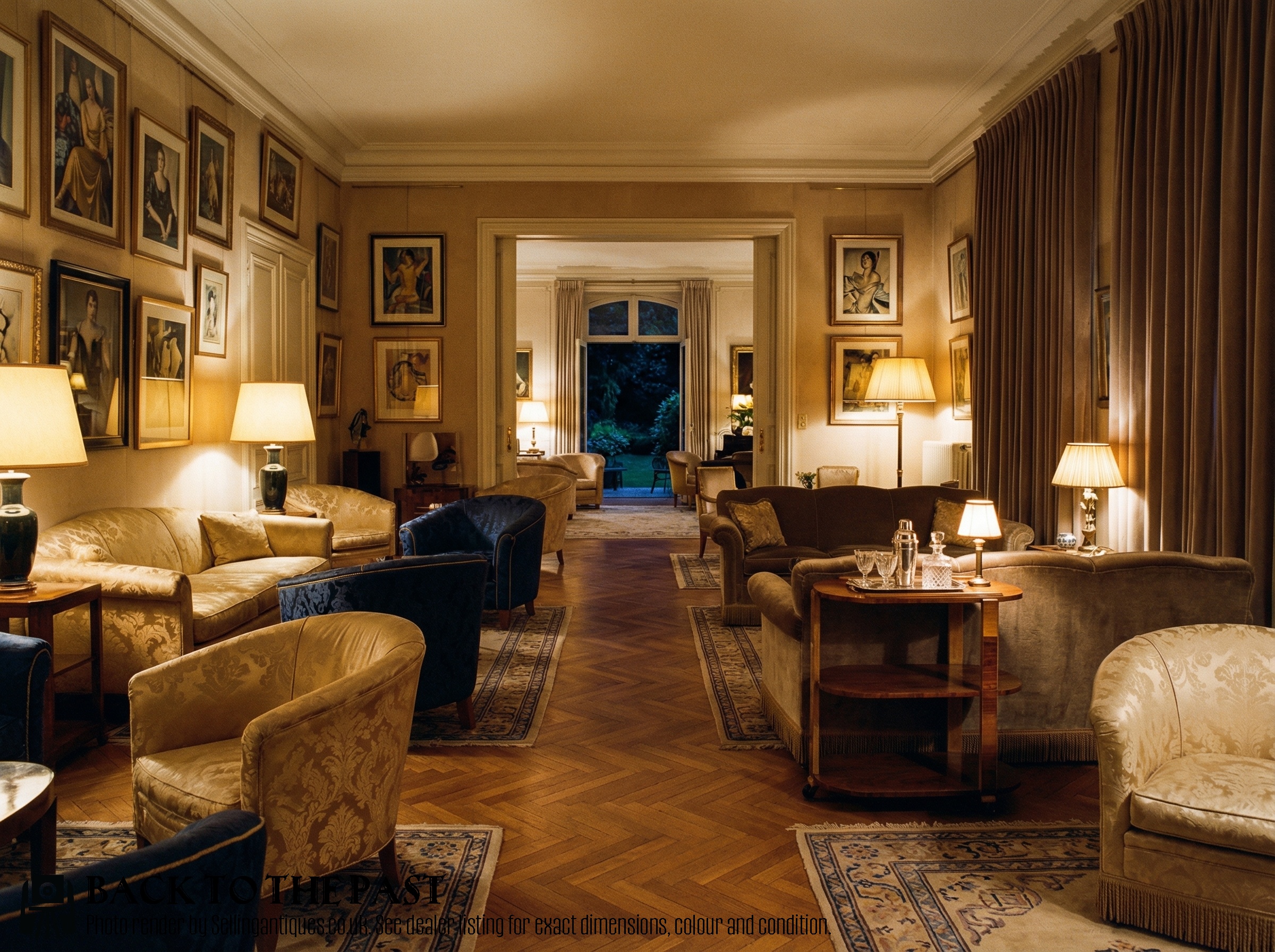
A bar cart functions well as a permanent display station for glassware, decanters, and bottles in a living room or dining space. Its mobility allows you to wheel it out easily when hosting guests.
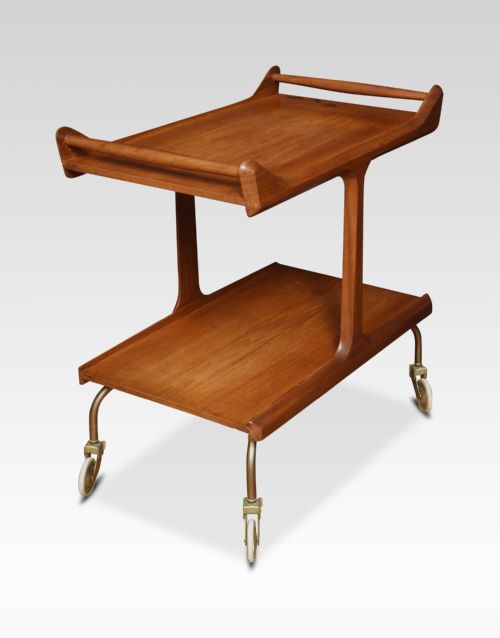
Mixing period materials like walnut or chrome with contemporary surroundings adds contrasting texture and practical surface area.