






Vintage Horn Handle Cane
A vintage horn handle cane is a practical support and a hidden blade, offering gentlemen of the nineteenth and early twentieth centuries both walking assistance and discreet protection.
Vintage Horn Handle Cane
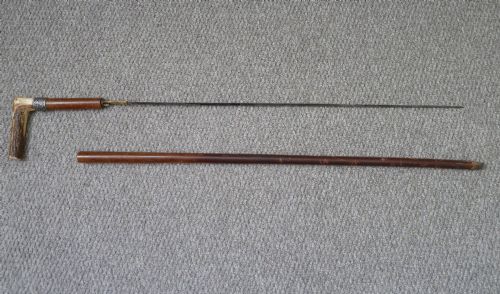
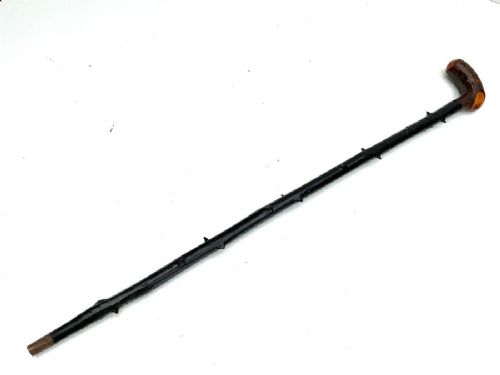
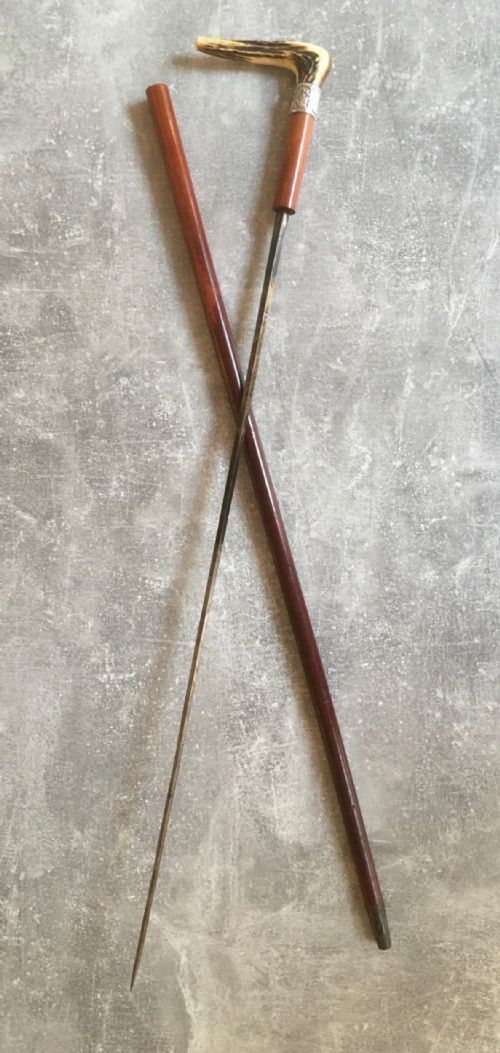
A vintage horn handle cane combines a natural horn or antler grip with shafts of malacca, rosewood, or snake-covered wood, often housing a concealed steel blade or corkscrew inside.
The pieces on this page span the Victorian, Edwardian, and early twentieth-century periods, showing regional varieties from French workshops to traditional Irish makers and British silver-collared designs.
Many examples function as gadget sticks, incorporating button releases, rabbit-shaped pommels, or hidden implements alongside their standard walking stick and riding crop forms.
Materials and construction methods
Makers shaped natural horn, antler, and bone into domed pommels or animal figures, mounting them securely onto shafts of malacca, rosewood, or exotic woods.
Metal components such as brass, silver collars, and steel blades - frequently etched Toledo steel - were integrated into the shaft with button releases or threaded mechanisms for concealment.
Vintage Horn Handle Cane Retail Price Guide 2026
Typical asking prices for vintage horn handle cane among the pieces listed under this phrase on Sellingantiques today, from the lower quarter to the upper quarter. They describe what is for sale here now, not the wider market.
One particularly imaginative nineteenth-century maker fitted a walking stick with a carved rabbit handle concealing a hidden corkscrew.
Distinctions in craftsmanship and materials
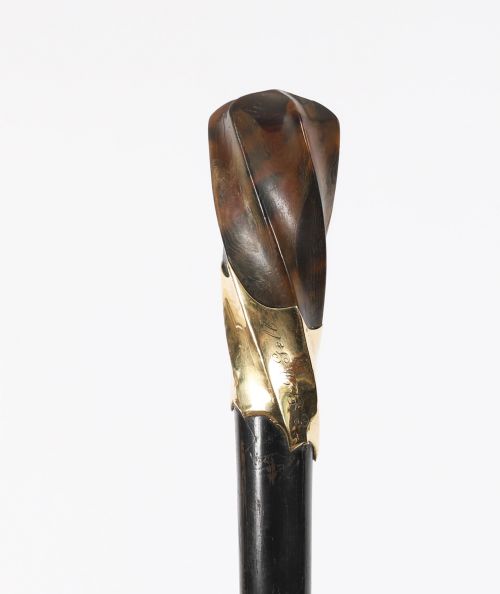
Superior examples demonstrate precise fitting between the horn handle, the collar - whether silver, gold-coloured, or plain metal - and the wooden shaft, ensuring seamless concealment of any internal blade or corkscrew.
The refinement of the carved horn or antler, the quality of the etched steel blade, and the selection of materials like malacca or shark vertebrae distinguish high-end workshop production from standard utility pieces.
Brigg
The Vintage Horn Handle Cane Glossary
- Pommel
- The rounded or decorative handle fitted to the top of a cane. This part rests in the palm of the hand during use.
- Malacca
- A type of rattan cane featuring distinctive rings or nodes along the shaft. It is prized for its resilience and flexibility.
- Sword stick
- A walking cane designed with a hidden blade concealed within the wooden shaft. These were popular for personal defence in the nineteenth century.
- Gadget stick
- A walking cane that incorporates a hidden functional tool, such as a corkscrew, whistle, or blade. They reflect inventive Victorian and Edwardian craftsmanship.
- Collar
- The metal band placed where the handle joins the shaft. Collars are frequently made of silver or brass and sometimes bear maker marks or initials.
Vintage Horn Handle Cane: Frequently Asked Questions
How were sword sticks used?
Sword sticks served as dual-purpose objects providing walking support and personal protection. Gentlemen carried them during the Victorian and Edwardian eras for everyday security.
The hidden blade remained secured inside the wooden shaft until released by a button mechanism.
How do I identify the period?
Dating relies on materials, hallmarks on silver collars, and construction styles associated with Victorian and Edwardian manufacturing methods. Nineteenth-century examples often feature specific woods like malacca or rosewood.
Maker marks and engraved dates provide precise chronological markers for individual pieces.
What materials make up the shaft?
Shafts utilise natural materials including malacca cane, rosewood, and specialised organic forms like shark vertebrae. Covered hafts using snakeskin also appear in French designs.
Metal components such as steel, brass, and silver provide structural reinforcement and decorative collars.