

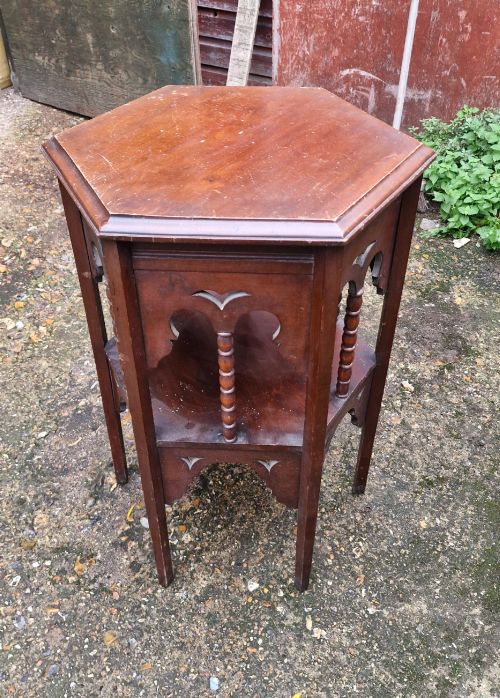
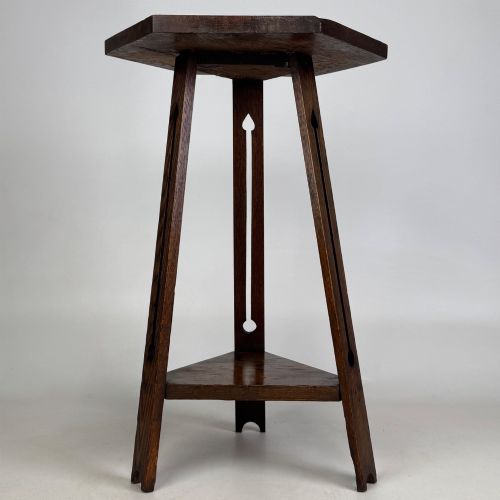



Vintage Hexagonal Table
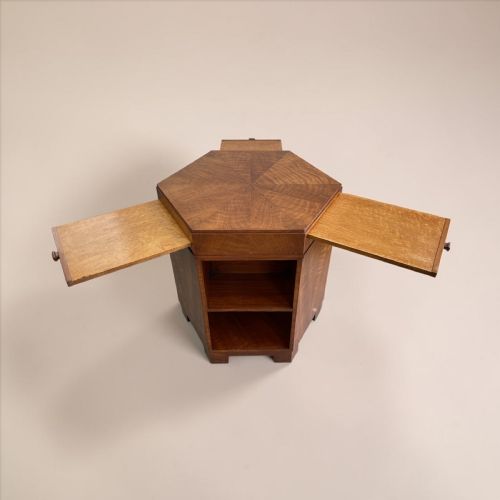
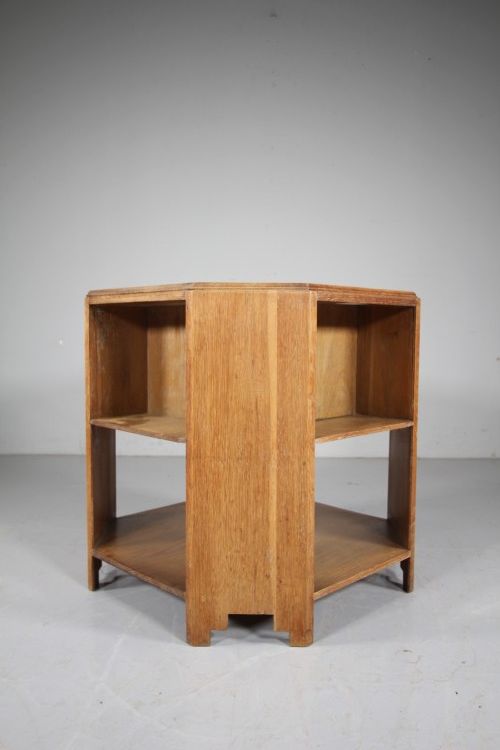
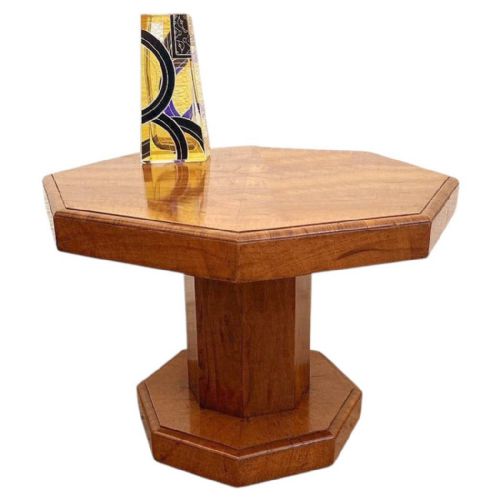
A vintage hexagonal table brings geometric lines and compact surface area into a room, serving easily as a side piece or coffee table.
Vintage Hexagonal Table
A vintage hexagonal table appears across multiple periods from the nineteenth century through to the nineteen-thirties, taking the form of side tables, occasional tables, coffee tables, and games tables. These six-sided items offer distinct surface arrangements that differ from standard rectangular or circular furniture.
The selections on this page span styles such as Art Deco, Victorian, Moorish Revival, Arts and Crafts, and Jacobean Revival. Oak and walnut emerge frequently, paired occasionally with decorative veneers or intricate inlays.
Makers and retailers like Heal's and Liberty & Co appear alongside simpler vernacular pieces. Buyers encounter both utilitarian oak items and decorative walnut marquetry designs.
Materials and construction methods
Timber selection dictates the character of these items, with solid oak and walnut forming the structural core of many examples. Walnut veneer and marquetry inlay provide decorative surface detail on specific period pieces.
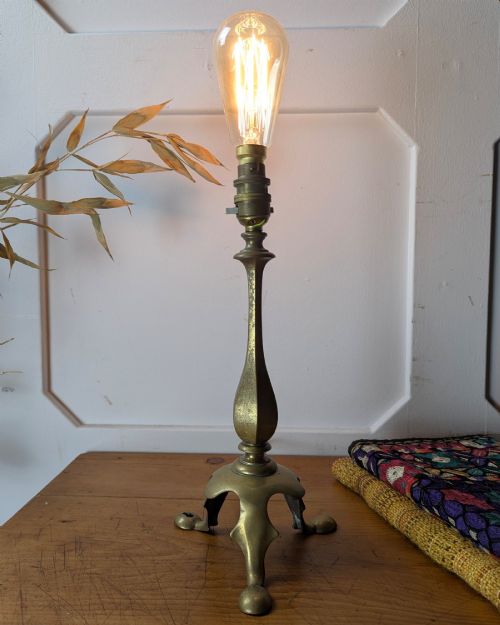
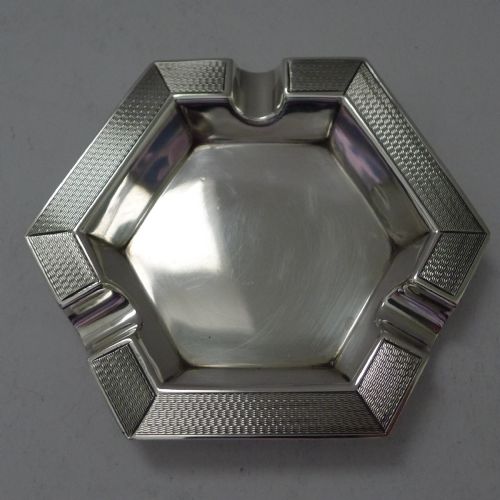
Metal elements such as brass and nickel appear in related lamps and candlesticks, whilst mother-of-pearl and sterling silver accent individual decorative objects. Joinery techniques reflect the prevailing style of manufacture, from Arts and Crafts solidity to Art Deco geometric precision.
Vintage Hexagonal Table Retail Price Guide 2026
Typical asking prices for vintage hexagonal table among the pieces listed under this phrase on Sellingantiques today, from the lower quarter to the upper quarter. They describe what is for sale here now, not the wider market.
Some tables double as games boards, proving that Victorians took their parlour entertainment strictly hexagonal.
Distinguishing quality in six-sided tables
Quality rests upon the integrity of the timber and the precision of the six-sided geometry. Superior examples display careful grain alignment across the top and well-balanced proportions in the legs and under tier.
Inlaid and veneered surfaces separate standard production from finer workshop output. The execution of marquetry and the retention of original surface finishes significantly influence the character of each piece.
William Neale·Liberty & Co·Muller Bros·Heals
The Vintage Hexagonal Table Glossary
- Marquetry
- Decorative patterns formed by fitting together small pieces of veneer into wooden surfaces. This technique adds pictorial or geometric complexity to table tops.
- Occasional table
- A small, movable table designed for specific, intermittent use rather than central placement. These pieces function easily beside chairs or sofas.
- Torchere
- A tall, slender stand originally designed to hold a candle or torch. Later examples serve primarily as plant stands.
- Arts and Crafts
- A design movement prioritising traditional craftsmanship and simple, honest construction. Pieces from this tradition often feature exposed joinery and plain oak.
Vintage Hexagonal Table: Frequently Asked Questions
Where should I place a hexagonal table?
These pieces fit comfortably beside a sofa or armchair where square tables might feel too bulky. Their angled geometry helps break up straight lines in a room.
They also function effectively as corner tables or central lamp stands without obstructing walkways.
How do I identify an Art Deco table?
Art Deco pieces from the nineteen-thirties often feature clean geometric lines and smooth walnut or oak surfaces. They lean towards streamlined simplicity rather than heavy period ornamentation.
Makers like Heal's defined this aesthetic with functional forms and refined timber selection.
What is Moorish Revival style?
Moorish Revival furniture incorporates intricate geometric patterns and often utilises mother-of-pearl or bone inlay. These pieces draw inspiration from Islamic architecture and design.
Such items introduce rich texture and decorative contrast to standard interior schemes.
Are these tables suitable for daily use?
Solid timber construction in oak and walnut provides durable surfaces for everyday placement of lamps and books. Simple maintenance keeps the polished wood protected.
Care should be taken with veneered or inlaid surfaces to avoid excess moisture and heat.