

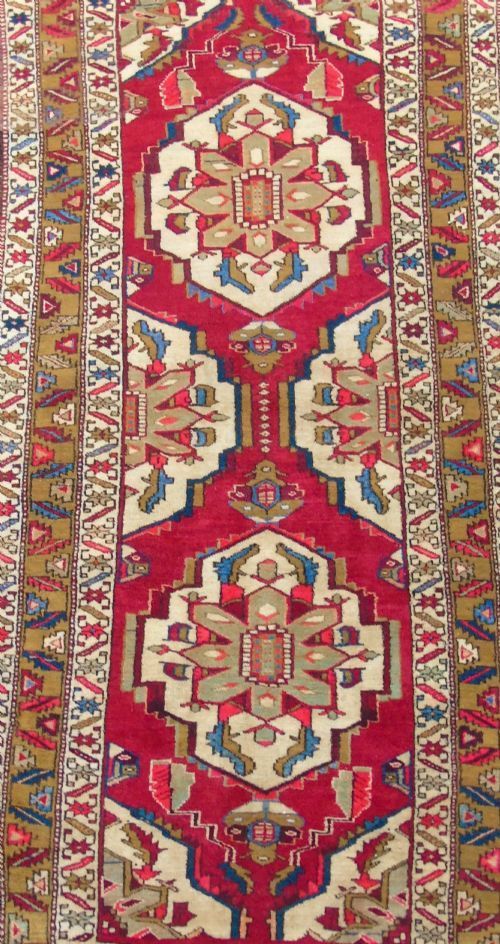
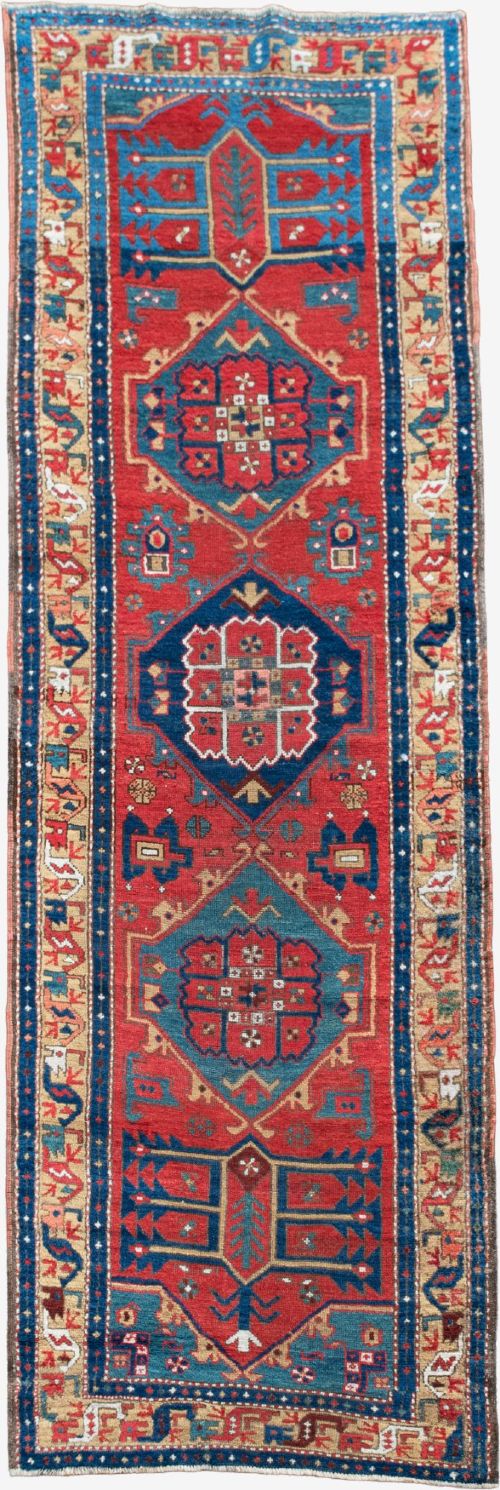
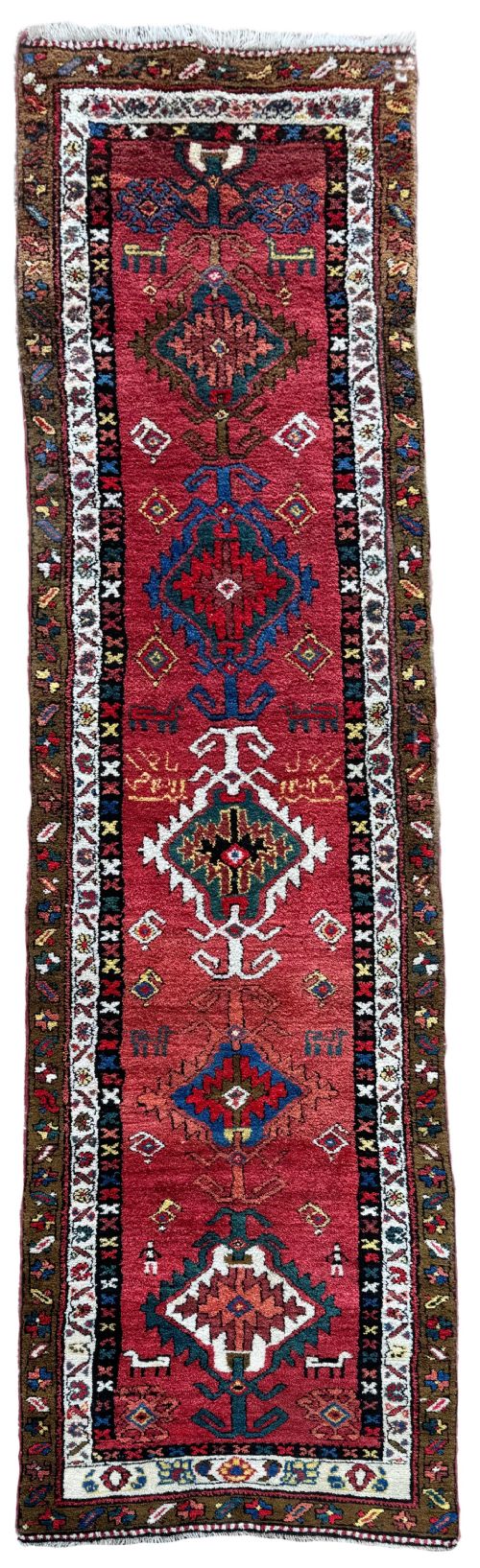


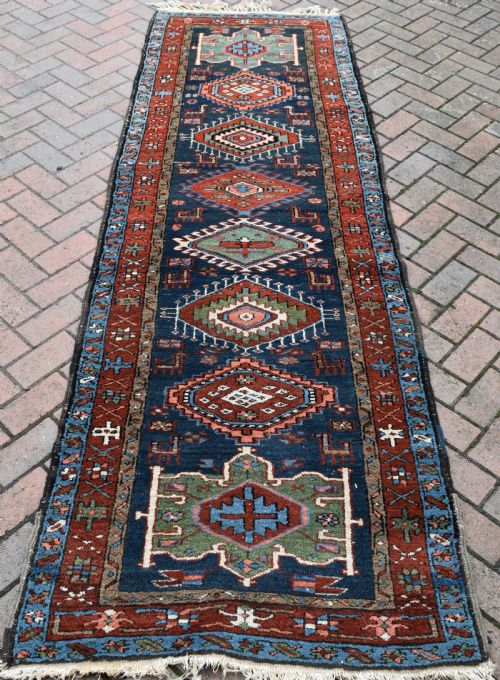

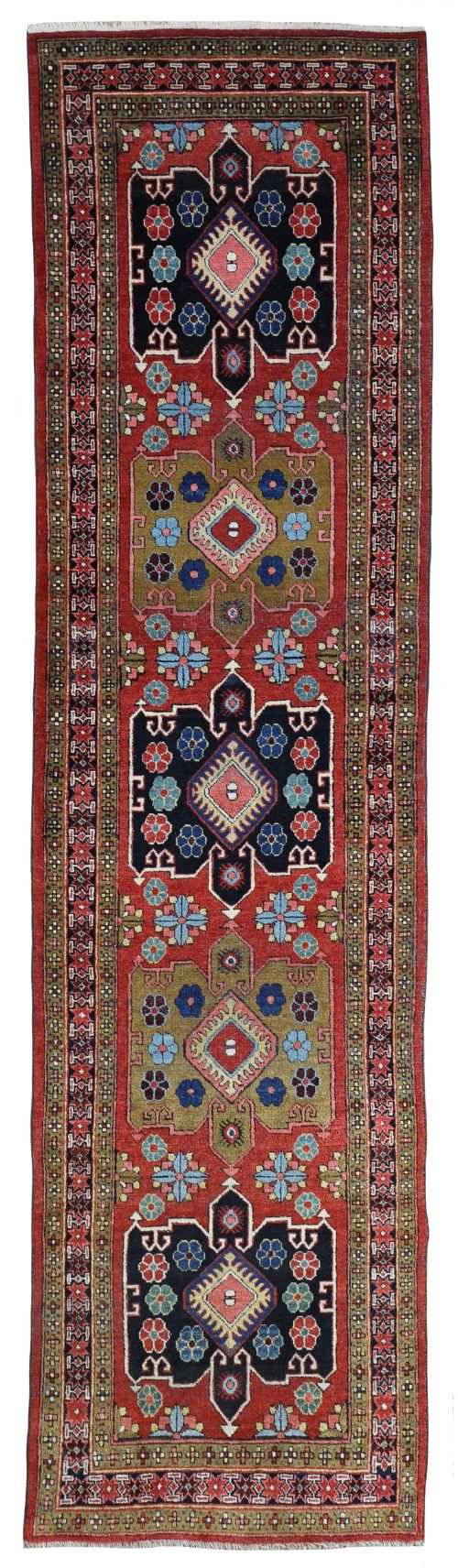

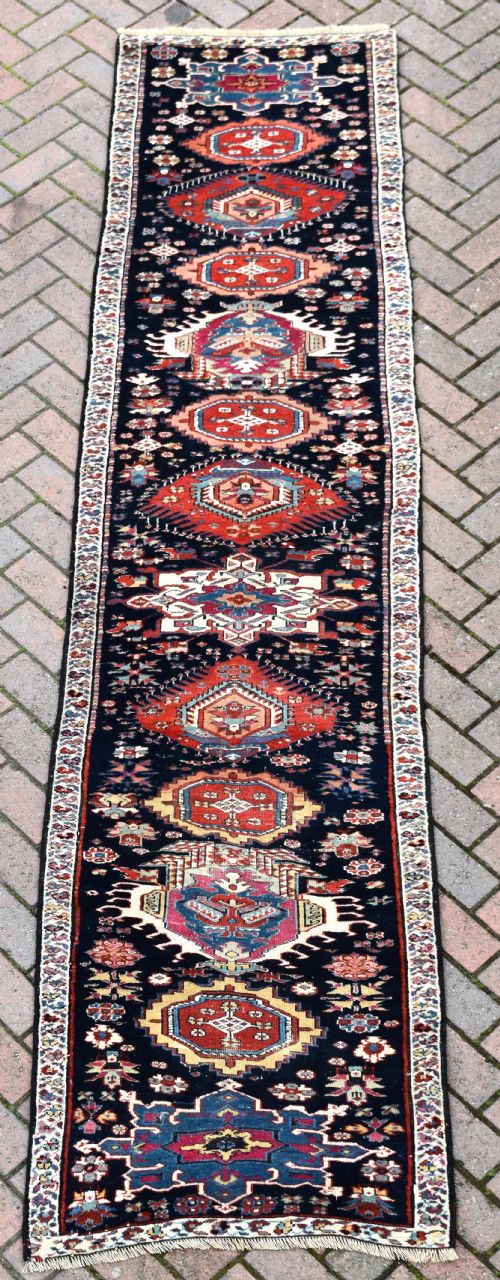
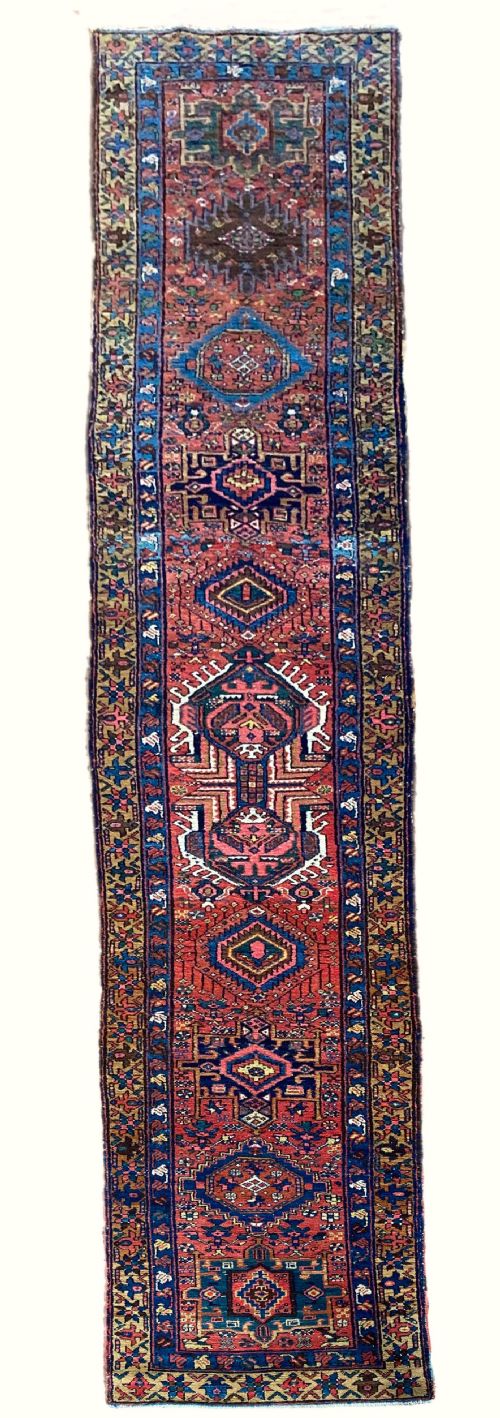

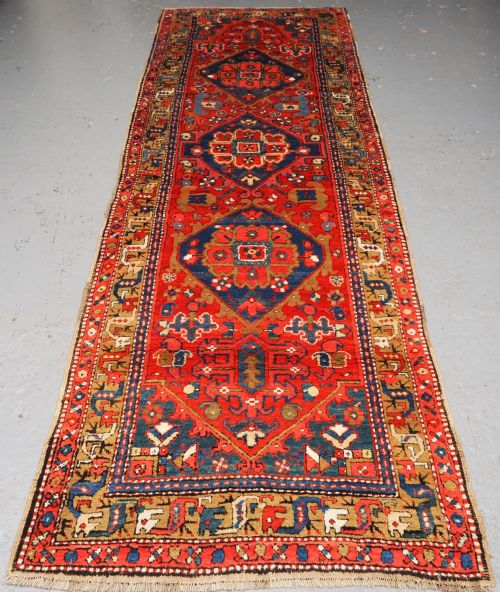
Vintage Heriz Corridor Rug
A vintage heriz corridor rug brings enduring North West Persian warmth to long halls with bold geometry and rich wool.
Vintage Heriz Corridor Rug
A vintage heriz corridor rug serves as a durable long runner designed for narrow spaces like hallways and galleries. These pieces originate from North West Persia and arrive in formats spanning from the late nineteenth century into the early twentieth century.
The most common form on this page is the narrow carpet runner measuring over three metres in length. Stylistic variations encompass traditional Persian designs, tribal motifs, and distinctive medallion layouts originating from Heriz and neighbouring centres like Karaja and Hastrud.
How they were made
Weavers constructed these runners using hand-spun wool for the pile, chosen for its resilience under heavy foot traffic in corridors. Cotton foundations provide structural stability and strength along the length of the rug.
Natural dye traditions dictate the palette, binding the wool fibres securely through time-honoured knotting techniques. This combination of materials creates a dense, hardwearing textile suited to sustained domestic use.
Vintage Heriz Corridor Rug Retail Price Guide 2026
Typical asking prices for vintage heriz corridor rug among the pieces listed under this phrase on Sellingantiques today, from the lower quarter to the upper quarter. They describe what is for sale here now, not the wider market.
Listings span from 1880 to 1920, incorporating wool and cotton materials across Persian Heriz, tribal, and traditional styles.
What varies in quality
The distinction between tiers rests upon the precision of the weave and the clarity of the geometric medallion design. Denser knotting yields sharper lines in the motifs and greater longevity for the pile.
Proportion and scale also separate examples, with exceptionally narrow widths or balanced large formats showing superior design execution. Preserved structural integrity across the cotton foundation determines the upper echelon of these runners.
Waring and Gillow
The Vintage Heriz Corridor Rug Glossary
- Heriz
- A region in North West Persia known for producing large carpets and long runners with bold geometric medallions.
- Runner
- A long, narrow carpet format specifically proportioned for corridors, hallways, and staircases.
- Karaja
- A village in North West Persia closely associated with Heriz production, noted for tribal geometric runner designs.
- Medallion
- A central ornamental design motif placed in the field of the rug, often geometric in these weaves.
- Pile
- The upright yarn loop surface of the rug that forms the tactile layer walked upon.
Vintage Heriz Corridor Rug: Frequently Asked Questions
Where do vintage heriz corridor rugs come from?
These rugs originate from North West Persia, specifically from Heriz and surrounding weaving districts such as Karaja and Hastrud.
Local workshops and village weavers produced these runners during the late nineteenth and early twentieth centuries using regional geometric designs.
How were these long rugs used originally?
They served primarily as floor coverings for corridors, hallways, and narrow galleries where foot traffic required durable protection.
The elongated format directed movement through homes while adding warmth and colour to transitional spaces.
What materials make up a vintage heriz runner?
The surface pile consists of sturdy wool, selected for its ability to withstand heavy daily use in busy hallways.
Foundation threads beneath the wool are typically made of cotton, providing the necessary tension and structural strength for long formats.
How do you style a corridor runner?
Position the runner centrally in a hallway or landing to anchor the space and complement existing wood or tile floors.
Allow enough clearance around the edges of the rug to showcase the timber flooring while protecting the main walking path.