
Vintage Hat Pegs
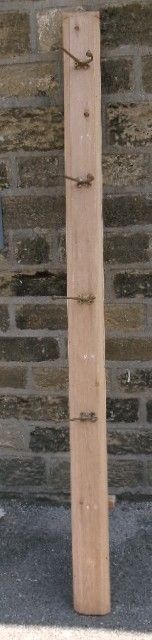
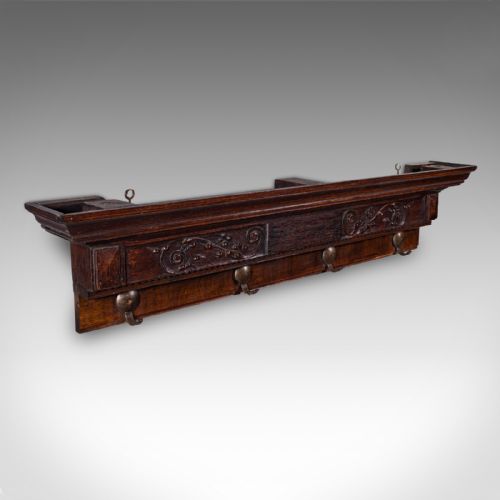
These vintage hat pegs and wall racks bring sturdy utility and period character to an entrance hall, combining brass, iron, and hardwoods.
Vintage Hat Pegs
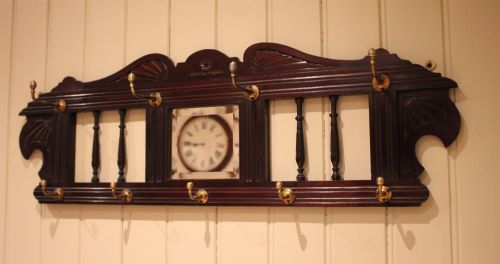
Vintage hat pegs encompass wall-mounted coat racks, individual hooks, hall stands, and mirrors with integrated hooks designed for everyday garments and headwear. These fixtures serve as practical storage for entrance halls, cloakrooms, and reception areas in domestic settings.
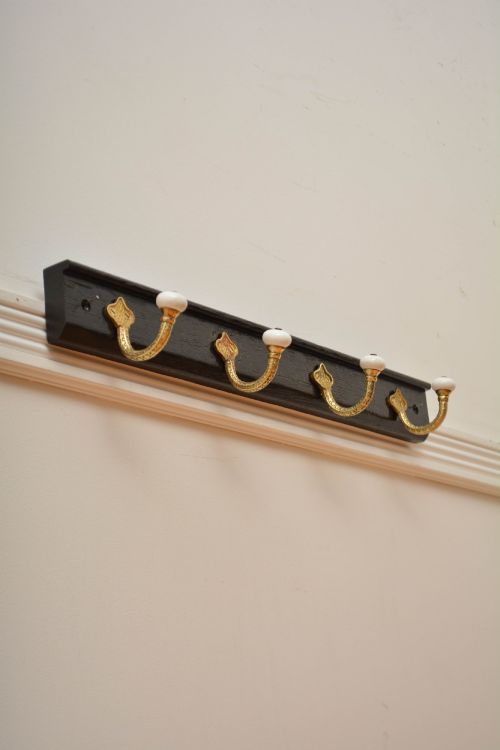
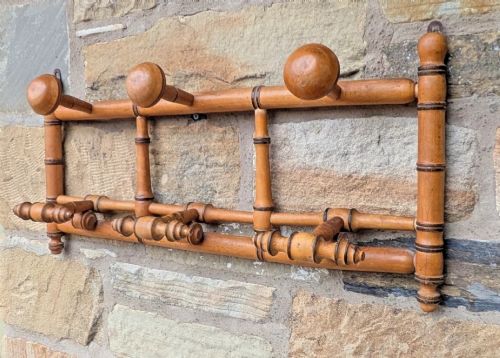
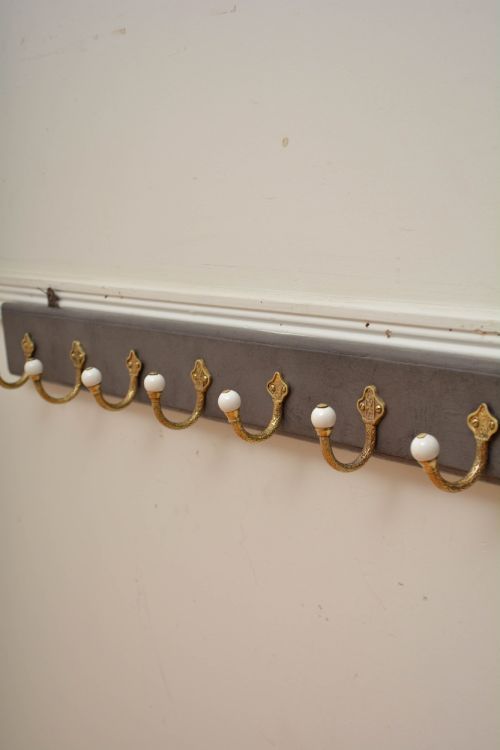
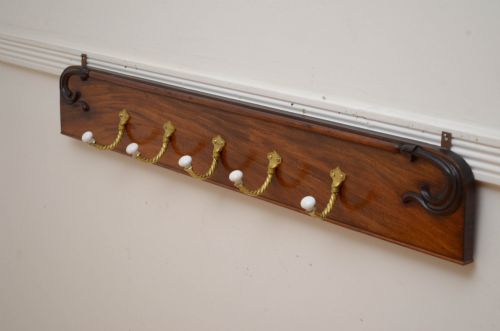
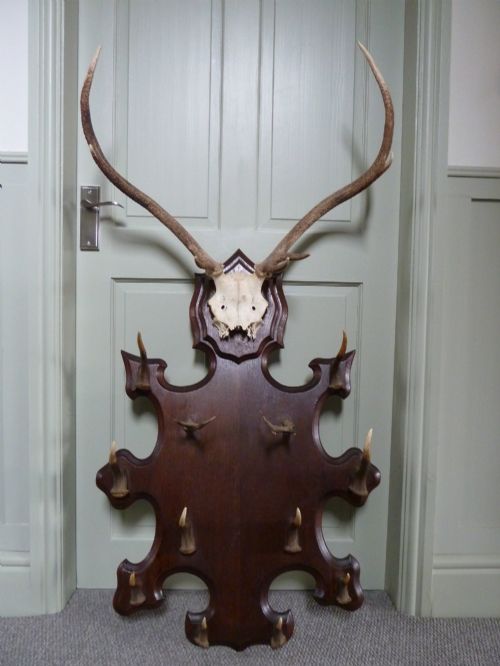
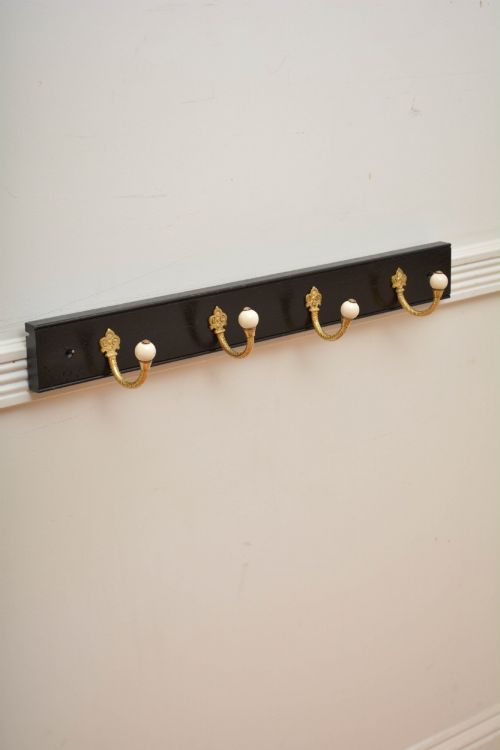
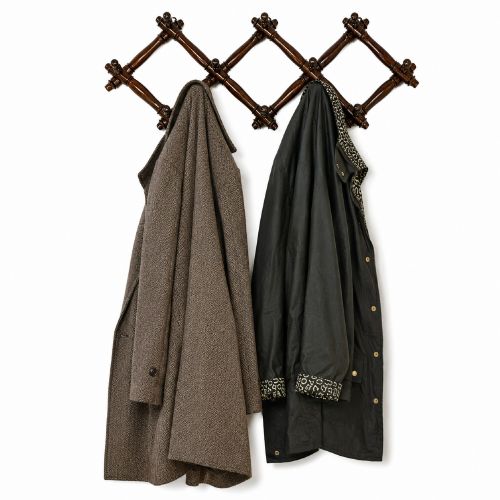
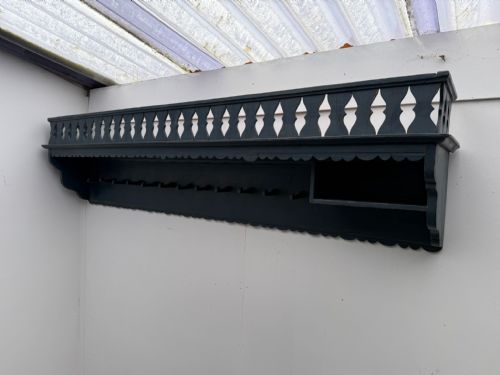
The selections span the Victorian, Edwardian, and Art Deco periods, ranging from simple timber backboards fitted with brass and ceramic hooks to elaborate country house stags horn designs and French faux bamboo styles.
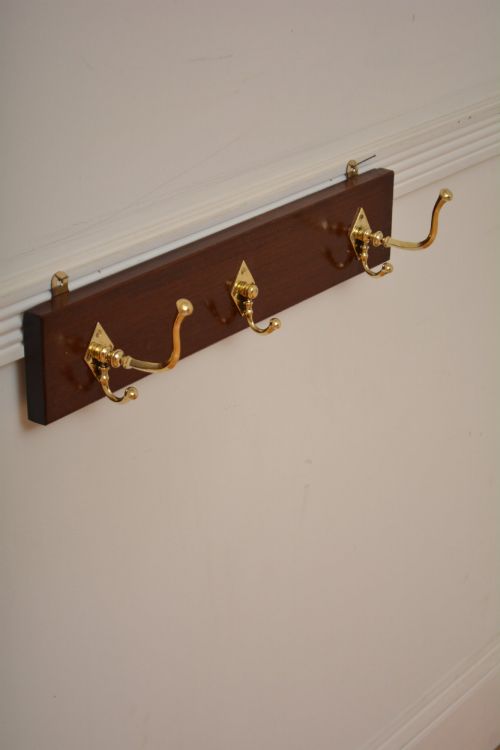
Mahogany, oak, and pine form the most common backboards, while brass, bronze, cast iron, and ceramic provide the robust protruding hooks necessary for hanging heavy winter overcoats and brimmed hats.
How they were made
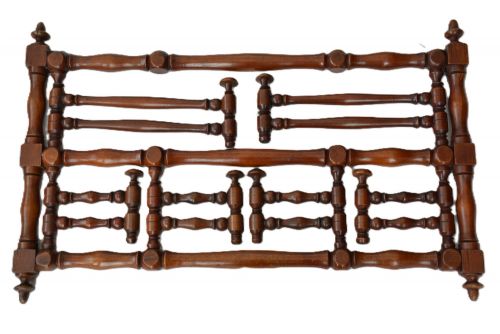
Makers utilised solid timbers such as mahogany, golden oak, walnut, and pine for the mounting boards, frequently applying an ebonised finish or turning the wood into twisted rope patterns and bentwood shapes.
Metalwork involved casting brass, bronze, and iron into decorative shields, double hooks, and mounting plates, often incorporating ceramic centres or porcelain tips to protect delicate fabrics from snags.
The listings show materials spanning brass, mahogany, glass, oak, ceramic, metal, beech, and wood across Victorian, Edwardian, and Art Deco periods.
What varies in quality
Quality rests upon the weight and casting finish of the metal hooks, alongside the selection of timber used for the backboard; heavier cast brass and solid hardwoods indicate higher grade workshop production.
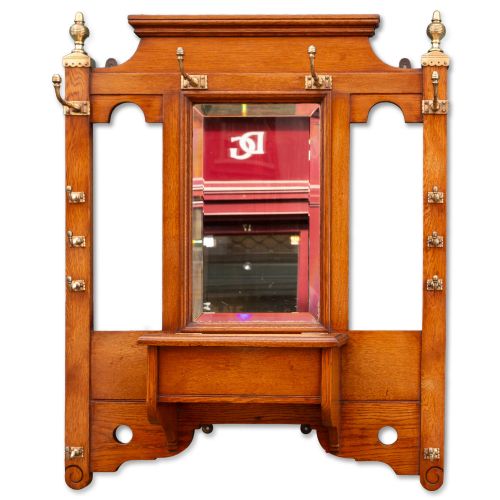
The integration of decorative elements, such as bevelled mirror plates, hand-carved details, or stag horn mounts, separates standard utility pieces from grander hall stands designed for prominent country house reception rooms.
The Vintage Hat Pegs Glossary
- Backboard
- The horizontal timber panel that supports the individual hooks and secures the entire assembly to a wall. It is frequently fashioned from mahogany, oak, or pine.
- Coat Stand
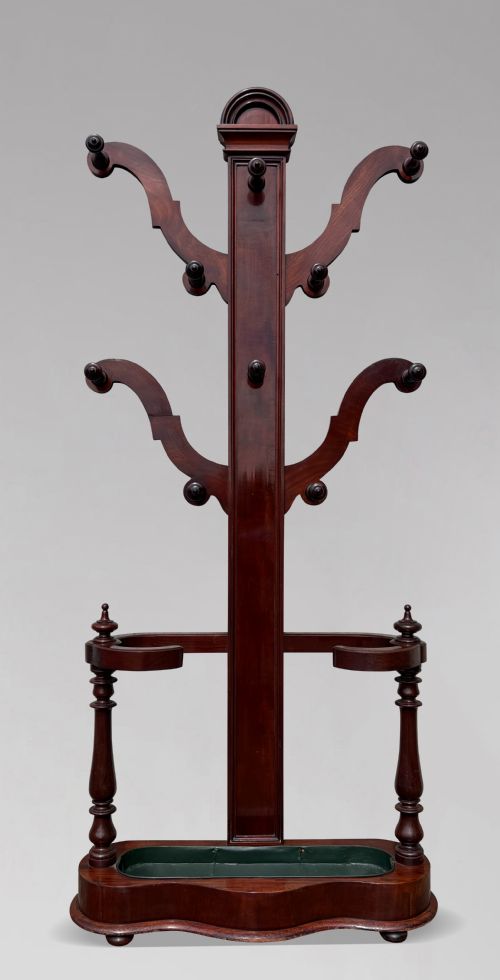
- A freestanding vertical post with multiple arms at the top for hanging hats and coats, distinct from wall-mounted racks. These often utilise bentwood or heavy timber construction.
- Hall Stand
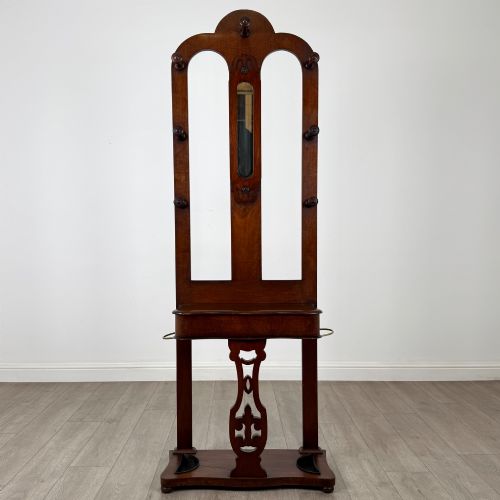
- A large entrance hall item combining a central mirror, umbrella stands, glove boxes, and mounted hat pegs. They are typically executed in Victorian oak or mahogany.
- Ebonised
- Wood treated with a dark stain or finish to imitate expensive ebony. This technique was popular during the Victorian era for contrast against polished brass hooks.
- Bentwood
- Timber softened by steam and bent into curved structural forms. This technique created lightweight yet resilient frames for turn-of-the-century coat racks.
Vintage Hat Pegs: Frequently Asked Questions
How do I hang a heavy coat rack securely?
Wall-mounted racks require solid fixing into masonry or wall studs to support the weight of heavy winter overcoats. Using appropriate wall plugs and screws through the pre-drilled fixing holes ensures the timber backboard remains stable under daily loads.
Positioning the rack at a practical height allows household members and guests to reach the hat pegs easily without straining the fixings or damaging surrounding wall plaster.
Can I use these in a modern bathroom?
These fixtures suit hallways and cloakrooms best, where brass, iron, and hardwood endure normal indoor humidity. Placing wooden backboards in unventilated bathrooms risks moisture damage to the timber and corrosion on older metal hooks.
Ensure any piece chosen for damp environments is wiped down promptly after exposure to water to preserve the original finish of the metal and ceramic components.
How do I clean old brass hooks?
Dust the timber and metal components gently with a dry, soft cloth to remove everyday surface particles. Avoid harsh chemical polishes that strip away the aged patina accumulated over the Victorian and Edwardian decades.
If the brass requires brightening, apply a mild metal cleaner carefully with a cotton bud to prevent staining the surrounding oak, mahogany, or ebonised wood backboard.
What is the difference between a hall stand and a coat rack?
A coat rack is a compact wall-mounted board fitted with hooks for garments and hats. It occupies minimal space in narrow corridors and reception areas.
A hall stand is a substantial freestanding piece of furniture that incorporates a mirror, umbrella wells, and sometimes a small bench or storage compartment alongside the hat pegs.