




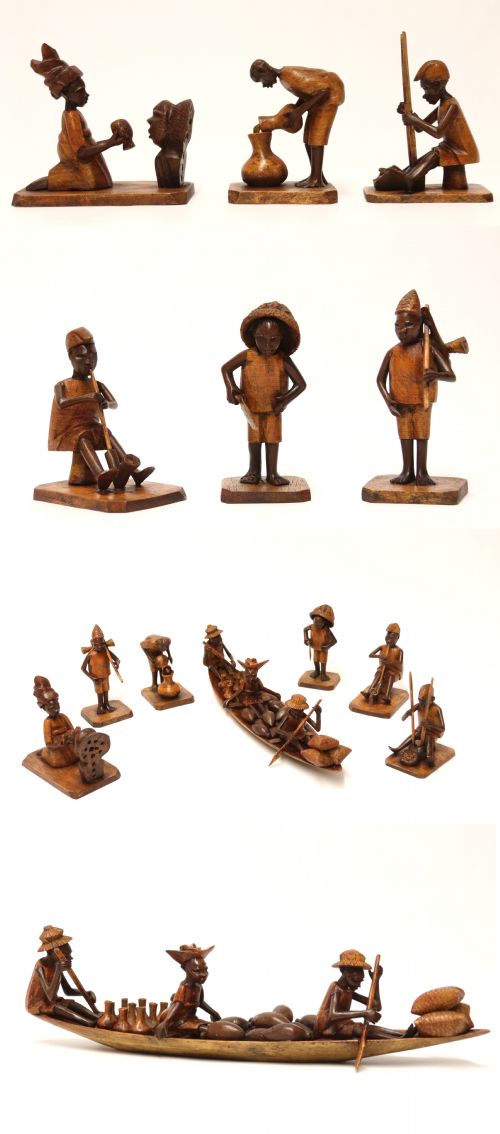

Vintage Hardwood Figures
These vintage hardwood figures range from Chinese deities and African tribal subjects to detailed animal studies crafted across the nineteenth and early twentieth centuries.
Vintage Hardwood Figures
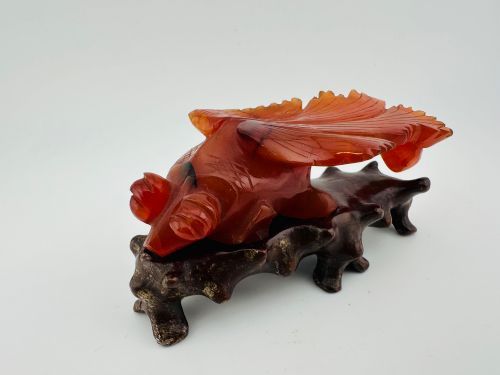
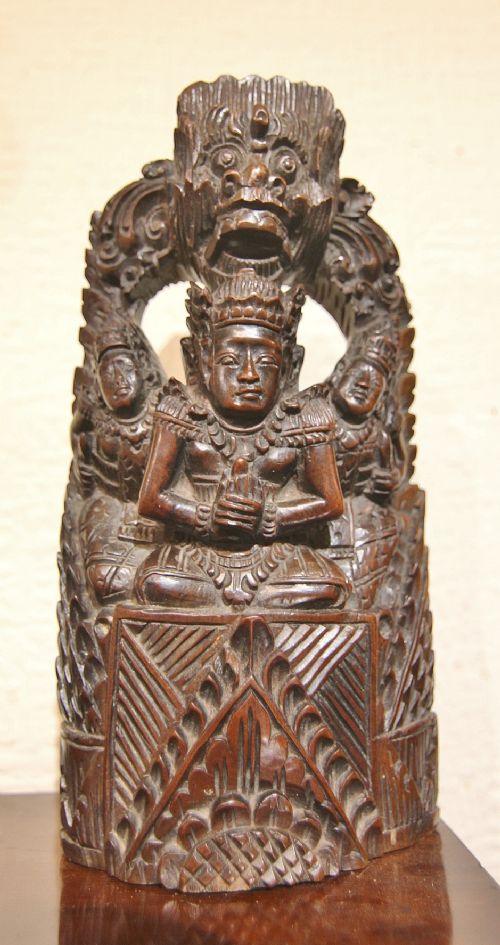
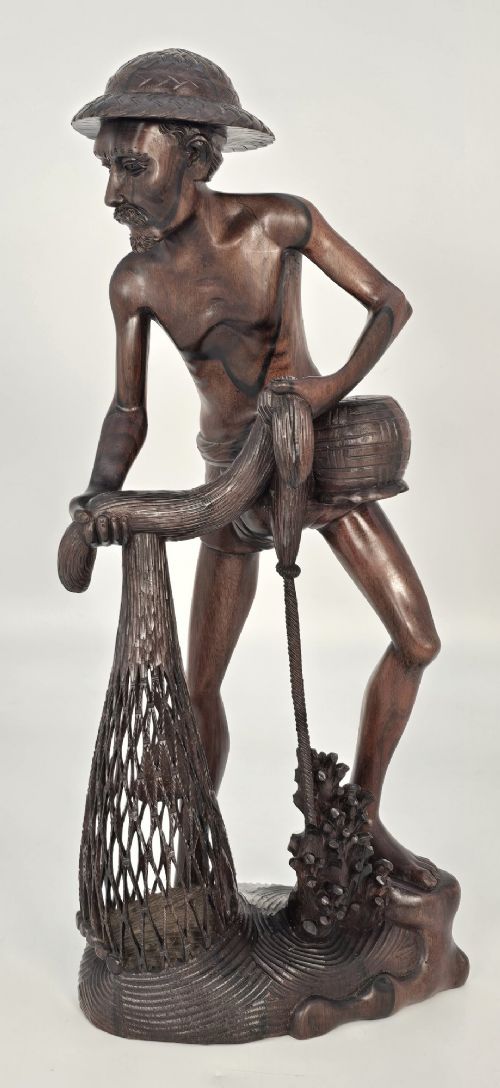
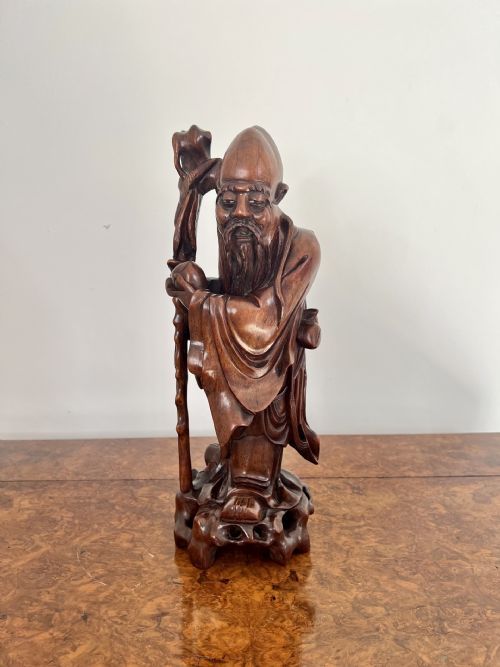
When buyers search for vintage hardwood figures, they encounter a diverse selection of sculptural carvings originating from international traditions, spanning periods from the late nineteenth century through to the mid-twentieth century. The selection includes human figures such as fishermen, deities, and classical torsos, alongside animal studies depicting elephants, fish, panthers, and birds.
The objects frequently serve decorative and ceremonial roles, incorporating regional artistry from Chinese Qing Dynasty workshops, Balinese carvers, African tribal regions, and Anglo-Indian Raj period studios. Buyers are most likely to meet Chinese carved figures on stands, alongside regional animal and deity sculptures produced between eighteen-eighty and nineteen-forty.
How they were made
Makers utilised dense timbers such as rosewood and ebony, alongside general hardwood and root wood, shaping the material with hand-carving techniques. Certain pieces incorporate supplementary materials like bone and brass details or mounted hardstone and jade elements.
Surfaces receive detailed chiselling to define drapery, feathers, musculature, and facial expressions, often finished with fitted stands for display. The execution relies entirely on manual woodworking skills applied to dense, durable timbers.
Vintage Hardwood Figures Retail Price Guide 2026
Typical asking prices for vintage hardwood figures among the pieces listed under this phrase on Sellingantiques today, from the lower quarter to the upper quarter. They describe what is for sale here now, not the wider market.
The listings span eight distinct decades of production, beginning in eighteen-eighty and extending to nineteen-forty.
What varies in quality
The distinction between standard and superior pieces rests on the precision of the carving and the natural character of the timber. Master carvers achieved depth and anatomical accuracy in human and animal subjects, whereas simpler workshop items display broader tool marks and less defined proportions.
Proportion and the integration of fitted bases also differentiate the items, with finer examples demonstrating careful attention to grain direction and balanced composition. The inclusion of complex multi-figure arrangements or delicate pierced detailing elevates the ambition of the carving.
The Vintage Hardwood Figures Glossary
- Hardwood
- Timber derived from broad-leaved trees, offering high density and durability suitable for detailed sculptural work. Rosewood and ebony fall into this category.
- Root wood
- Timber section taken from the root mass of a tree, utilised by carvers for its irregular, gnarled grain patterns which dictate the final form of the sculpture.
- Raj period
- The era of British rule in the Indian subcontinent, influencing decorative arts and wood carvings produced for export and domestic collections during the nineteenth and early twentieth centuries.
- Qing Dynasty
- The final imperial dynasty of China, spanning from sixteen-forty-four to nineteen-twelve, associated with traditional carved figures and scholarly decorative objects.
- Artists lay figure
- An articulated wooden mannequin utilised by painters and sculptors to study human anatomy and drape garments correctly during composition.
Vintage Hardwood Figures: Frequently Asked Questions
How do I identify Chinese hardwood figures?
Chinese hardwood figures often depict traditional subjects such as fishermen, deities, and Mandarin ducks, frequently mounted on fitted wooden stands. Many pieces reflect Qing Dynasty or Republic Period conventions through their posture and attire.
Material choice also aids identification, with carvers utilising dense rosewood or root wood to create detailed sculptures. Look for characteristic facial carving and polished dark grain finishes typical of these regional workshops.
What periods do these carvings cover?
The listings span from the late nineteenth century through to the nineteen-forties, covering periods such as the Raj era in India and the early twentieth century globally. Pieces from eighteen-eighty to nineteen-forty represent the primary manufacturing dates seen in these sculptural works.
Earlier nineteenth-century examples often display traditional folk art or imperial Chinese motifs, while pieces from the nineteen-twenties and thirties occasionally reflect art deco influences or tribal export styles. Dating relies on stylistic conventions and recorded period origins.
Were these figures made for export?
Many hardwood sculptures, particularly those from Chinese and Anglo-Indian workshops, were produced during the nineteenth and early twentieth centuries for international markets and travellers. These pieces combined traditional regional iconography with forms suited to Western domestic display.
Tribal carvings from African regions and figures from Bali also circulated through international trade routes during this period. The presence of fitted stands on Asian carvings often indicates items created for export display.
How should I clean antique wood carvings?
Antique hardwood carvings require gentle dusting with a dry, soft brush to remove debris from carved crevices without damaging the surface patina. Avoid using water, harsh detergents, or modern polishes that can penetrate the grain and alter the timber's appearance.
Maintaining stable humidity levels prevents the dense wood from drying out and cracking over time. Occasional application of appropriate microcrystalline wax can protect the surface if the timber appears dry.