





Vintage Hanging Shelving
These vintage hanging shelving pieces lift storage off the floor entirely, bringing timber and glass display right onto the wall.
Vintage Hanging Shelving
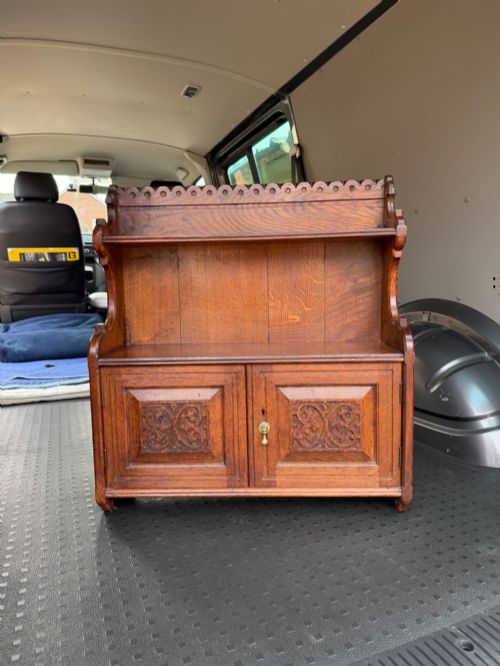
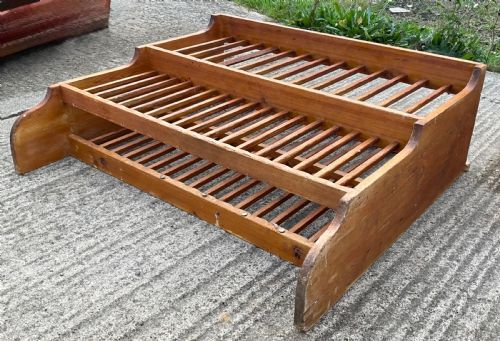
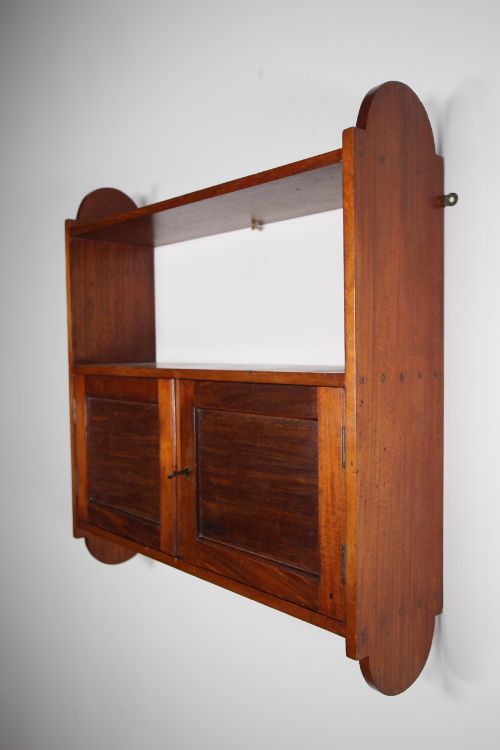
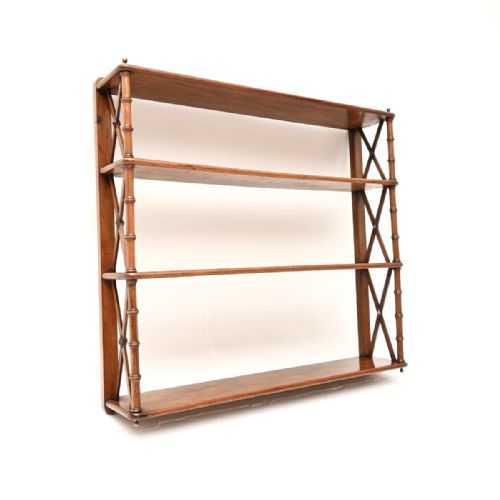
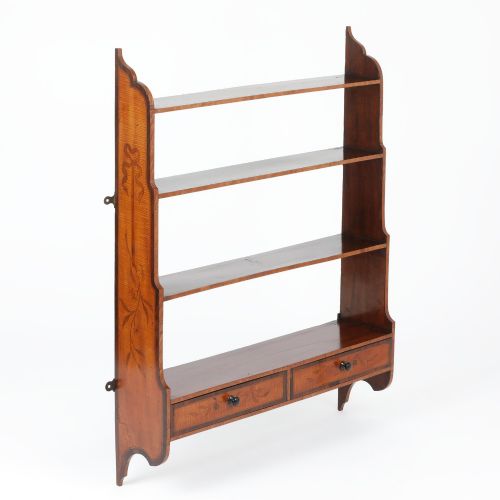
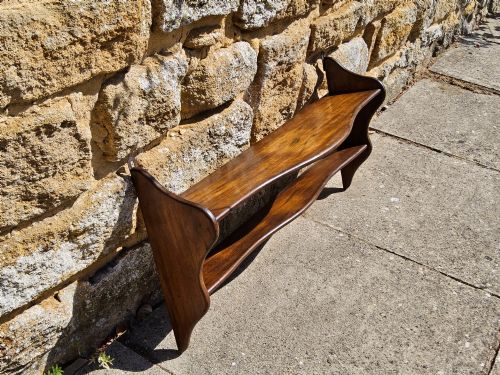
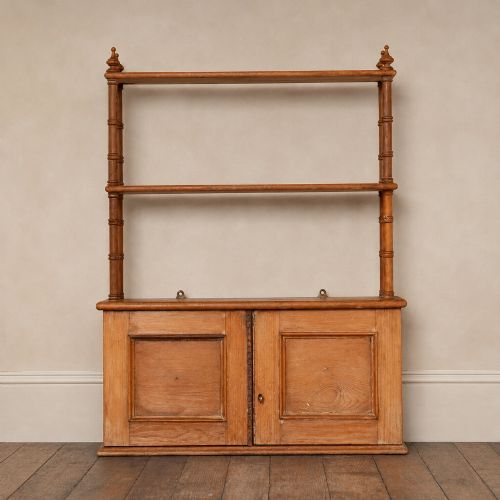
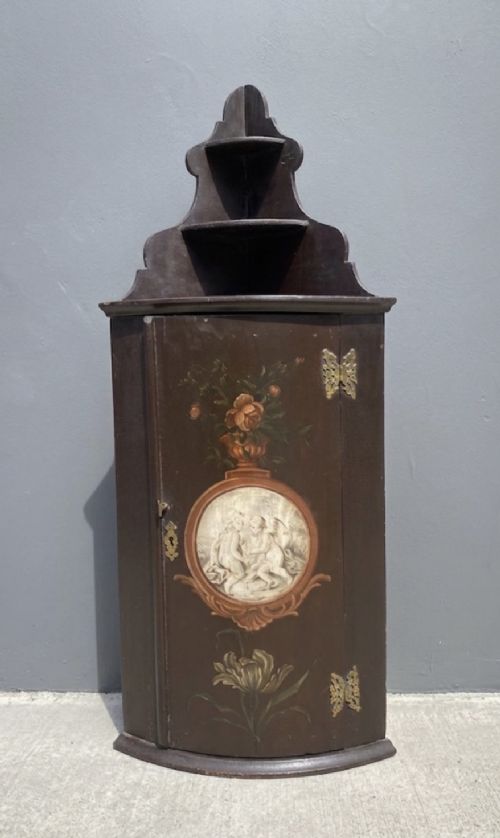
Vintage hanging shelving turns vertical wall space into display storage, appearing across the 18th century, 19th century, Regency, Victorian, and Edwardian periods. Buyers encounter forms ranging from simple mahogany bookcases and pine kitchen racks to walnut wall cabinets, corner cupboards, and multi-tiered whatnots.
Mahogany, walnut, oak, and pine dominate the timber selection, alongside brass details, glass panels, and painted finishes. Styles stretch from Georgian and Regency refinement through Victorian Gothic Revival and Arts and Crafts simplicity to French Chateau influences.
Materials and Construction
Cabinetmakers constructed these hanging units predominantly from solid hardwoods like mahogany, walnut, and oak, as well as softer pine and cherry wood. Joinery methods included traditional housing joints for shelves and secure wall-mounting brackets or brass hanging fixtures designed to bear the weight of books and display objects.
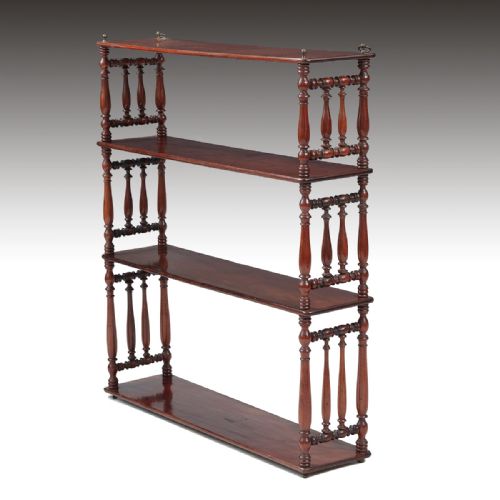
Surface treatments range from polished timber grains and satinwood inlays to hand-painted finishes, bobbin-turned supports, and applied brass galleries.
Vintage Hanging Shelving Retail Price Guide 2026
Typical asking prices for vintage hanging shelving among the pieces listed under this phrase on Sellingantiques today, from the lower quarter to the upper quarter. They describe what is for sale here now, not the wider market.
Some Victorian wall shelves come equipped with tiny brass galleries to stop your prized porcelain from sliding off during a lively dinner party.
Craftsmanship and Proportion
Quality rests in the crispness of the timber selection, the integration of inlays, and the integrity of the hanging supports. Superior examples display balanced proportions, fine grain matching in walnut or mahogany, and robust structural joints that securely anchor the shelves to the wall.
Lesser examples show hurried construction, mismatched secondary woods, or poorly secured hanging points that compromise the stability of the loaded tiers.
Heals·Arthur Simpson
The Vintage Hanging Shelving Glossary
- Waterfall shelves
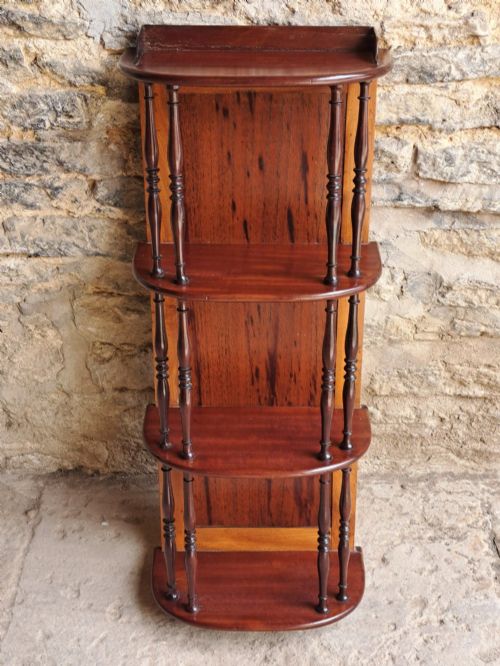
- Graduated tiers stepping back from top to bottom, often seen in mahogany and satinwood.
- Bobbin shelves
- Shelving supported by turned bobbin or spool mouldings, characteristic of late 19th-century and early 20th-century pieces.
- Whatnot
- An open-tiered movable or hanging shelving unit designed for displaying ornaments and small objects.
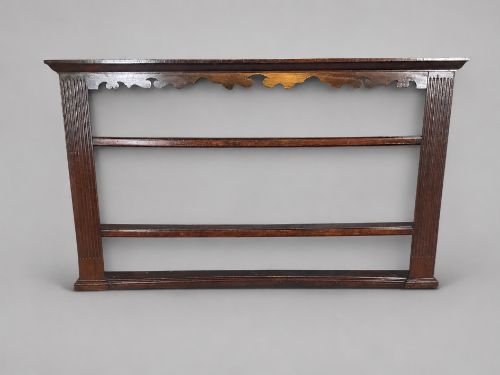
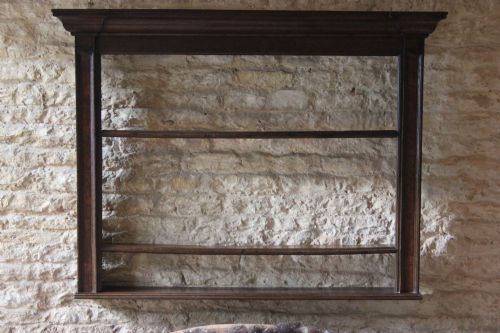
- Dresser rack
- A wall-mounted plate rack or shelving unit historically positioned above a base cabinet for tableware storage.
Vintage Hanging Shelving: Frequently Asked Questions
How do I hang antique wall shelves securely?
Check the original hanging brackets and fixings on the back of the timber frame to ensure they remain structurally sound before mounting. Secure the unit directly into wall studs or use appropriate heavy-duty wall anchors rated for the weight of the wood and books.
Distribute heavier volumes on the lower tiers to maintain balance and prevent undue strain on the upper wall fixings.
What is the difference between Georgian and Victorian hanging shelves?
Georgian hanging shelves prioritize clean architectural lines, symmetrical proportions, and classical mahogany or walnut timbers. Victorian examples often introduce heavier ornamentation, Gothic Revival influences, or darker oak and walnut constructions.
Later Victorian and Edwardian pieces also frequently incorporate brass galleries, painted surfaces, or multi-tiered waterfall designs.
Can these shelves hold heavy books?
Many smaller antique hanging shelves and portable bookshelves were designed for lighter volumes, pamphlets, or decorative display rather than massive folio collections. Assess the depth of the shelves and the thickness of the timber sides to gauge load capacity.
Using them for lighter display items protects the historical joints from unnecessary sagging over time.
How do I care for antique timber shelves?
Dust the wood regularly with a soft, dry cloth to prevent particulate buildup on polished mahogany, walnut, or oak surfaces. Avoid placing antique shelves in direct sunlight or near heat sources that could dry out the historic timber and cause splitting.
Apply a traditional microcrystalline wax sparingly if the surface appears dry, buffing gently to maintain the natural sheen.