



Vintage Hand Painted Screen
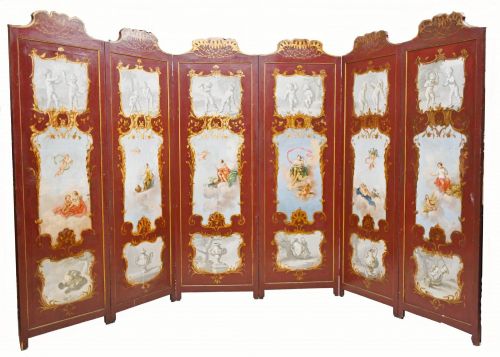
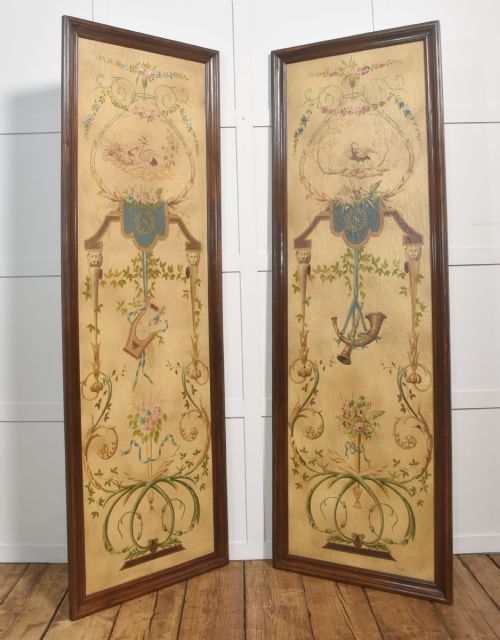
These vintage hand painted screen examples are decorative folding room dividers and panels finished by hand, bringing colour and period character to an interior.
Vintage Hand Painted Screen
A vintage hand painted screen covers folding room dividers, decorative panels and wall plaques produced across the nineteenth and twentieth centuries. Buyers search for these pieces to divide interior spaces or to hang as striking wall art.
The selections on this page lean heavily towards East Asian lacquerwork, Chinoiserie and traditional folding forms from various global traditions. One is most likely to meet four-panel and six-panel wooden room dividers alongside framed panels dating from the Victorian era up to the mid-twentieth century.
Makers utilised diverse regional vernaculars, ranging from French Empire and Rococo Revival European styles to Anglo-Indian fretwork and Burmese lacquered items. Each object performs a dual function of practical partition and ornate pictorial display.
Materials and construction
Construction relies primarily on wooden frames, leather or canvas panels, and papier-mâché, assembled to form multiple folding leaves or rigid wall plaques. Brass hardware and hinges join the panels together, allowing the screens to articulate smoothly.
Surfaces are prepared with lacquer or gesso before artists apply detailed paintwork, often enhanced with gold leaf or gilt leaf highlights. Intricate fretwork and carved details frequently accompany the painted scenes on Indian and Chinese examples.
Vintage Hand Painted Screen Retail Price Guide 2026
Typical asking prices for vintage hand painted screen among the pieces listed under this phrase on Sellingantiques today, from the lower quarter to the upper quarter. They describe what is for sale here now, not the wider market.
Listings feature items spanning the 1850s to the 1950s, incorporating wood, lacquer, canvas, and gold leaf.
Assessing quality and execution
Quality rests in the precision of the joinery, the stability of the folding hinges, and the skill evident in the hand-painted details. Finer pieces display confident brushwork and rich layering of lacquer or gold leaf that holds depth under light.
The integrity of the underlying canvas, leather, or wood dictates the longevity of the panel. Superior examples maintain crisp pictorial storytelling and robust structural framing across each fold.
The Vintage Hand Painted Screen Glossary
- Lacquer
- A durable resin finish applied in multiple layers to wood or fabric surfaces. It provides a glossy, protective coat that can be polished or carved.
- Fretwork
- Openwork ornamentation carved or pierced in wood or metal patterns. It adds geometric lightness to panels and screens.
- Gilt leaf
- Thin sheets of hammered gold or metal applied to decorative surfaces. It creates luminous highlights against painted backgrounds.
Vintage Hand Painted Screen: Frequently Asked Questions
How do I use a folding screen at home?
Folding screens work effectively to zone open-plan spaces, create private corners, or mask utilitarian areas in a room. They also function successfully when mounted directly onto walls as large-scale decorative art.
Positioning a screen away from direct heat sources and strong sunlight preserves the painted surface and prevents the wooden or leather panels from warping over time.
How do I date a painted screen?
Dating relies on examining the construction methods of the wooden frame, the composition of the hinges, and the style of the painted decoration. Nineteenth-century pieces often display heavier timber frames and hand-mixed pigments, while mid-twentieth-century items reflect later regional aesthetics.
Comparing the decorative motifs, such as Rococo Revival curves or Chinese Republic Era lacquer techniques, against known period examples helps narrow down the decade of production.
What is the difference between a screen and a panel?
Screens consist of multiple hinged panels designed to fold and stand upright independently on the floor. Decorative panels and wall plaques are rigid, single-surface items intended for mounting on walls rather than dividing a space.
Both forms utilise similar painting and lacquering techniques, but their mounting hardware and structural thickness differ according to their intended placement.
How should I clean a lacquered screen?
Dusting gently with a soft, dry cloth is the standard method for maintaining painted and lacquered surfaces. Avoid using liquid cleaners, chemical solvents, or abrasive cloths that can damage the delicate paint layers or gold leaf.
Professional conservation advice should be sought if the lacquer or paint shows signs of lifting or flaking.