
Vintage Hallway Coat Stand
A vintage hallway coat stand brings order to an entrance, combining upright structure with practical hooks for hats, coats, and sticks.
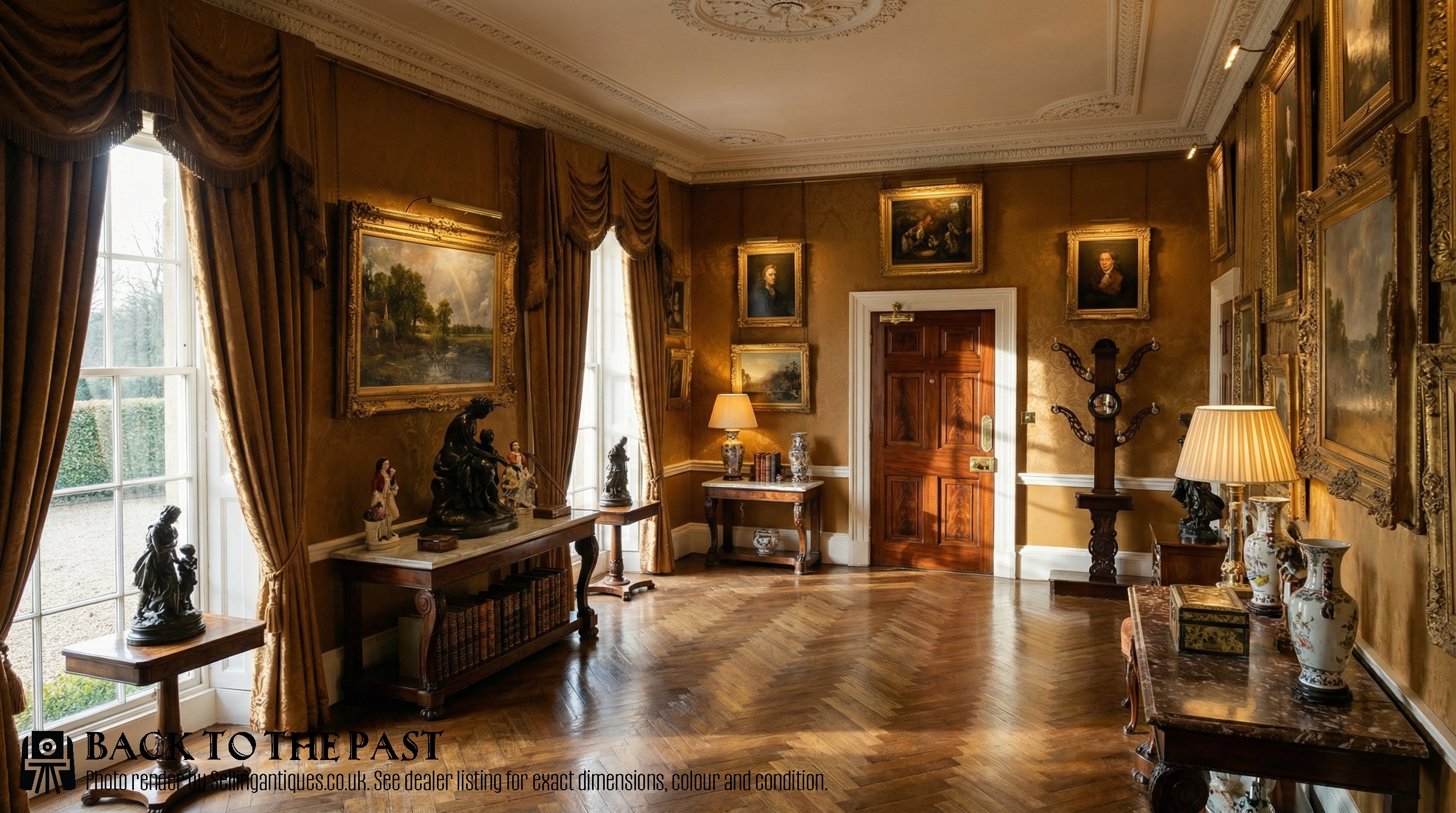
Vintage Hallway Coat Stand
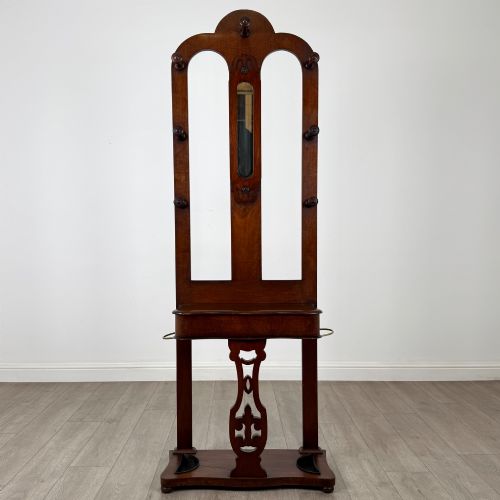
A vintage hallway coat stand serves as a functional piece of entrance furniture designed to hold garments, headwear, and walking accessories. The selection spans the Victorian and Edwardian eras through to the early 20th century, encompassing diverse regional iterations from British workshops to continental makers.
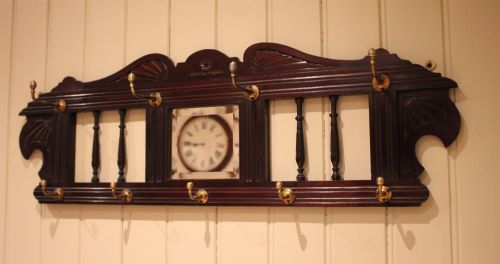
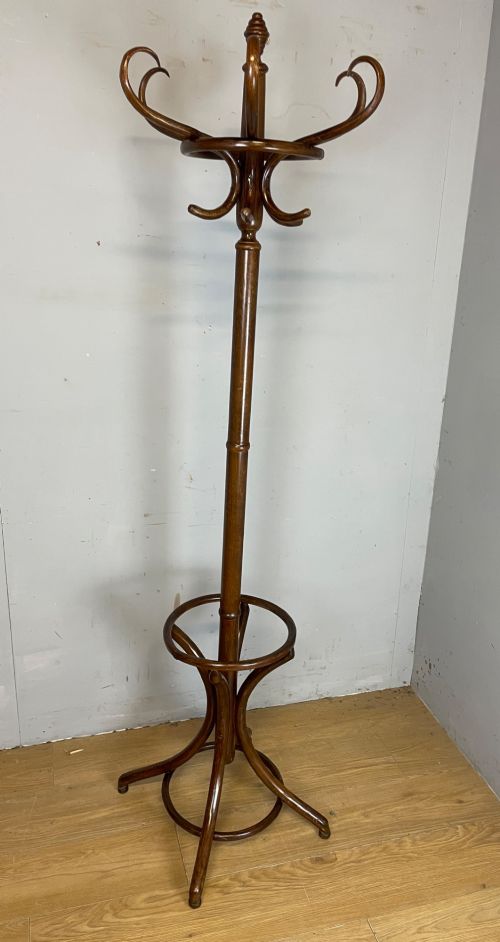
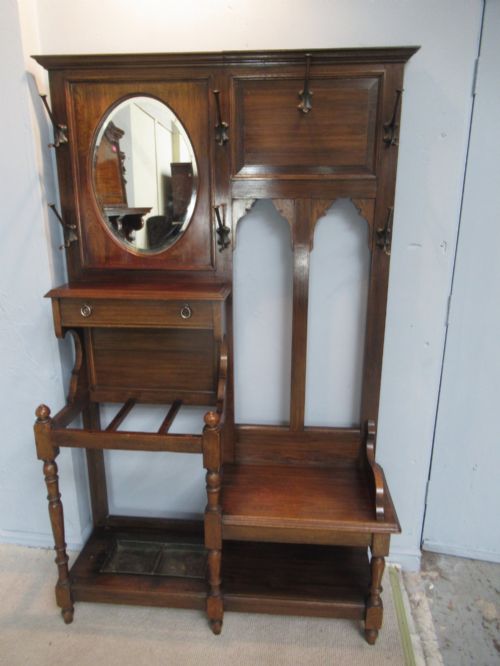
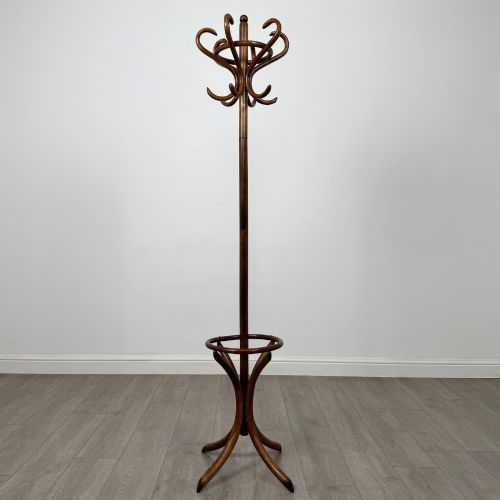
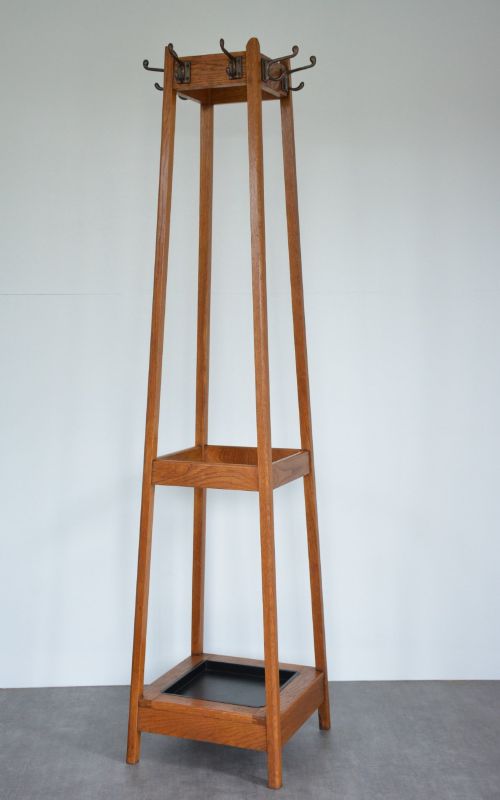
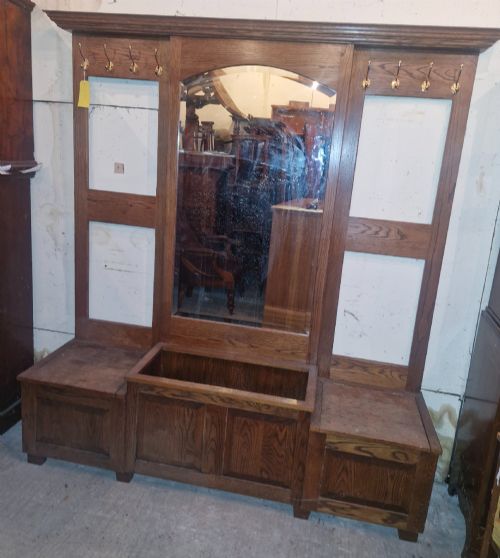
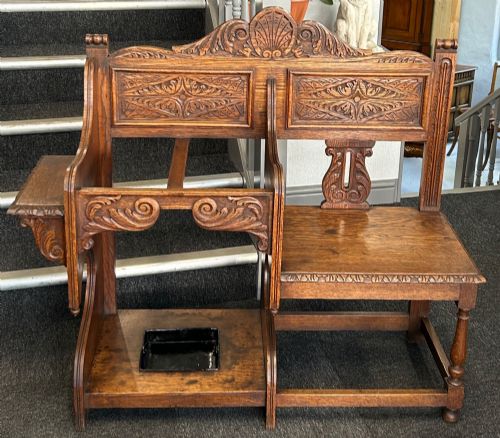
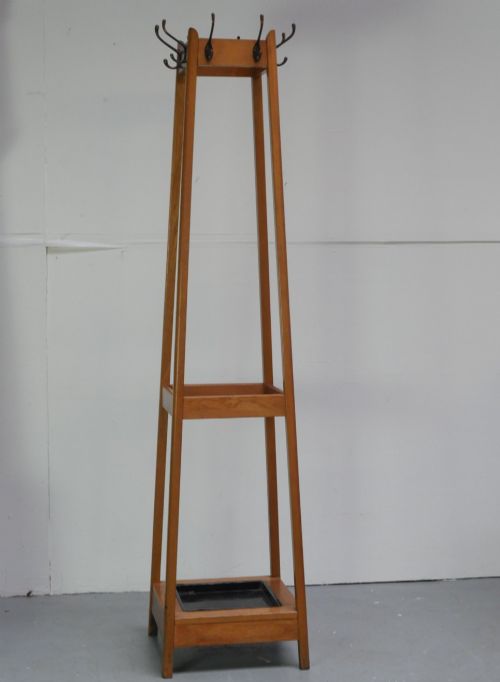
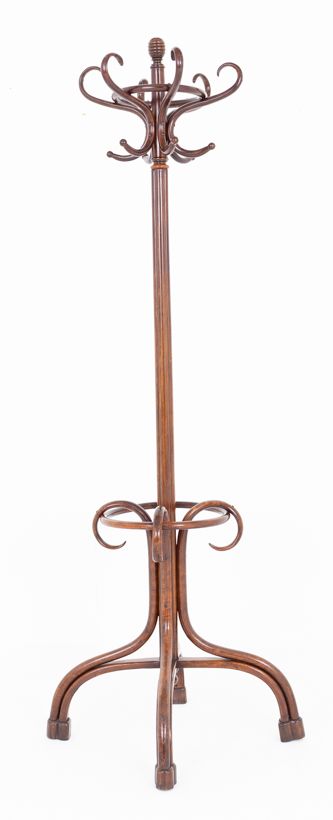
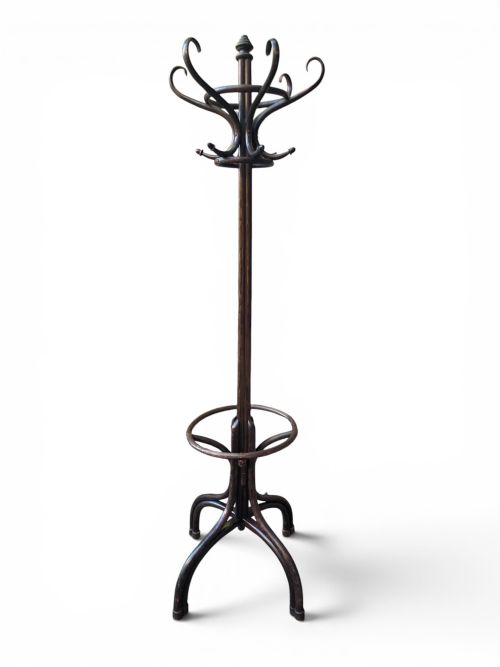
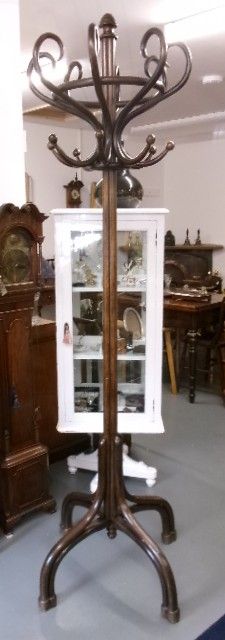
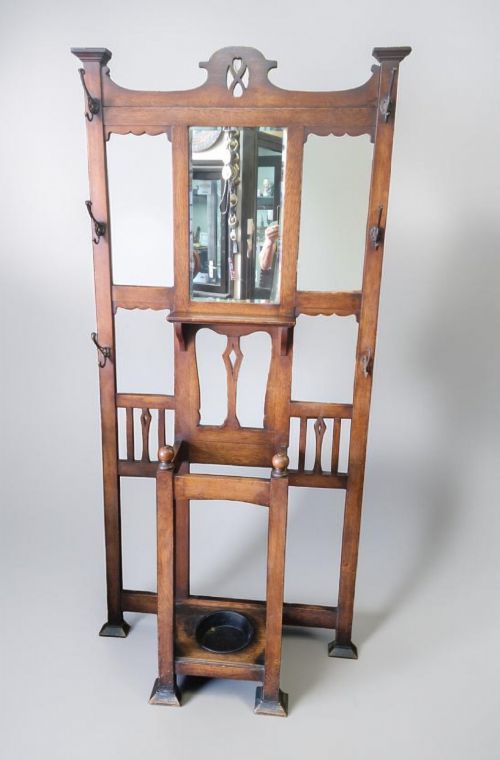
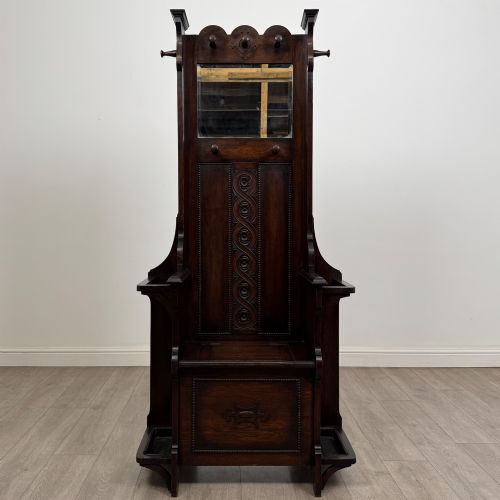
You will encounter several distinct forms on this page, ranging from robust timber hall trees with integrated seating to lighter, steam-bent wooden hatstands. Many examples incorporate umbrella holders, drip trays, and brass hooks, whilst wall-mounted coat racks and bamboo frames offer alternative solutions for smaller lobbies.
How they were made
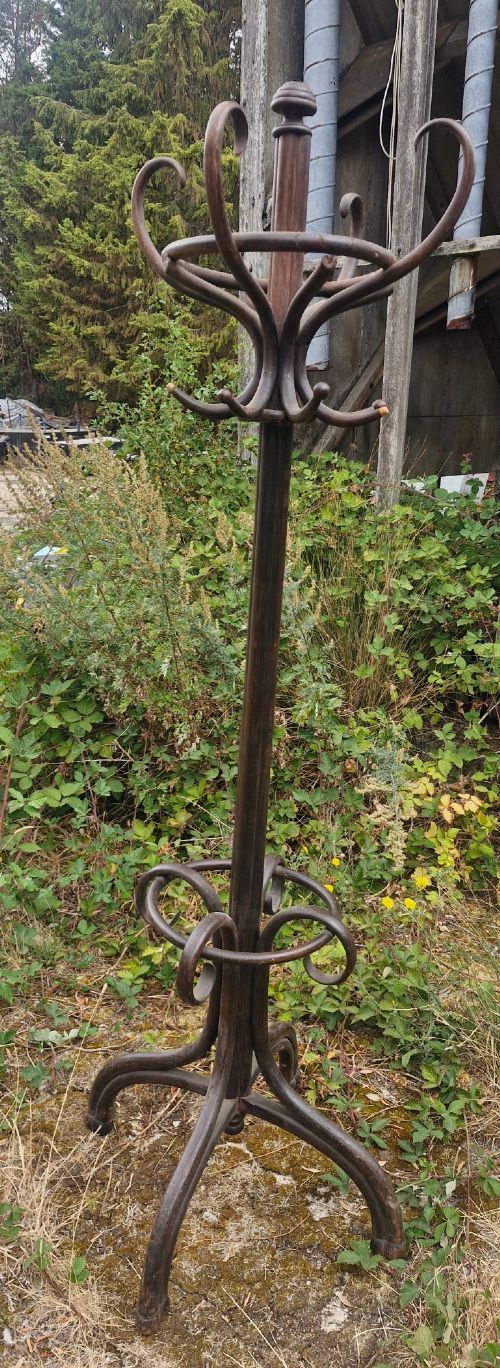
Makers utilised solid timbers such as oak, mahogany, walnut, and beech, frequently employing steam-bending techniques to create the characteristic curved framework seen in bentwood designs. Joinery methods relied on sturdy mortise and tenon construction for larger hall seats, ensuring stability under heavy winter garments.
Metal components added both utility and decoration, with brass hooks, iron brackets, and zinc drip trays integrated into the wooden bodies. Surfaces were finished with polished waxes or varnishes that highlighted the natural grain of the oak and walnut.
Cow horns make a surprise appearance as sturdy coat hooks on 19th-century oak stands.
What varies in quality
The distinction between standard examples and finer pieces lies in the complexity of the carving, the selection of figured timbers, and the integrity of the original hardware. Superior items often feature integrated mirrors, carved panels in the Arts and Crafts or Art Nouveau taste, and robust brass fittings stamped with maker details.
Structural robustness also marks the upper tier, particularly in bentwood designs where the thickness of the beech and the precision of the curved sections determine long-term durability. Completeness matters greatly, with surviving drip trays and matching sets of coat hooks elevating the integrity of the piece.
Thonet·Astrola·Jas Shoolbred
The Vintage Hallway Coat Stand Glossary
- Bentwood
- Wood softened by steam and bent into curved shapes. This technique defines the lightweight hatstands popularised by Austrian and German manufacturers.
- Hall Tree
- A freestanding piece of hallway furniture combining a coat rack, hat hooks, umbrella stand, and frequently a bench seat with storage.
- Demi Lune
- A half-moon shape. This describes hall stands with flat backs designed to sit flush against an entrance wall.
- Thonet Style
- Furniture produced in the manner of the pioneering bentwood manufacturer. It employs circular loops and sinuous wooden framing.
- Drip Tray
- A metal or ceramic basin positioned at the base of a stand. It catches water dripping from wet umbrellas and walking sticks.
Vintage Hallway Coat Stand: Frequently Asked Questions
What is a hall tree?
A hall tree is a tall, freestanding piece of furniture designed for an entrance hall. It combines multiple functions into a single unit, including coat hooks, hat pegs, and umbrella storage.
Many larger versions also incorporate a bench seat and a central mirror. They provide an all-in-one storage solution for visitors entering the home.
How do I care for bentwood?
Bentwood furniture requires simple maintenance to keep the steam-bent beech in good condition. Keep pieces away from direct heat sources and sudden temperature changes to prevent the wood from drying out.
Apply a traditional wax polish occasionally to nourish the surface. Avoid excess moisture, particularly on older pieces with original finishes.
Where were bentwood stands made?
Bentwood stands originated primarily in Austria and Germany during the 19th century. Firms such as Thonet pioneered the steam-bending process that made these light, curved structures possible. Nooks and frames were exported across Europe, influencing British cabinet makers who adopted similar techniques for entrance furniture.