



Vintage Guilloche Mirror
A vintage guilloche mirror brings intricate patterned enamel work and polished metal together in compacts, hand mirrors, and wall pieces.
Vintage Guilloche Mirror
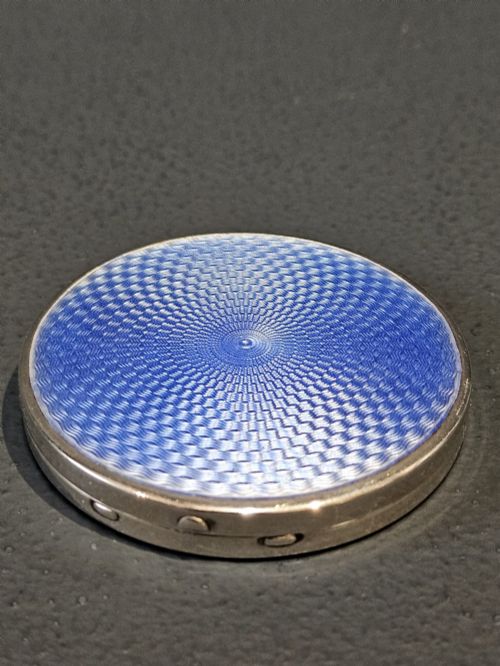
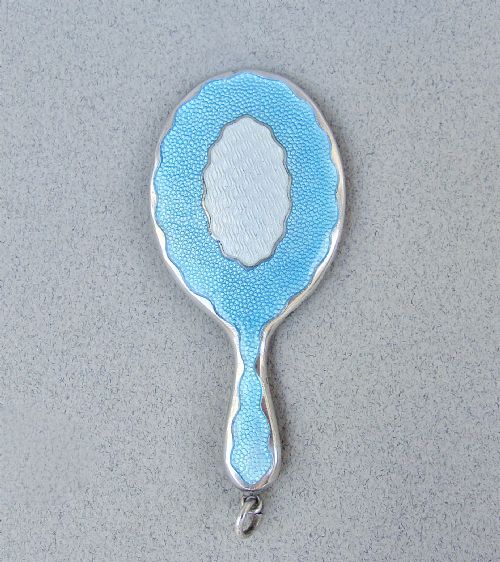
A vintage guilloche mirror encompasses a range of decorative objects featuring engine-turned geometric patterns beneath translucent coloured enamel. These pieces span from the late nineteenth century through the art deco era, appearing primarily as hand mirrors, powder compacts, and purse mirrors. Collectors frequently encounter compacts and mirrors fashioned from sterling silver or chrome with blue enamel decoration.
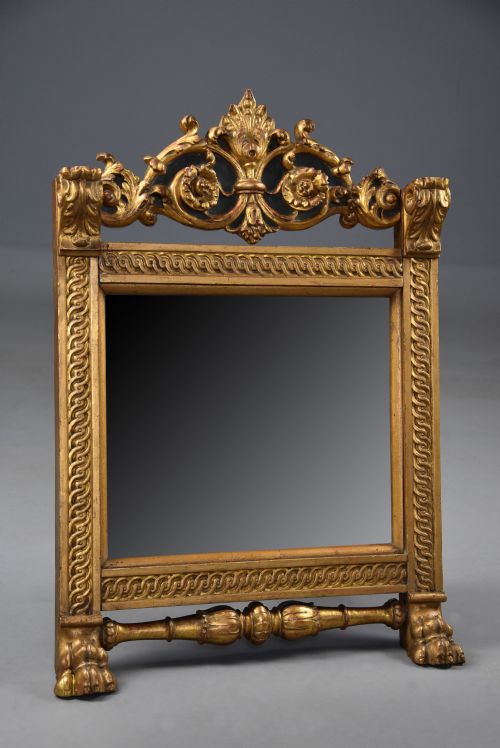
The selection ranges from early twentieth century art deco items bearing Birmingham hallmarks to romantic art nouveau lockets and French chateau wall mirrors. Alongside smaller vanity accessories, the category includes carved giltwood easel table mirrors and Spanish pine wall mirrors. Each form reflects the specific decorative tastes of its period, from Renaissance revival carvings to sleek modernist lines.
How they were made
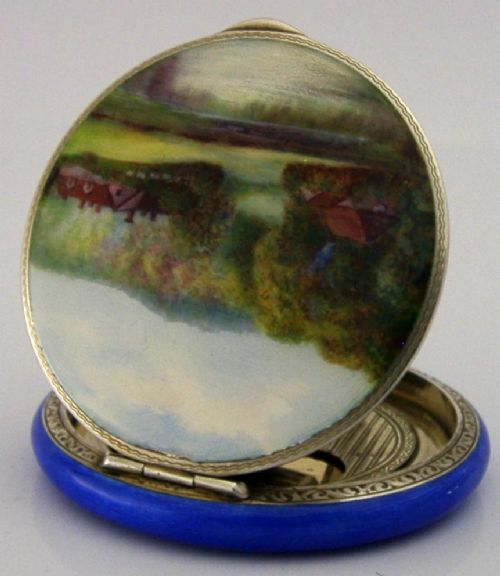
Maker's workshops created the characteristic patterned surfaces by using a mechanical lathe to engrave precise geometric designs into a metal base, usually silver or gold. Artisans then applied vitreous enamel over the engraved metal, allowing the underlying machined pattern to show through the translucent colour. Hand-painted details often embellished the enamel surface on pieces from the nineteen twenties and thirties.
Structural framing relied on traditional cabinetmaking and metalworking techniques appropriate to the object type. Table and wall mirrors utilised carved giltwood, gesso, and pine, while vanity items employed stamped metals, mesh, and suede linings.
Vintage Guilloche Mirror Retail Price Guide 2026
Typical asking prices for vintage guilloche mirror among the pieces listed under this phrase on Sellingantiques today, from the lower quarter to the upper quarter. They describe what is for sale here now, not the wider market.
Several compacts retain their original suede linings and powder residue, whispering of hurried theatre-interval touch-ups nearly a century ago.
What varies in quality
Quality differences emerge in the precision of the engine-turned engraving and the clarity of the vitreous enamel layers. Finer items display crisp, deeply cut geometric patterns that catch the light evenly beneath unblemished enamel coatings. Maker marks and assay office stamps from centres such as Birmingham and London also distinguish standard commercial production from distinguished maker output.
The integrity of the mounting materials separates individual examples. Solid sterling silver or yellow gold housings demonstrate superior original manufacture compared to base metal or chrome alternatives, while hand-painted enamel elements require precise brushwork executed by skilled artisans.
Henry Williamson·Henry Matthews·Evans·Cartier·Meyle & Mayer·Houbigant
The Vintage Guilloche Mirror Glossary
- Guilloche
- A decorative technique where a mechanical lathe engraves a precise, repeating geometric pattern into a metal surface. This engraved metal serves as the textured base beneath translucent enamel.
- Vitreous Enamel
- Glass powder fused to a metal substrate at high temperatures to create a durable, coloured coating. It provides the smooth, glossy surface seen on vanity accessories.
- Engine Turned
- Mechanically engraved using a specialised lathe to produce intricate geometric designs. The process ensures exact repetition of the pattern across the metal.
- Easel Mirror
- A portable mirror supported by a hinged leg or prop on the back, designed to stand upright on a dressing table. These often feature carved wood or metal frames.
- Powder Compact
- A small vanity case containing a mirror and a compartment for face powder. Many incorporate guilloche enamel decoration on the lid.
- Silver Gilt
- Silver that has been coated with a thin layer of gold. This treatment adds a warm golden tone while utilising a silver base structure.
Vintage Guilloche Mirror: Frequently Asked Questions
How do I date a guilloche mirror?
Dating relies primarily on hallmarks stamped into the metal housing, maker marks, and stylistic indicators such as art deco geometric forms or art nouveau organic curves. Design characteristics like enamel colours and compact shapes further help place the piece within periods such as the nineteen twenties or thirties.
Assay office marks and registration numbers provide specific years of production for many silver and gold vanity items. Comparing the construction methods with known manufacturing eras clarifies the timeline.
What is engine turning on enamel?
Engine turning is a mechanical engraving process that cuts precise, repetitive geometric patterns into a metal plate using a specialised lathe. When translucent enamel is applied over this textured surface, the light reflects through the colour to create depth and movement.
This technique forms the visual foundation of most guilloche items. The accuracy of the pattern distinguishes machine work from hand carving.
Are these mirrors made of solid silver?
Many vanity items and hand mirrors use sterling silver for their frames and compact bodies, verified by official silver hallmarks. Other pieces utilise base metals, chrome, or yellow gold depending on the maker and period.
Examining the marks stamped into the metal reveals the specific alloy used. Silver-gilt variations combine silver with a surface layer of gold.
How were vintage powder compact mirrors used?
Vintage powder compacts served as portable vanity cases for women during the early twentieth century, housing face powder, a sifter, and a small mirror for touch-ups. They were designed to fit neatly inside a handbag or purse alongside matching accessories.
Many featured integrated mesh compartments or suede linings to hold cosmetics securely. Their decorative enamel lids doubled as fashionable accessories during social outings.