



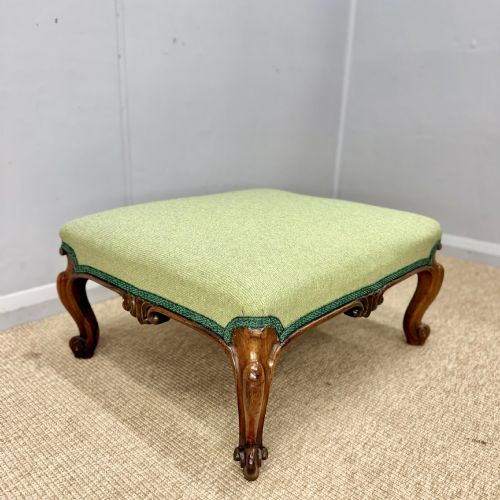
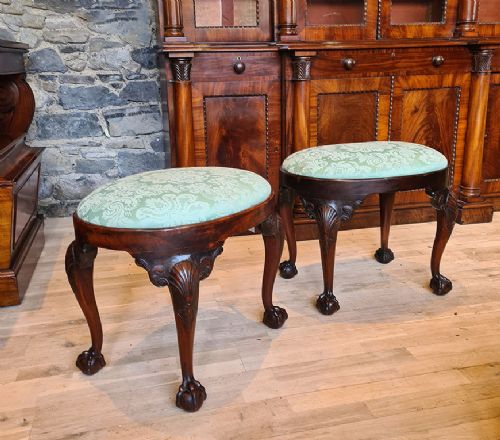


Vintage Green Footstool
A vintage green footstool brings tactile colour and period character to a room, ranging from buttoned leather to painted country timber.
Vintage Green Footstool
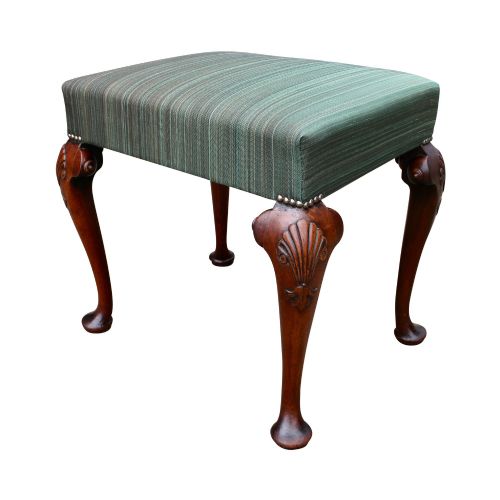
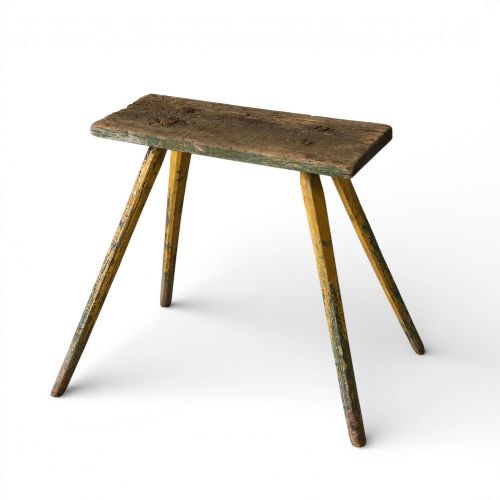
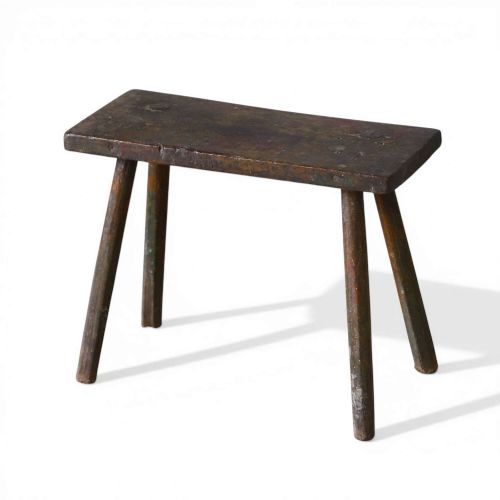
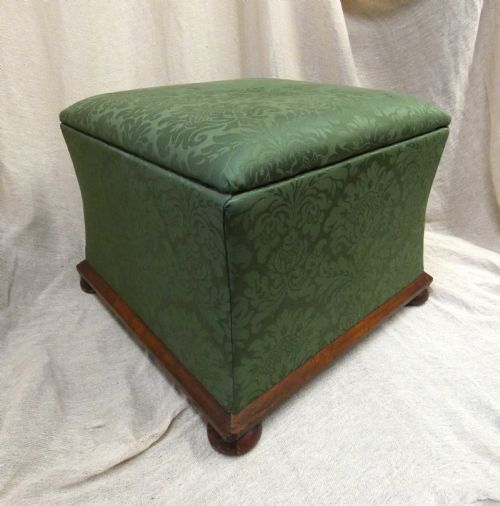
A vintage green footstool encompasses low seating forms including footstools, ottomans, and milking stools originating from the nineteenth century through to the nineteen-thirties. You meet pieces spanning Victorian, Regency, and Edwardian periods, alongside rustic painted European examples.
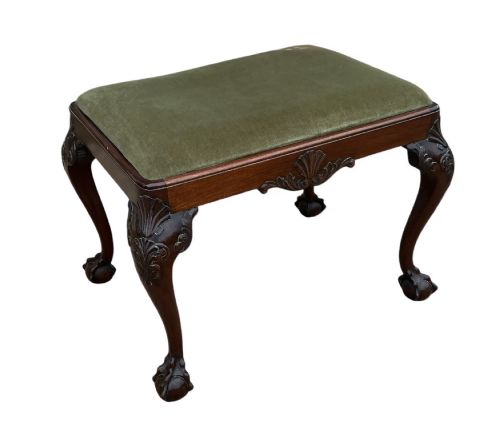
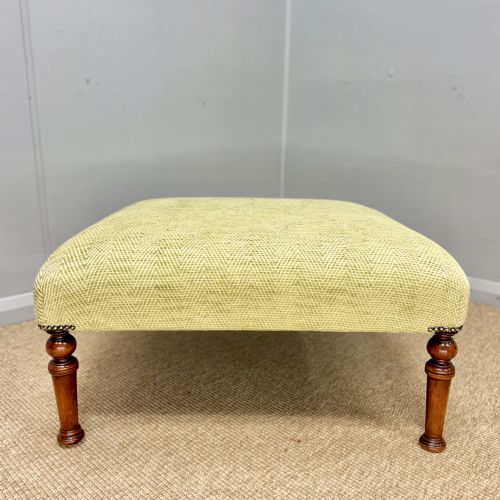
The selection ranges from formal mahogany and walnut frames with upholstered tops to simple turned timber milking stools retaining original green paint. Structural variations include square, rectangular, and oval formats, sometimes designed as gout stools or window seats.
Materials and construction
Carpenters utilised solid hardwoods such as mahogany, walnut, rosewood, and oak for the frames, frequently employing carved details, spiral turnings, or inlaid decoration. Joinery techniques reflect the period, from robust nineteenth-century framing to twentieth-century workshop production.
Upholstered versions combine internal webbing or padding with coverings of leather, velvet, wool, tapestry, or herringbone fabric, occasionally secured with traditional buttoning. Painted rustic pieces preserve early surface treatments directly on the wood.
Design influences stretch from Georgian and Regency formal styles to French country, Edwardian, and Art Deco aesthetics.
Assessing quality
Quality rests in the integrity of the timber frame, the crispness of any carving or turning, and the authenticity of surface finishes like original paint or aged leather. Pieces exhibiting balanced proportions and cohesive period details demonstrate superior craftsmanship.
The standard of upholstery and the preservation of original textiles or leather significantly influence the character of the piece. Subtle details such as hand-carved motifs or refined joinery elevate certain examples above standard utility seating.
Harry and Lou Epstein·David Oakleafman Langstaff·Whytock and Reid
The Vintage Green Footstool Glossary
- Gout stool
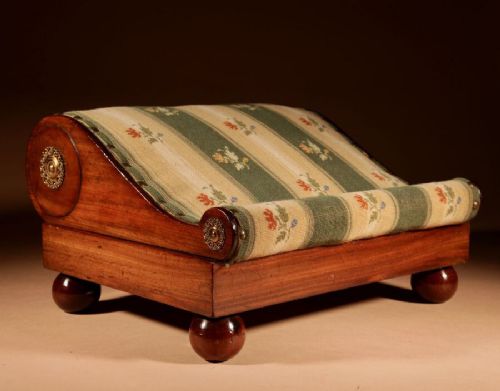
- A specialised footstool featuring an adjustable inclined rest designed to elevate and support the foot or leg.
- Milking stool
- A simple, sturdy three or four-legged low stool traditionally used for agricultural tasks, often found in rustic painted finishes.
- Ottoman
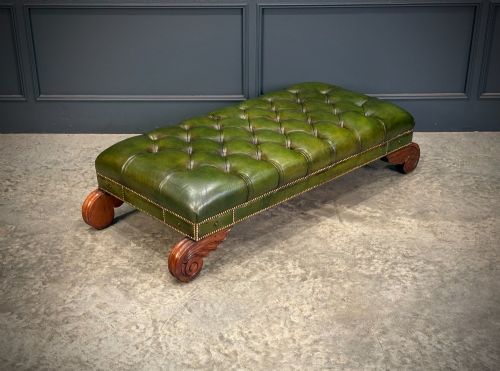
- A low upholstered seat or footstool without a back or arms, sometimes incorporating internal storage or a larger rectangular footprint.
- Buttoned leather
- An upholstery technique where leather is pulled deep into the padding and secured with buttons to create a padded diamond pattern.
- Needlepoint
- A type of canvas work embroidery utilised historically for durable and decorative stool upholstery.
Vintage Green Footstool: Frequently Asked Questions
What is a vintage green footstool used for?
These low seats function primarily for resting feet before an armchair or sofa, while larger ottoman variants serve as flexible seating or low display surfaces.
Their compact proportions allow them to fit easily into sitting rooms, dressing areas, or bedrooms as functional decorative accents.
How do I date a vintage green footstool?
Dating relies on examining the timber species, joinery methods, and stylistic cues such as Regency curves or Victorian buttoning.
Secondary indicators include the wear on original paint finishes and the type of underlying upholstery materials used in construction.
Are painted green footstools original?
Many rustic and continental milking stools retain genuine early or original green paint surfaces applied during their working life.
Closer inspection of the pigment layers and natural wear patterns helps distinguish period painted finishes from later decorative overpainting.
How do I style a footstool in a room?
A footstool introduces a focal point of colour and texture, pairing effectively with contrasting fabrics on nearby armchairs or sofas.
Rectangular or square variants can also act as standalone pieces positioned beneath windows or beside dressing tables.