
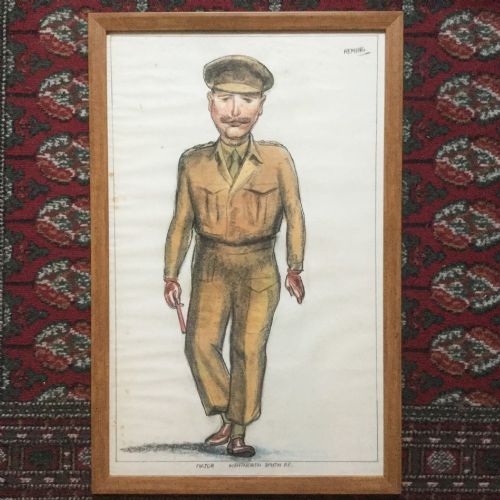
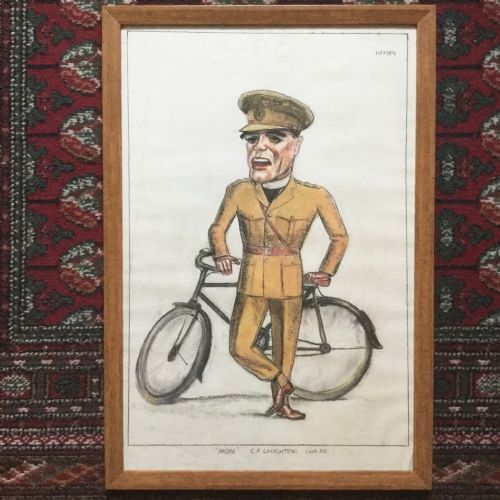
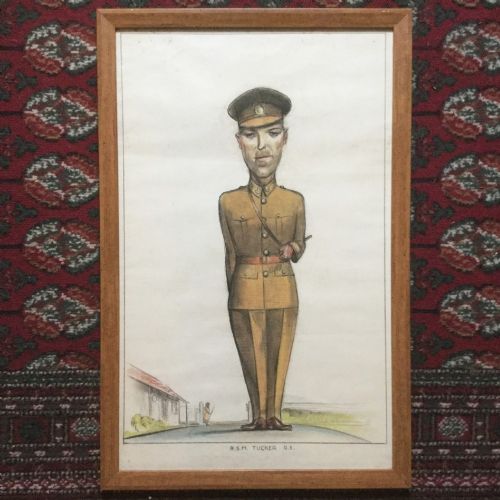
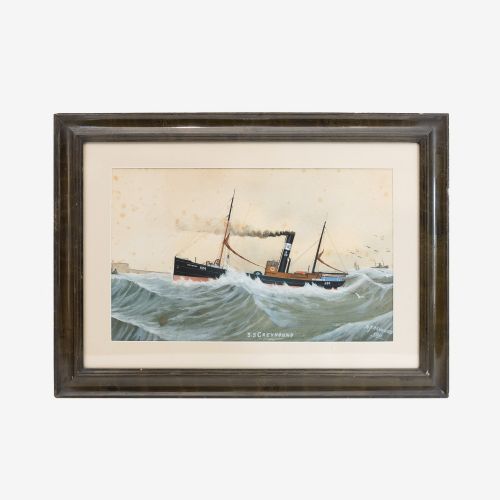
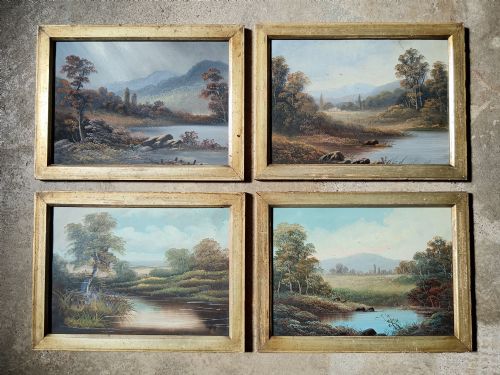


Vintage Gouache Artwork
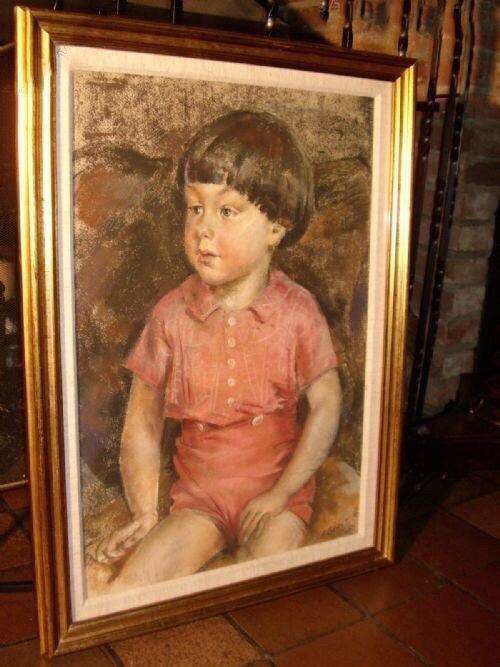
Vintage gouache artwork delivers the dense, opaque pigment and matte finish that defined commercial illustration and intimate portraiture across two centuries.
Vintage Gouache Artwork
Vintage gouache artwork encompasses maritime scenes, botanical studies, portraits, and modernist compositions created from the nineteenth century through the mid-twentieth century.
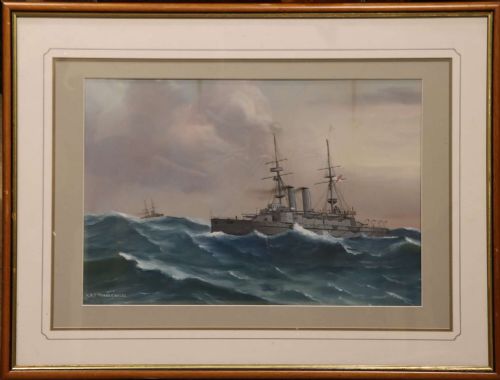
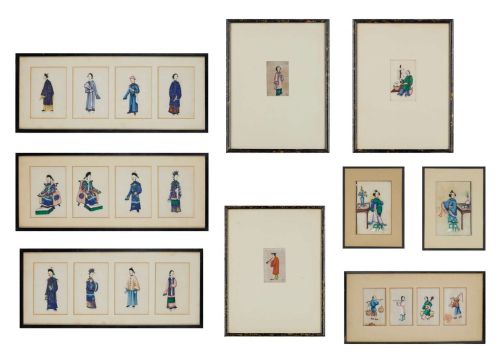
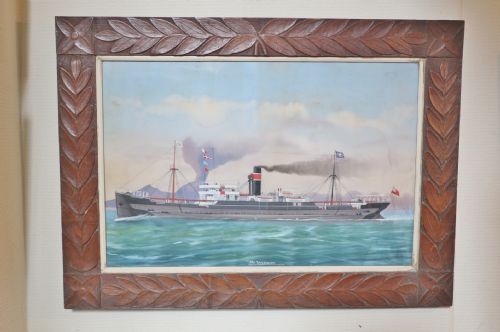
Maritime paintings depicting steamships and naval vessels appear frequently alongside military portraits, landscape views, and Chinese figural pith paintings.
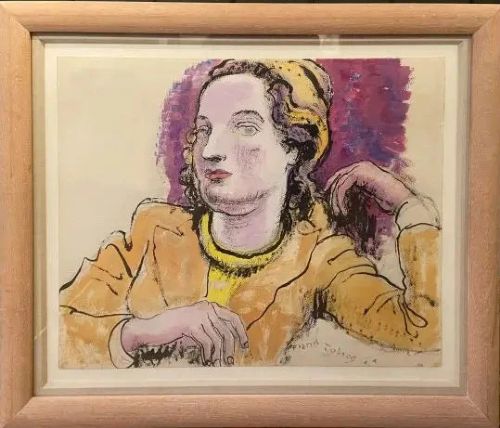
Works span diverse stylistic movements including Victorian academic realism, Edwardian maritime illustration, Art Deco graphic design, and Mid-Century Modern abstraction.
Materials and application techniques
Artists built these images using water-soluble body colour composed of opaque pigments bound in glue, often layering the medium over pencil, ink, or watercolour.
Supports range from standard paper and buff paper to silk, cardboard, and pith, frequently protected beneath glass within original wooden framing.
Listings feature works from the 18th century through the 1960s, executed on paper, board, silk, and pith.
Factors separating examples
Quality rests on the precision of brushwork, the vibrancy of surviving opaque pigments, and the handling of light within maritime or landscape subjects.
Signed compositions by recorded artists and works retaining their period mountings command greater attention than anonymous academic exercises.
Frank Dobson·John Rattenbury Skeaping·Vincenzo D’Esposito·Alexander Harwood·AJ Thornton·Dame Laura Knight·Jean Cuny
The Vintage Gouache Artwork Glossary
- Gouache
- An opaque watercolour medium containing pigment, water, and a binding agent such as gum arabic, producing a flat, matte surface.
- Pith paper
- A delicate support material prepared from the cellular pith of the Tetrapanax papyrifer plant, common in nineteenth-century Chinese export art.
- Body colour
- A traditional term for watercolour pigment rendered opaque through the addition of white filler, synonymous with gouache.
- Buff paper
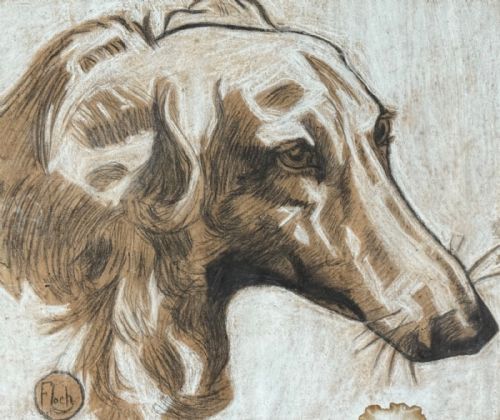
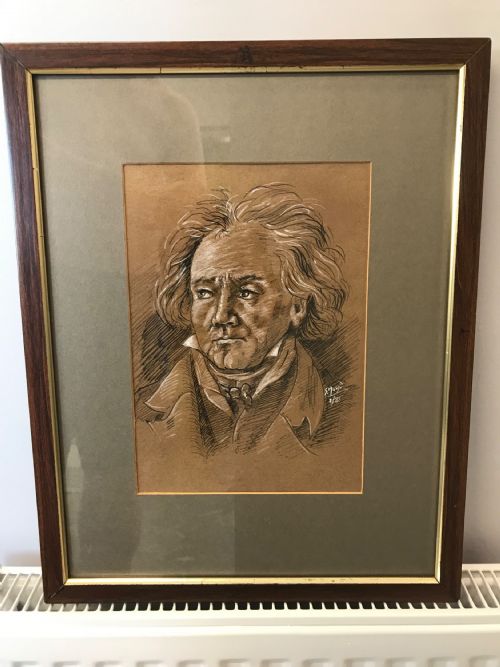
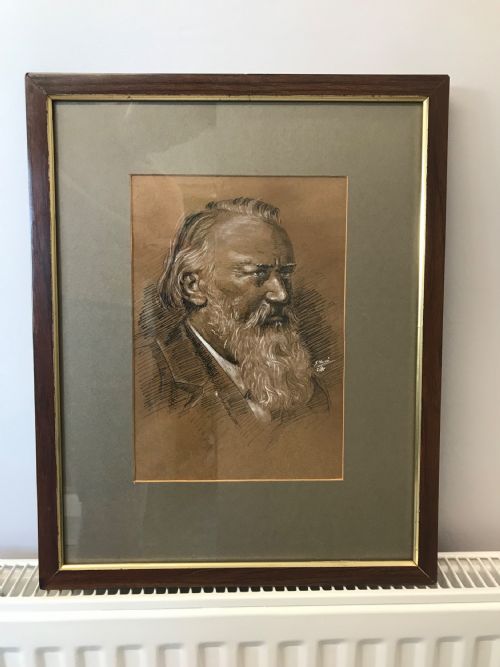
- A pale brownish-yellow paper stock favoured by draughtsmen during the early twentieth century for tonal contrast with white highlights.
Vintage Gouache Artwork: Frequently Asked Questions
Can I display these paintings in direct sunlight?
Prolonged exposure to direct sunlight causes fugitive pigments to fade and accelerates the degradation of paper supports.
Position the frame away from windows or utilise museum-grade UV-filtering glass for permanent protection.
How do I distinguish gouache from standard watercolour?
Gouache contains a higher pigment load mixed with chalk, creating an opaque layer that completely hides the underlying paper or previous strokes.
Watercolour remains translucent, allowing light to pass through the wash and reflect back from the white paper beneath.
What framing is appropriate for these pieces?
Period frames with simple wooden mouldings complement the historic nature of early twentieth-century illustrations and maritime paintings.
Ensure a mat board separates the painted surface from the glass to prevent condensation damage over time.