

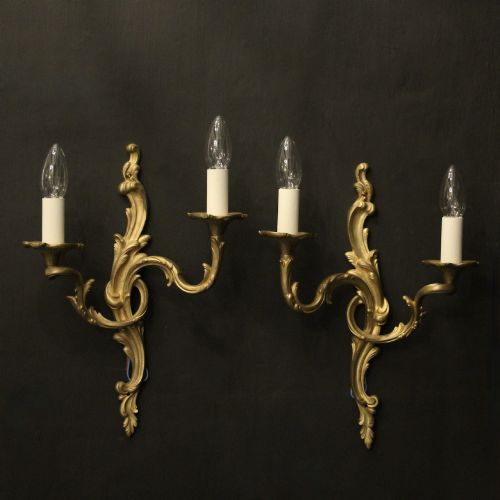
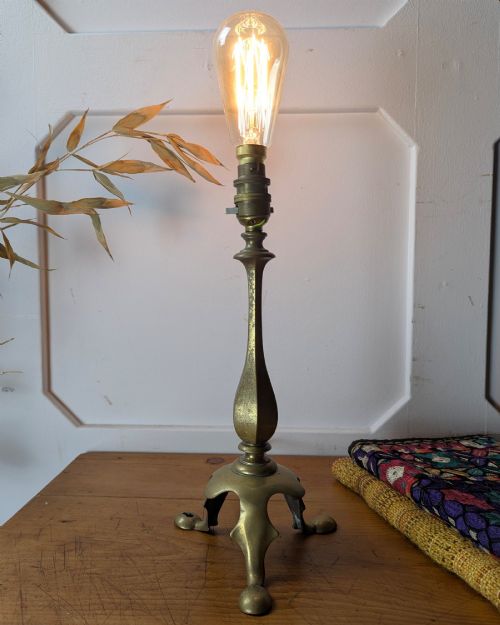
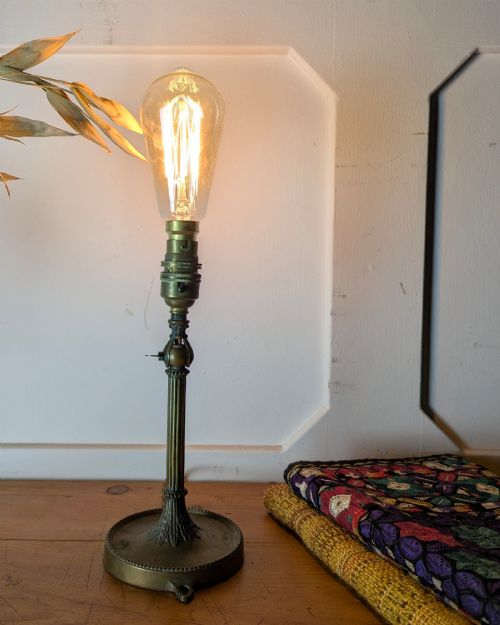
Vintage Gold Wall Lights
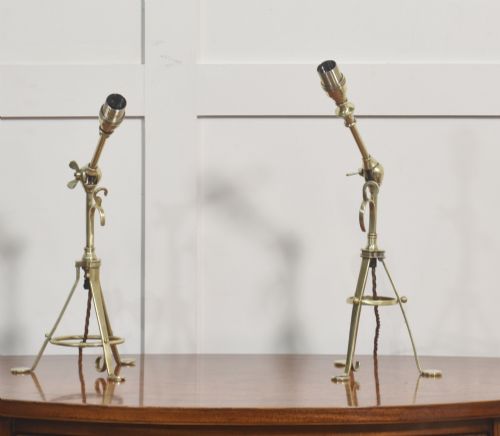
Vintage gold wall lights bring warmth and metallic lustre to interiors, spanning French styles and twentieth-century brass designs.
Vintage Gold Wall Lights
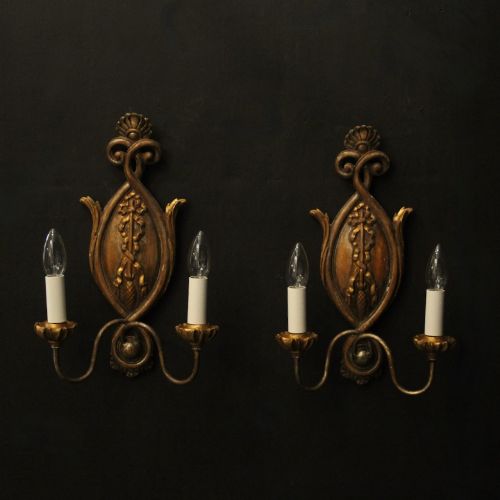
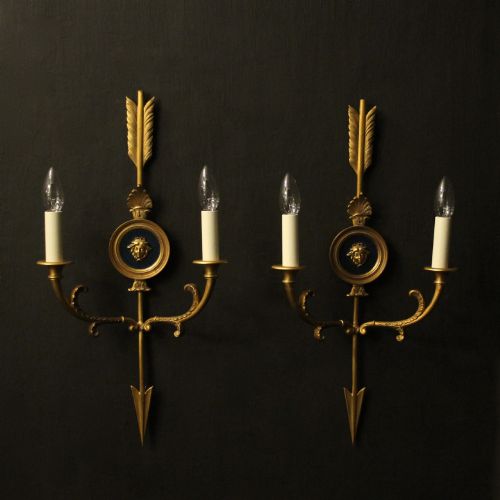
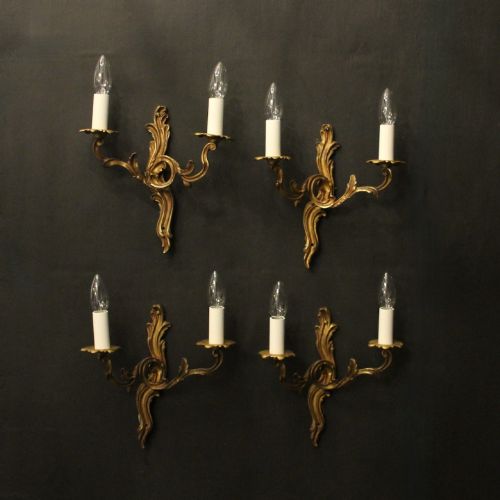
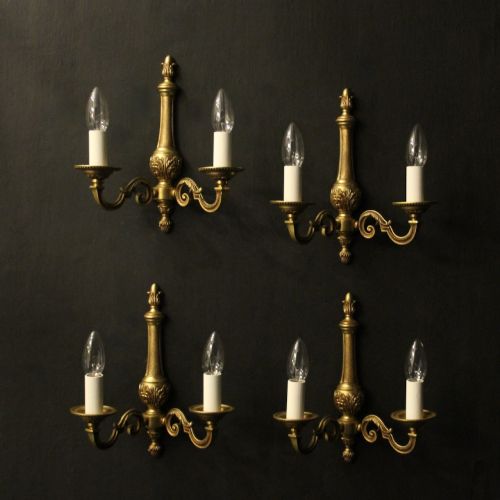
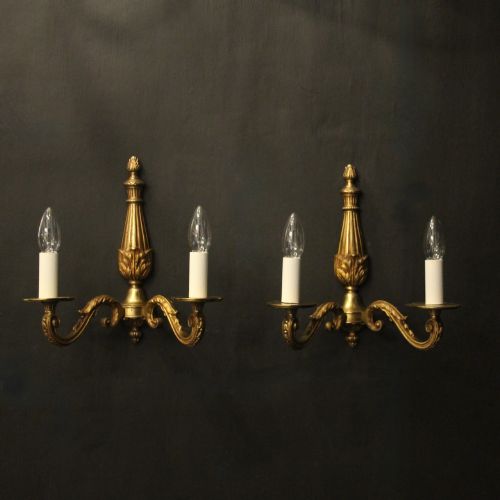
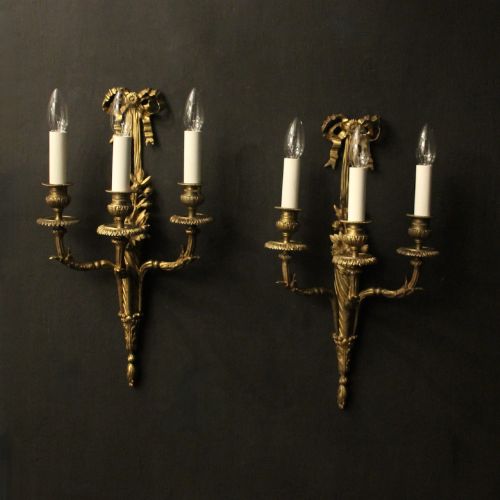
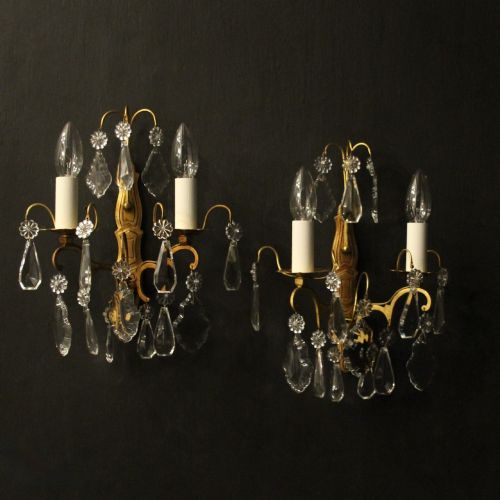
Vintage gold wall lights encompass decorative sconces, girandoles, and half-lanterns designed to illuminate rooms from vertical mountings. When exploring vintage gold wall lights, buyers encounter numerous French fixtures alongside English mid-century examples.
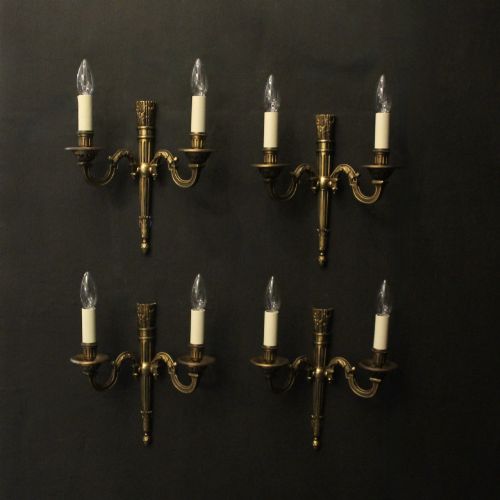
The selection ranges from single-arm brackets to sets of four or six twin-arm and triple-arm fixtures. These pieces draw heavily on historical aesthetics including French Rococo, Neoclassical, Louis XVI, and Empire styles.
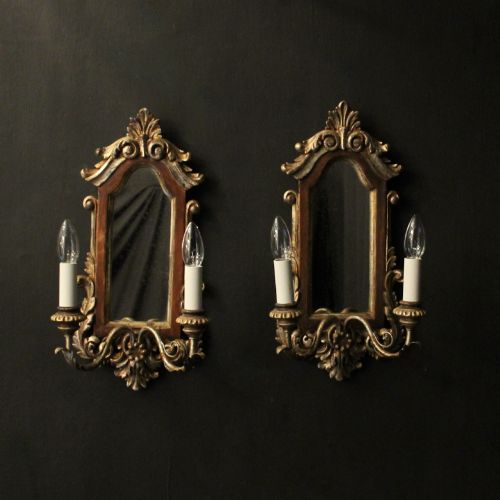
Origins heavily lean towards French workshops, complemented by Italian giltwood girandoles and occasional English designs. Most surviving examples date from the late nineteenth century through to the 1950s.
Materials and construction
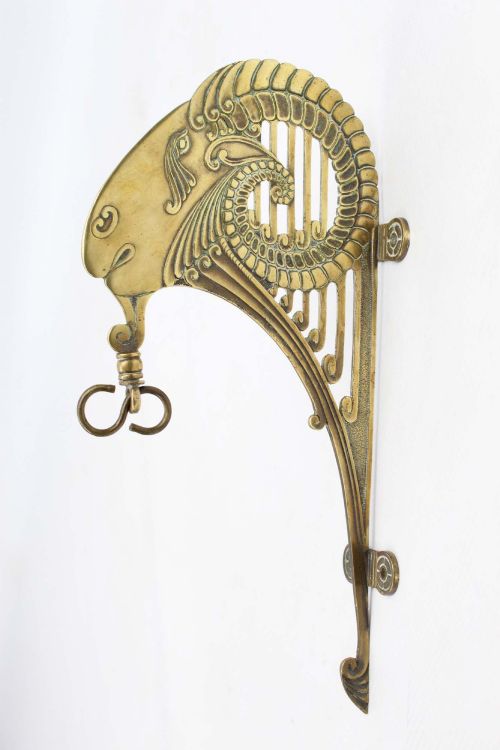
Construction relies primarily on cast metals such as brass, bronze, and gilt metal, frequently enhanced with gold leaf or ormolu finishes. Makers employed gilding techniques to achieve a rich, enduring metallic sheen across arms, backplates, and decorative motifs.
Many examples incorporate glass components, crystal drops, or mirrored backplates designed to reflect and amplify candle or electric illumination. Carved giltwood also appears in Italian girandoles, combining wooden carving with metallic paint or leaf.
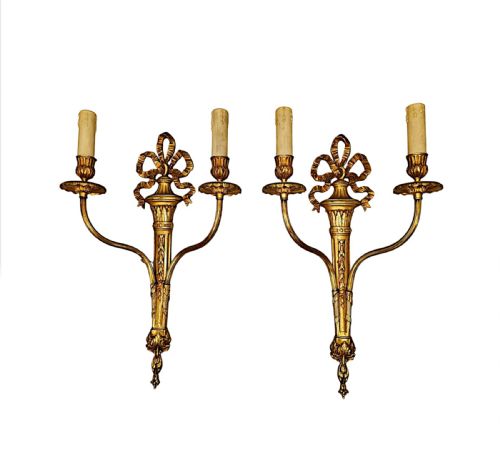
Several wall lights feature carved gilded ribbons tied in permanent metallic bows, bringing soft textile shapes to rigid bronze.
What distinguishes quality
Quality reveals itself in the crispness of metal casting and the depth of the gilding applied to the surface. Finer examples display sharply defined scrollwork, ribbons, and acanthus leaves rather than soft, blurred details.
The weight of the metal and the structural integrity of the joints dictate durability and overall presence on the wall. Matching sets that retain their original unified finish and complete crystal or glass elements command greater appreciation.
W.A.S. Benson·Maison Baguès·Casier
The Vintage Gold Wall Lights Glossary
- Girandole
- A decorative wall bracket holding candles or electric lamps, frequently paired with a mirror. The reflective glass helps to multiply the light within the room.
- Ormolu
- Finely chased gilt bronze used for decorative mounts and light fittings. This technique produces a rich golden appearance that resists tarnishing.
- Sconce
- A wall-mounted lighting fixture attached directly to a vertical surface. These fixtures historically held candles but are now frequently wired for electricity.
- Louis XVI
- A neoclassical design style characterised by straight lines, symmetry, and classical motifs such as ribbons and urns. This aesthetic heavily influences many twentieth-century wall lights.
Vintage Gold Wall Lights: Frequently Asked Questions
How do I wire antique wall lights?
Most vintage wall fixtures require professional rewiring to meet modern electrical safety standards. An electrician can easily adapt older brass and bronze arms for contemporary wall circuits.
Ensure that the internal wiring conduits are inspected during installation, particularly on older nineteenth-century metal pieces.
Are these lights suitable for bathrooms?
Original vintage wall lights rarely carry modern IP waterproof ratings. Placing them in damp environments requires careful consideration and professional advice regarding placement zones.
Dry hallways, living rooms, and bedrooms remain the most suitable locations for preserving delicate gilt finishes.
How do I clean gilded metal fittings?
Dust gently using a soft, dry brush to avoid wearing away delicate gilt surfaces. Water and chemical polishes can damage original ormolu and gilt bronze.
Regular light dusting prevents grime accumulation without risking the integrity of the antique metallic finish.
What is the difference between a sconce and a girandole?
A sconce is a general term for any wall-mounted light fixture. A girandole specifically incorporates a mirror into the backplate to reflect the illumination.
Both forms were historically designed for candles before being adapted for electricity in later decades.