


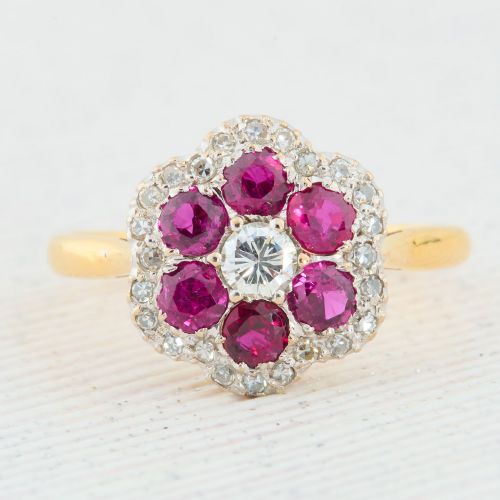
Vintage Gold Ruby Band
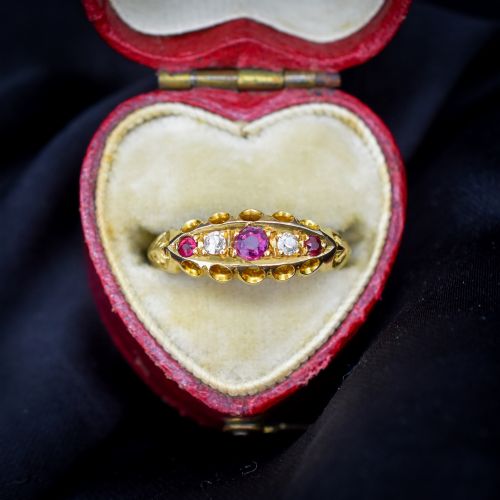
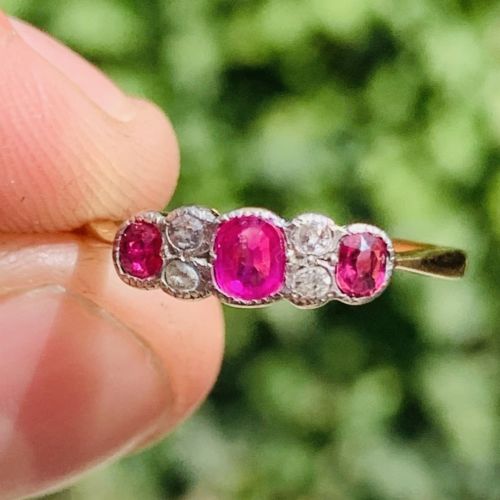
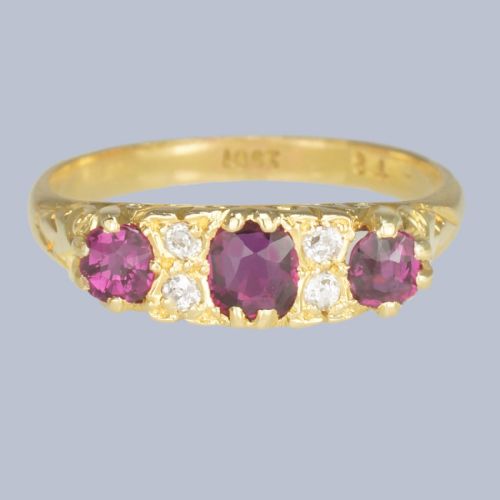
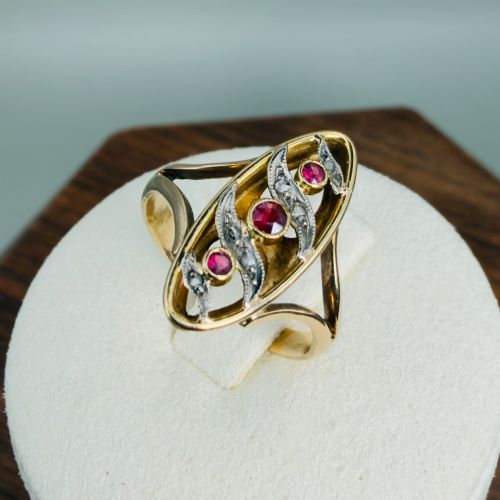
A vintage gold ruby band pairs rich red stones with bright yellow gold or platinum in enduring finger rings spanning the Victorian to mid-century eras.
Vintage Gold Ruby Band
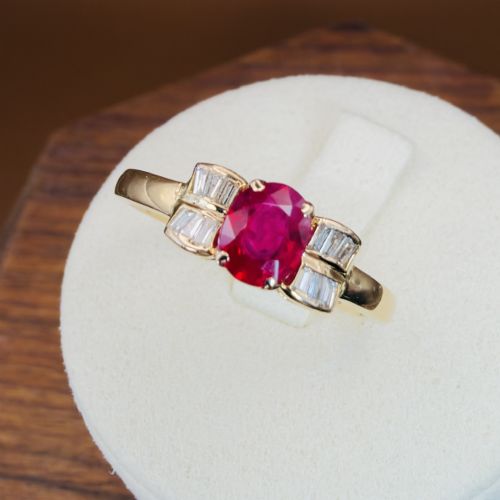
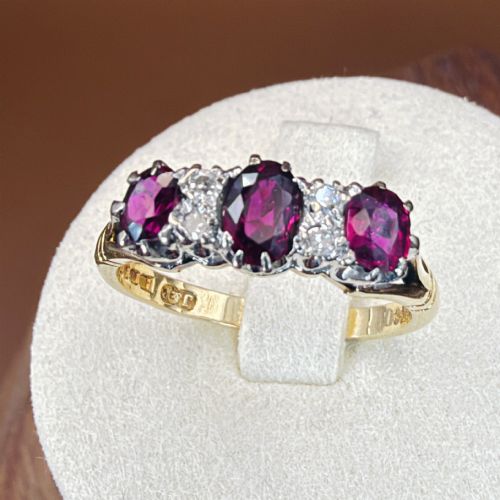
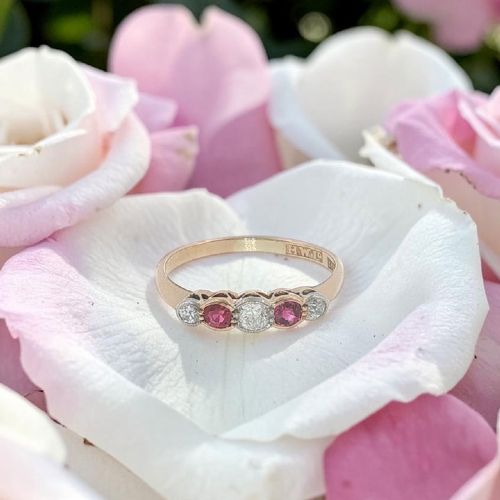
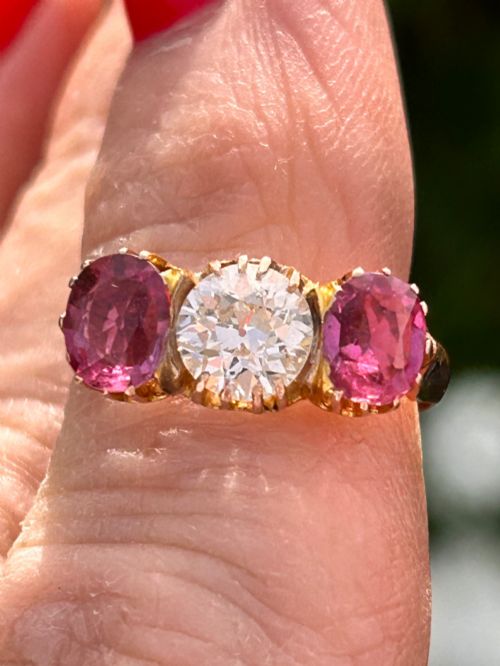
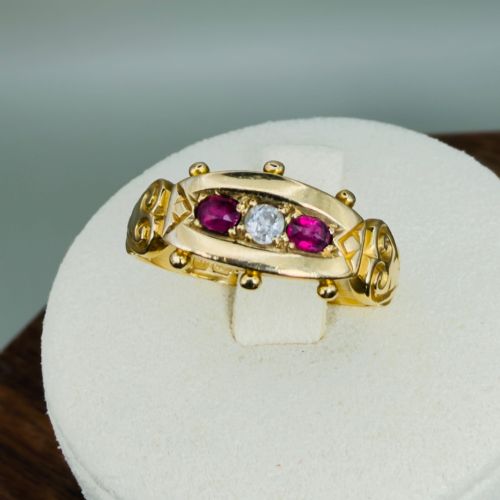
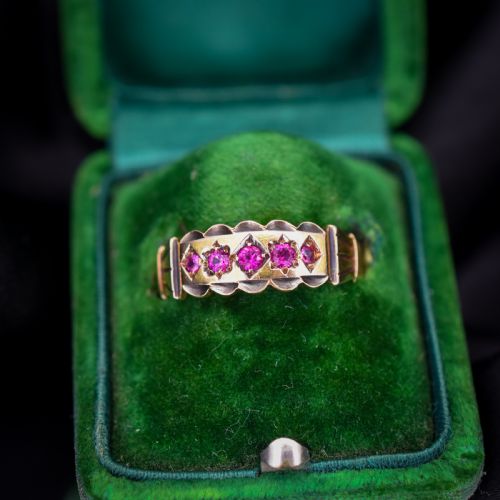
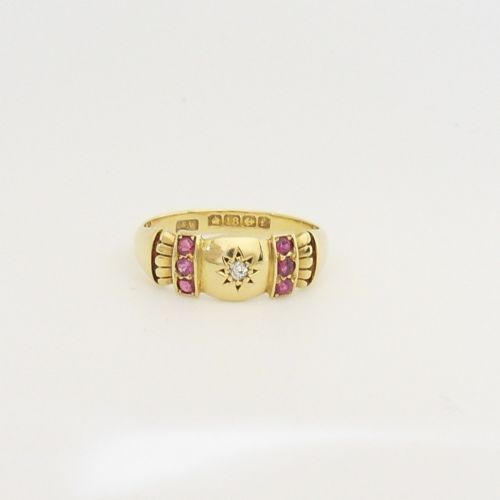
A vintage gold ruby band combines striking red rubies with gold or platinum settings, taking forms that range from simple multi-stone rows to elaborate cluster rings. These pieces span periods from late Victorian and Edwardian decades through the mid-century modern era.
Buyers seeking a vintage gold ruby band encounter diverse styles including boat rings, starbursts, gypsy settings, and trilogy layouts. Edwardian and Victorian examples sit alongside 1950s and 1960s designs to form a rich selection of ring styles.
How they were made
Goldsmiths utilised 18ct gold, 15ct gold, 9ct gold, and platinum to form the structural bands and mountings for these rings. Stones were secured using claw settings, flush gypsy mountings, or integrated channel layouts.
Cut styles reflect the technological shifts of each era, pairing old-cut, oval-cut, baguette, and princess-cut diamonds alongside rubies. Hallmarks stamped into the metal often record specific towns like Chester and Birmingham alongside production dates.
What varies in quality
Quality rests upon the stone origin and cut, distinguishing pieces set with Burmese or Mogok rubies from standard commercial gems. The presence of specific gemmological reports and crisp hallmarks adds documented certainty to a piece.
The weight of the metal and the precision of the stone setting dictate structural integrity across the range. Heavier gold bands and secure claw work separate fine artisan output from lighter commercial production.
The Vintage Gold Ruby Band Glossary
- Trilogy ring
- A ring featuring three principal stones, often symbolising past, present and future. This layout frequently pairs a central ruby flanked by diamonds.
- Gypsy ring
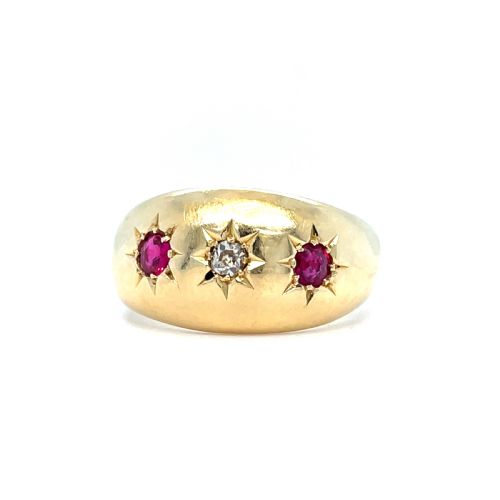
- A style where stones are flush-set directly into a thick, tapered gold band. This mounting style became particularly popular during the late Victorian and Edwardian periods.
- Navette ring
- A ring featuring a pointed, boat-shaped bezel that stretches along the finger. The shape allows for intricate clusters of rubies and diamonds.
- Old-cut diamond
- A hand-faceted diamond cut before modern machine standards were established. These stones display smaller tables and high crowns.
- Starburst
- A raised cluster design where radiating lines or settings mimic the points of a star. Rubies set centrally in these motifs are framed by surrounding diamonds.
Vintage Gold Ruby Band: Frequently Asked Questions
How do I style a vintage ruby band?
These rings pair easily with plain gold bands or sit comfortably on their own as a standalone piece. Their versatile profiles allow daily wear alongside modern jewellery.
Consider the metal colour of your existing pieces when selecting a gold, yellow gold, or platinum mounting. Mixing eras creates a collected personal aesthetic on the hand.
What periods do these rings cover?
The selection spans from the late nineteenth century through Victorian, Edwardian, and Art Deco eras into the mid-century period. Pieces frequently display hallmarks or stylistic cues pointing to specific decades.
Victorian and Edwardian examples often feature intricate engraved details or starburst motifs. Later mid-century iterations lean towards cleaner lines and heavier gold weights.
How do I care for my gold ruby ring?
Clean your ring gently using warm soapy water and a soft brush to remove everyday oils from the gemstones. Avoid harsh chemical dips that might harm softer companion stones like pearls.
Store the ring in a fabric-lined box away from harder jewellery to prevent scratches on the gold and stones. Periodic checks by a specialist ensure the claw settings remain secure.
What metals are used in these bands?
Goldsmiths utilised 18ct yellow gold, 15ct gold, 9ct gold, and platinum across these historic pieces. Metal purity is often verified by official town marks and fineness stamps.
Yellow gold provides a warm traditional contrast to the deep red of rubies. Platinum and white gold mountings offer a bright, reflective setting favoured in Edwardian and Art Deco designs.