
Vintage Gold Overmantel Mirror
A vintage gold overmantel mirror brings proportion, warmth and architectural weight to a chimney breast, reflecting light deep into a room.
Vintage Gold Overmantel Mirror
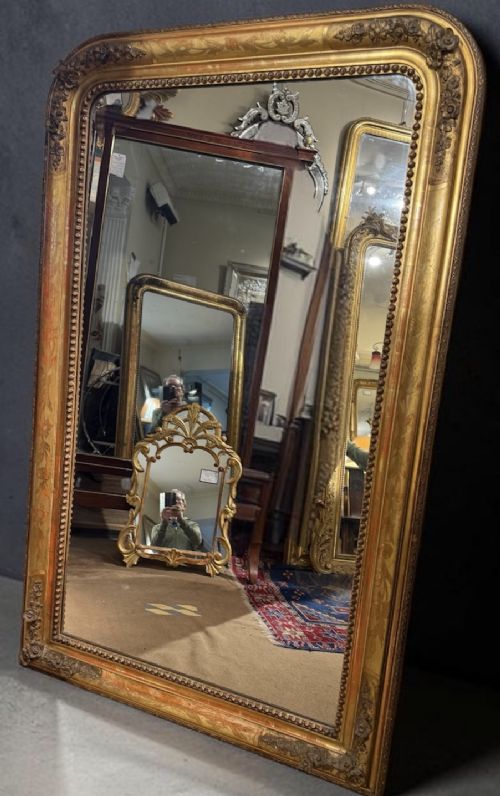
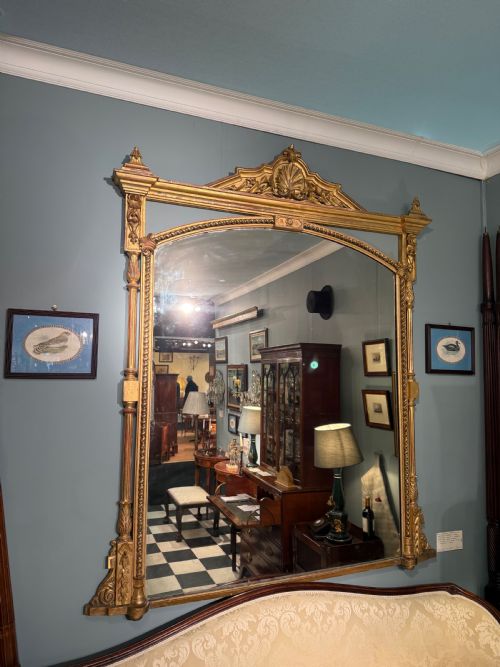
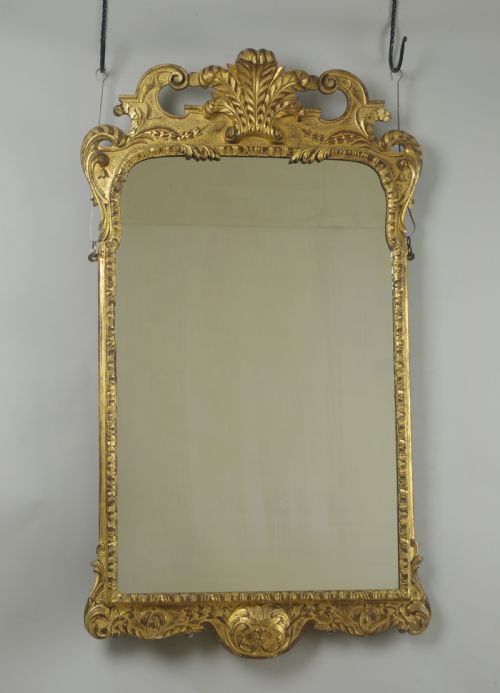
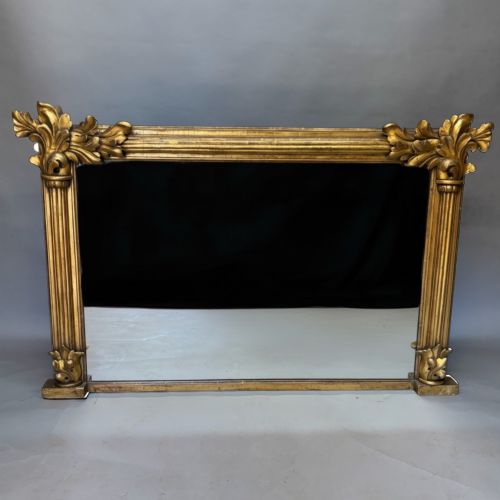
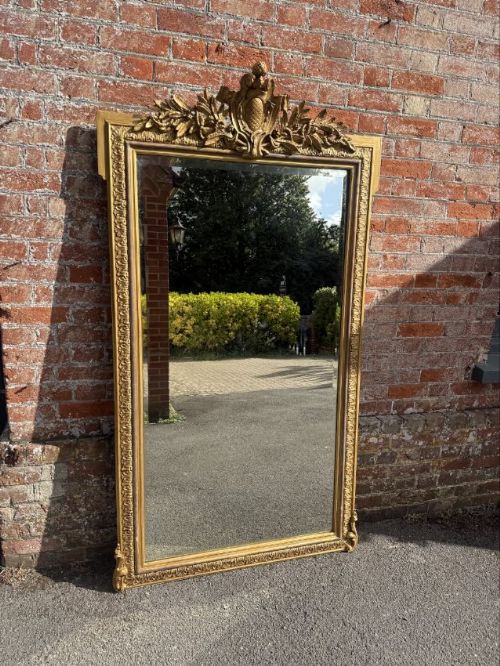
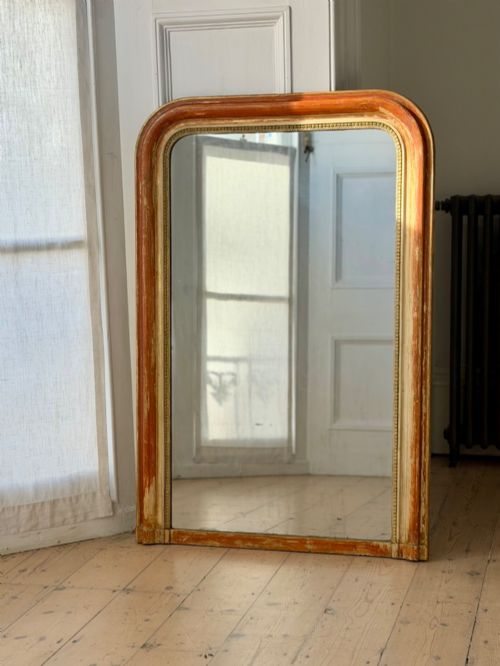
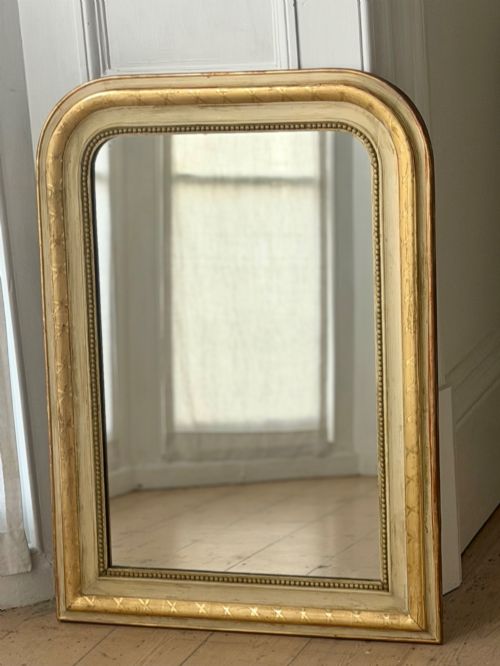
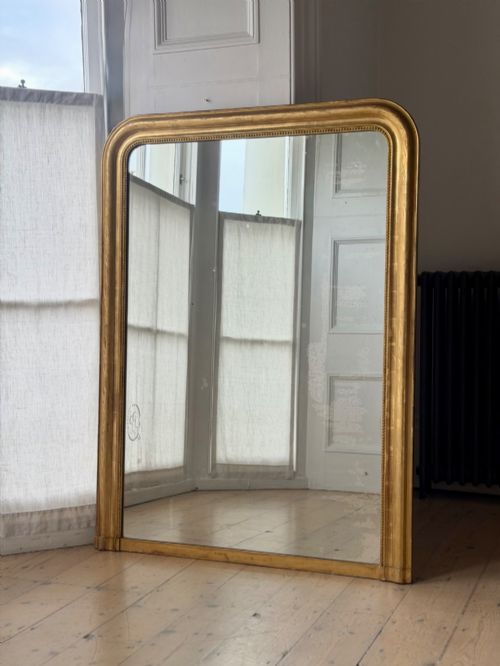
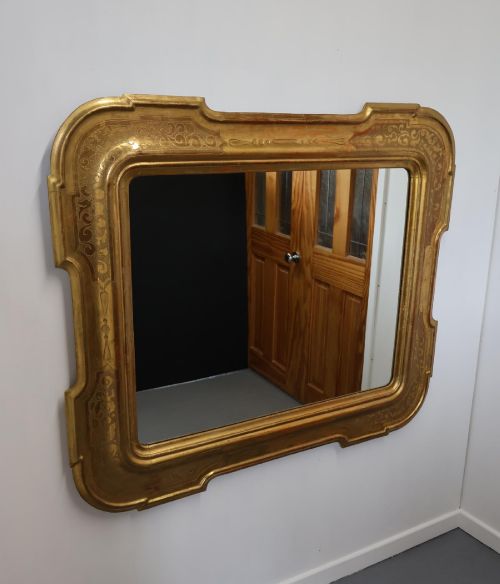
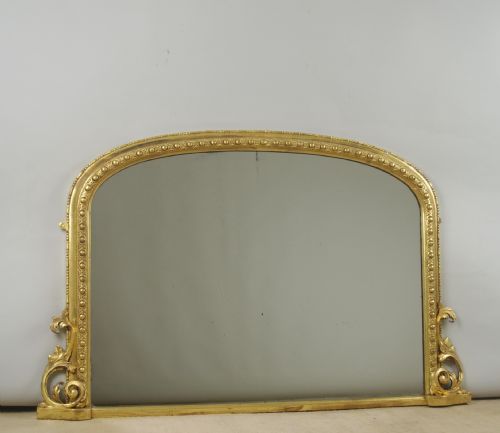
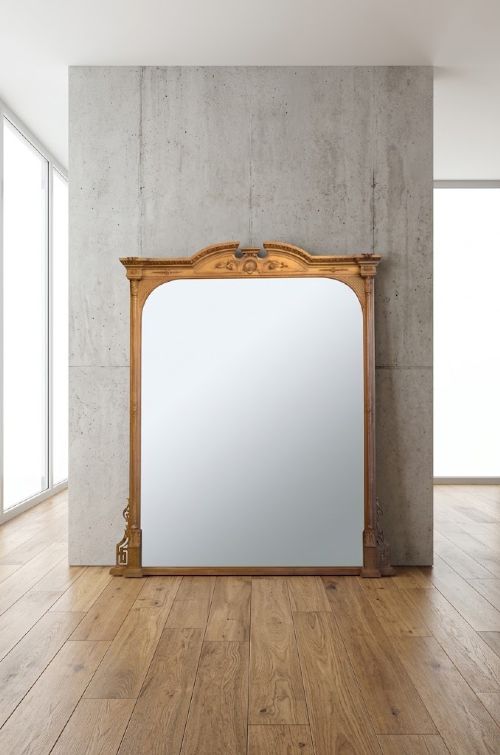
A vintage gold overmantel mirror is designed specifically to sit above a fireplace, typically featuring a wide horizontal or tall arched format that commands the chimney breast. The pieces encountered on this page span the 18th, 19th, and early 20th centuries, originating from English workshops and French provincial or Parisian ateliers.
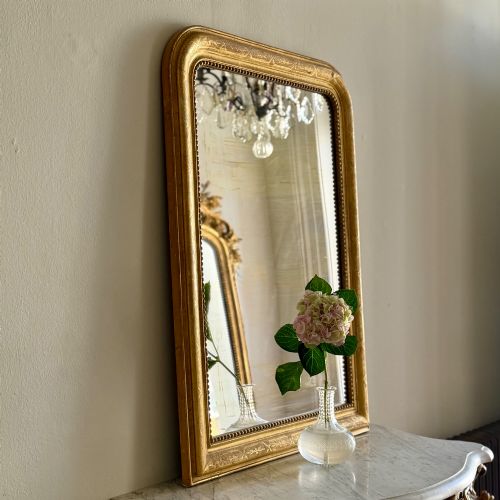
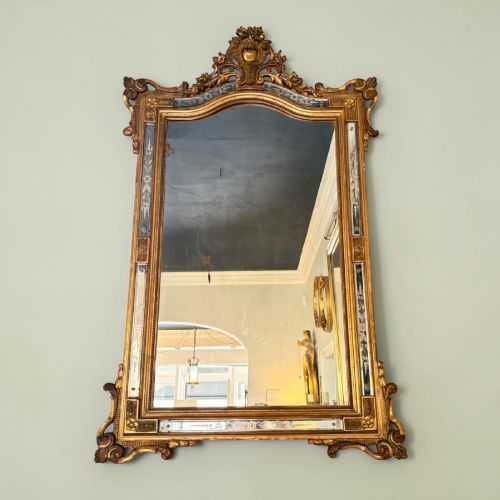
The styles range from restrained Louis Philippe and classical architectural frames to flamboyant Rococo Revival and Florentine carvings. Wall mirrors, pier mirrors and overmantel mirrors share similar vocabulary here, unified by their golden surfaces and domestic placement.
How they were made
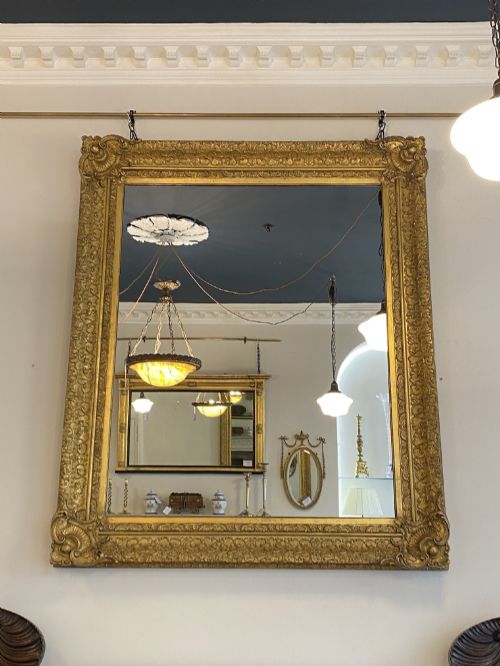
Makers carved wooden foundations from pine, hardwood or composition substrates, often applying intricate layers of gesso to build up high-relief scrollwork, floral motifs and crests. Gilding involved applying thin gold leaf over bole or utilising gold paint on prepared wooden surfaces.
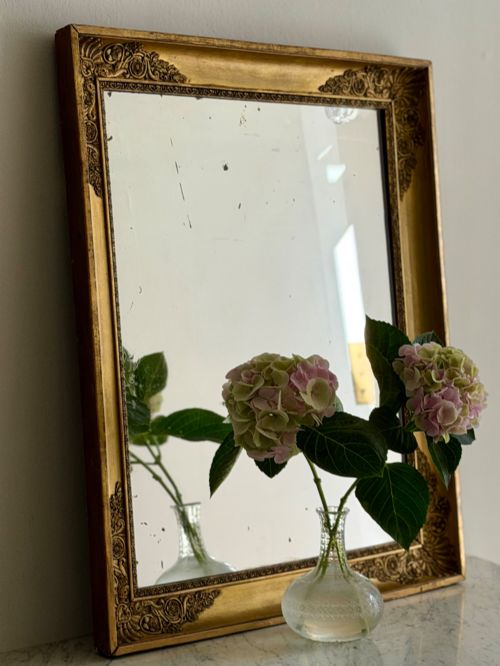
Mirror plates include antique mercury glass with characteristic foxing, bevelled edges and traditional heavy sheet glass secured into the rabbet with wooden backs. Structural joinery relies on pegged corners and braced frames built to support substantial weight.
Listings feature 19th-century French and English pieces utilising gesso, giltwood, and antique mirror glass across Victorian and Rococo styles.
What varies in quality
Quality rests in the crispness of the hand-carving and the depth of the gesso relief, where superior examples exhibit sharp undercut details rather than soft, moulded contours. The integrity of the original gilding and the character of the antique mirror plate establish the visual depth of the piece.
Proportion and scale dictate desirability, with heavier architectural frames maintaining structural rigidity and balanced sight lines across grand salon proportions.
The Vintage Gold Overmantel Mirror Glossary
- Gesso
- A plaster-like mixture applied to wooden frames as a smooth base for gilding and intricate relief moulding. It allows carvers to achieve fine decorative details before applying gold leaf.
- Overmantel
- A large mirror or painting specifically proportioned to hang on the wall directly above a fireplace mantelpiece. These frames often match the horizontal sweep of the hearth below.
- Foxing
- Small dark spots and speckles that develop within antique mirror plates as the silvering degrades over decades. This natural ageing process creates a mottled, atmospheric reflection.
- Trumeau
- A decorative wall mirror fitted into a wood-panelled pier or set above a mantel, often incorporating painted panels or carvings above the glass. It represents a classic French interior style.
- Pier glass
- A tall mirror designed to hang on the narrow pier of wall between two windows. Their vertical proportions often mirror the architectural rhythm of historic rooms.
Vintage Gold Overmantel Mirror: Frequently Asked Questions
How do I hang an overmantel mirror safely?
These frames carry significant weight due to their dense wooden construction and heavy glass plates. Secure fixings must engage directly with wall studs or masonry using heavy-duty brackets rated for the load.
Professional installation ensures the weight distributes evenly along the lower support ledge and upper security hooks.
What is Louis Philippe style?
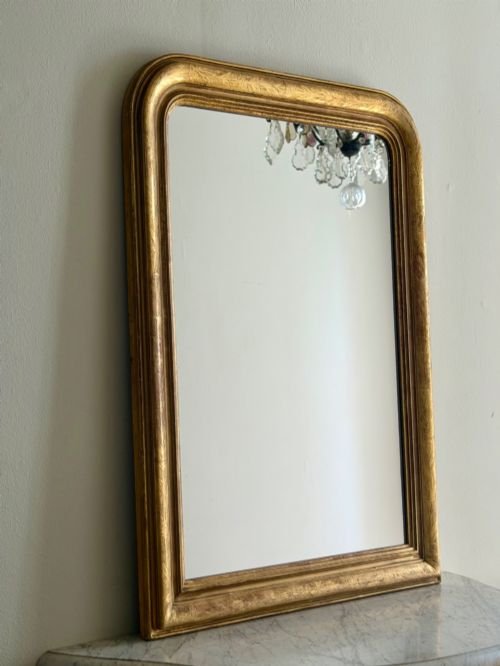
Louis Philippe mirrors date from the mid 19th century, characterised by gently rounded top corners and clean, restrained framing. They offer a simpler silhouette than ornate Rococo pieces.
This understated elegance makes them versatile additions to both traditional and contemporary interiors.
Can I clean foxed mirror glass?
Foxed glass carries historical ageing caused by the breakdown of the backing over generations. Standard glass cleaners will not remove these internal spots and can damage fragile edges.
Gentle dusting with a dry microfiber cloth preserves the delicate surface and protects the antique silvering.
How do I date a gold mirror?
Dating relies on examining the construction of the wooden backboards, the assembly nails, and the manufacturing technique of the glass plate. Hand-carved gesso details and mercury silvering typically point to 18th or 19th century origins.
Style indicators such as ribbon crests or ebonised highlights also help place the piece within Victorian or Edwardian periods.