
Vintage Gold Necklace Drop
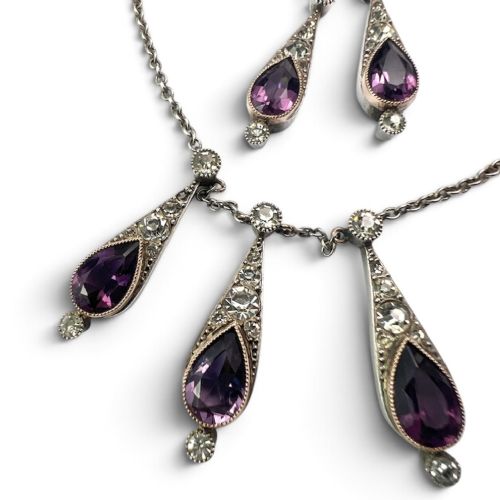
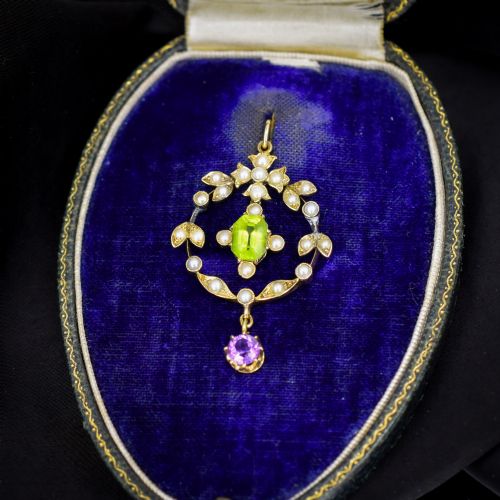
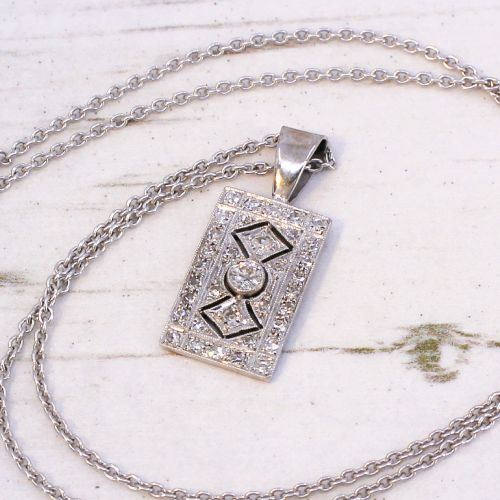
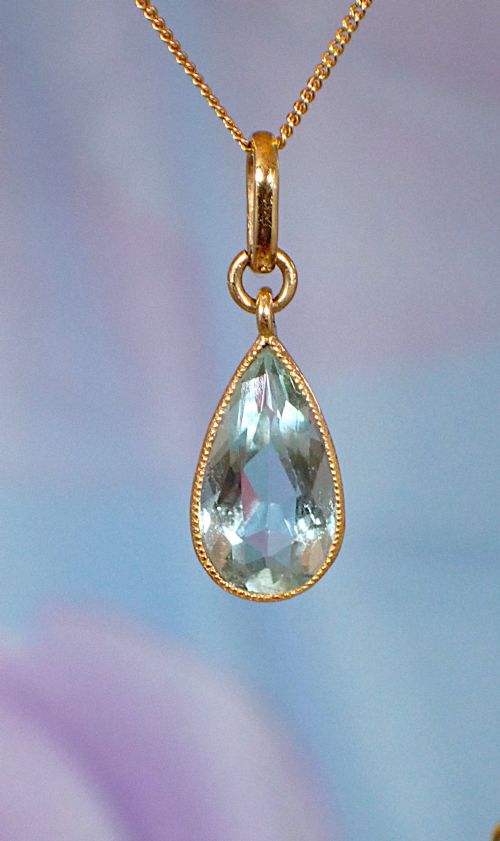
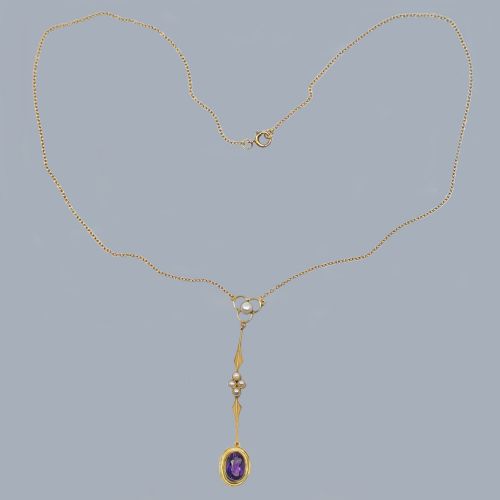
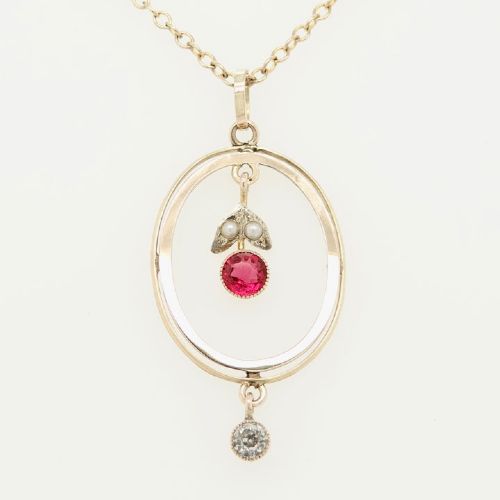
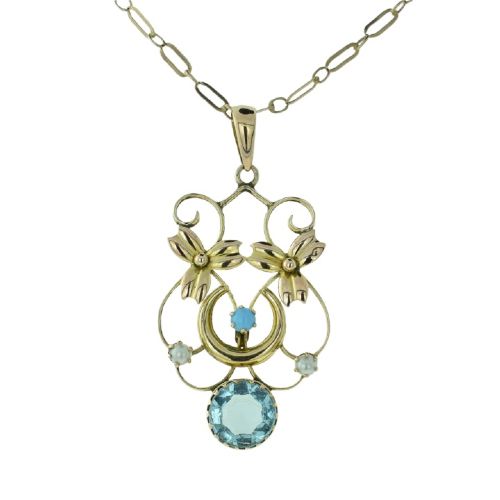
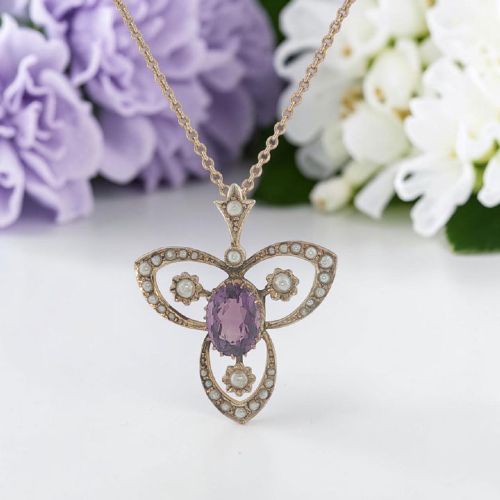
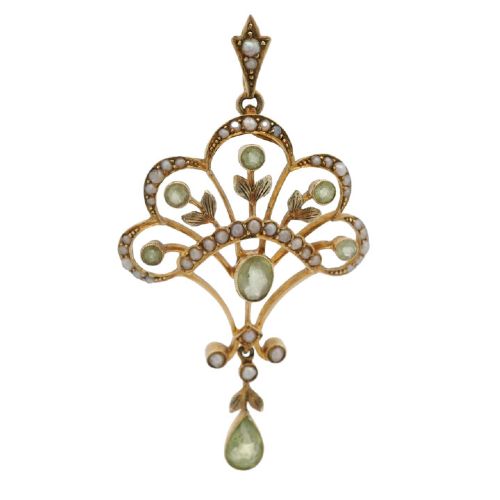
A vintage gold necklace drop suspends gemstones and pearls from delicate chains across Edwardian, Victorian and Art Deco designs.
Vintage Gold Necklace Drop
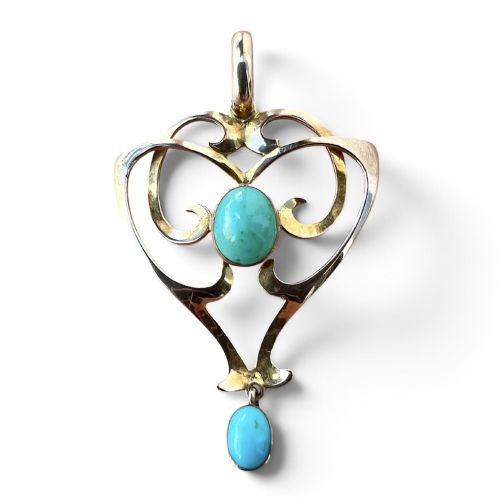
A vintage gold necklace drop places pendant elements and lavaliers along chains, drawing the eye toward suspended gemstones. These pieces span Victorian, Edwardian and Art Deco periods, encompassing distinct stylistic movements such as Art Nouveau and Arts and Crafts.
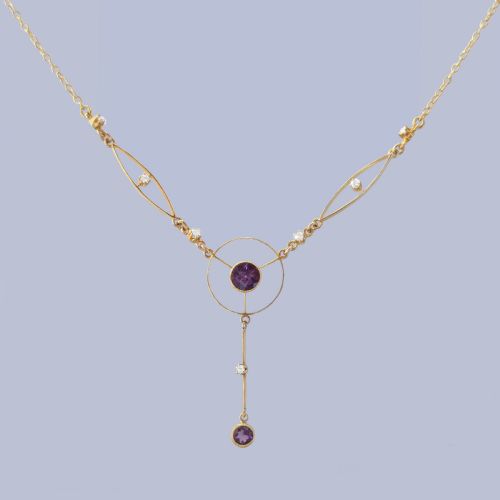
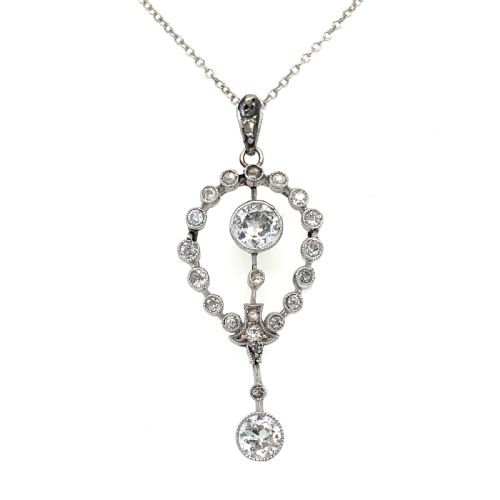
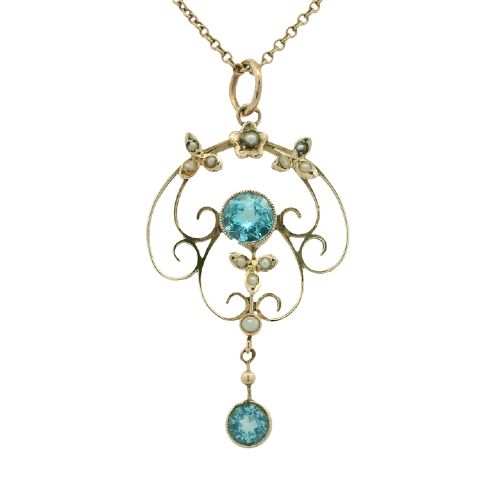
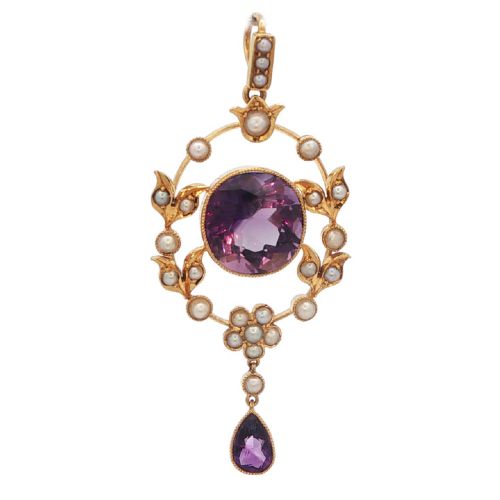
The most common variants on this page pair 9ct or 15ct gold with amethyst, aquamarine, peridot, seed pearls and diamonds. Drop necklaces and pendants utilise articulated mountings that let the central stone move independently.
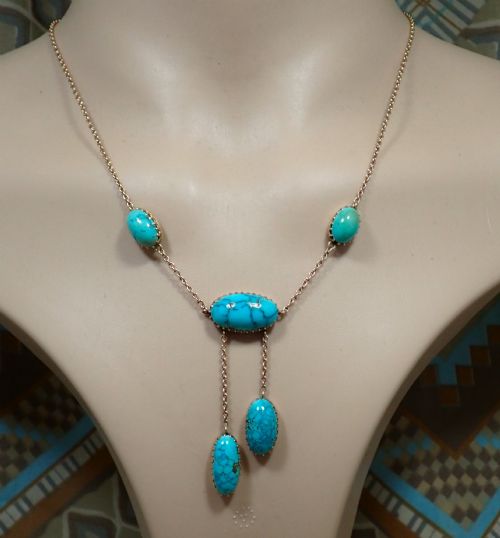
Configurations range from simple negligee necklaces to elaborate fringe designs and multi-stone lavaliers. Makers constructed these items to highlight specific coloured stones, often incorporating smaller seed pearls as borders.
Materials and construction
Goldsmiths worked primarily in 9ct and 15ct yellow and rose gold, occasionally employing 18ct gold, white gold or platinum for specific gemstone settings. Chains and mounts incorporate hand-assembled links paired with secure box clasps or bolt rings.
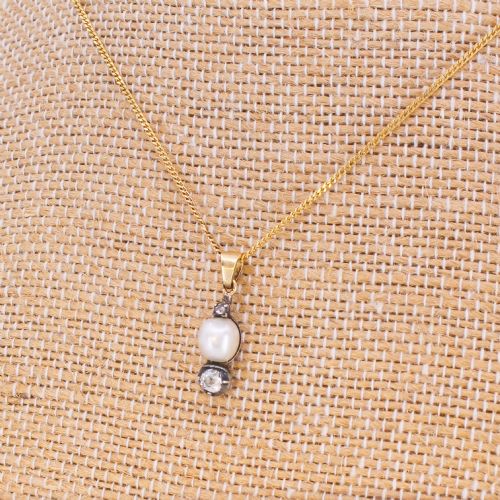
Gemstones including amethyst, aquamarine, peridot, tourmaline and opal received old-cut diamond accents and delicate seed pearls. Stones were secured using collet settings, claw settings or fine bezel work designed to maximise light passage.
Artisans combined casting and wire-work techniques to create fluid drop elements, lavalier loops and fringe components. Soldered joints supported articulating drops while maintaining structural integrity across slender profiles.
Listings feature pieces spanning Victorian, Edwardian, Art Deco and Mid-Century periods, utilising 9ct and 15ct gold alongside diamonds, seed pearls and amethysts.
Distinguishing quality
The choice of gold purity, such as 15ct gold versus 9ct gold, establishes a baseline for material quality in these pieces. Higher-tier examples feature matched natural gemstones with strong colour saturation and minimal inclusions.
Construction intricacy separates standard production from superior craftsmanship, visible in hand-engraved details, fully articulated drop joints and secure pearl settings. Maker attribution, such as signed components from known workshops, adds distinction.
The integrity of the original chain matching the pendant indicates a well-preserved piece. Expert stone-cutting, particularly in old-cut diamonds and cabochon opals, elevates the overall execution.
Deakin & Francis·S. Blanckensee & Son
The Vintage Gold Necklace Drop Glossary
- Lavalier
- A pendant necklace featuring a central stone from which one or more smaller drops are suspended. This style gained prominence during the Edwardian era.
- Negligee necklace
- A necklace design featuring two unequal drops hanging from a central ring or motif, popular in Edwardian and Arts and Crafts jewellery.
- Seed pearl
- A very small, naturally occurring or cultured pearl used extensively as decorative borders in Edwardian and Victorian pendant designs.
- Collet setting
- A metal band that wraps around the girdle of a gemstone to secure it in place, common in antique gold mountings.
- Cabochon
- A gemstone shaped and polished with a smooth, convex domed surface rather than faceted edges, frequently seen on opals and turquoises.
Vintage Gold Necklace Drop: Frequently Asked Questions
How do I style a drop necklace?
Drop necklaces complement lower necklines where the suspended stones and pendant elements can rest directly against the skin.
They pair well with period attire or modern minimalist outfits that allow the intricate goldwork and coloured gems to stand out.
How do I date an Edwardian pendant?
Edwardian pieces typically date from 1901 to 1910, often displaying platinum-topped gold, millegrain edges and light floral motifs.
The presence of seed pearls alongside aquamarine or amethyst frequently points to this specific period of manufacture.
Are these chains original?
Many listings include original chains that match the gold purity and wear pattern of the pendant drop.
Collectors look for consistent patination across both the main pendant and the accompanying chain links.