
Vintage Gold Halo Ring
When you search for a vintage gold halo ring, you encounter clusters of diamonds circling centre stones across multiple periods.
Vintage Gold Halo Ring
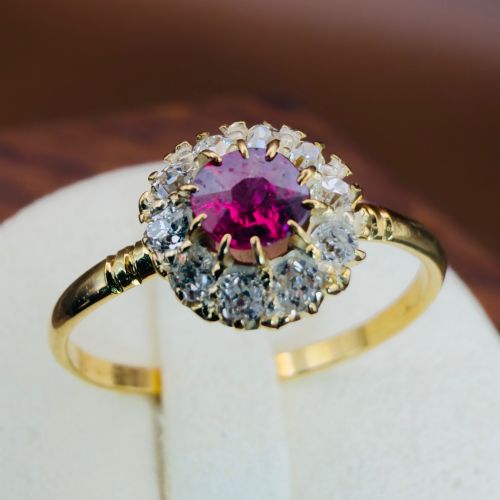
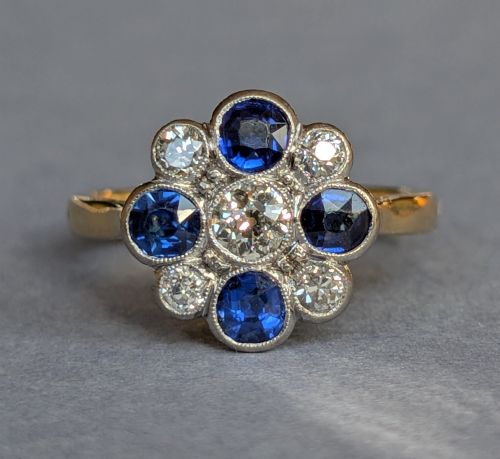
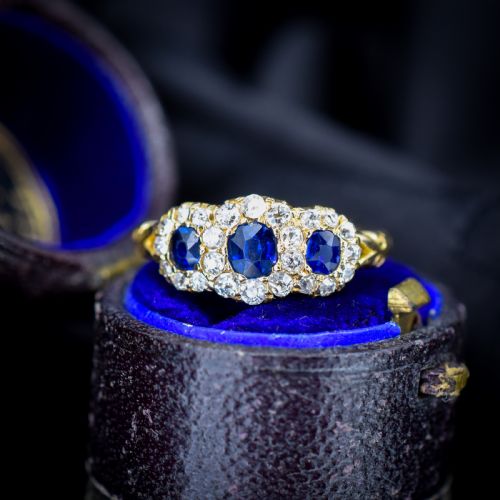
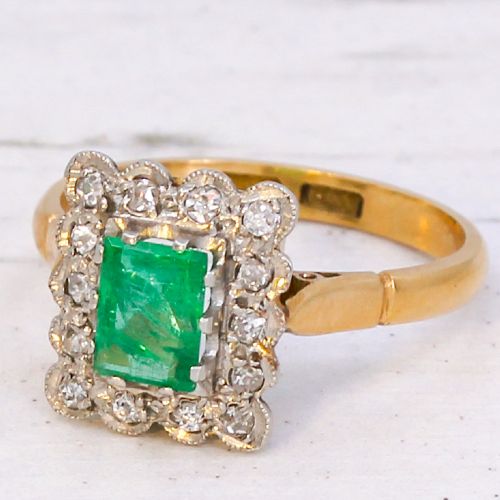
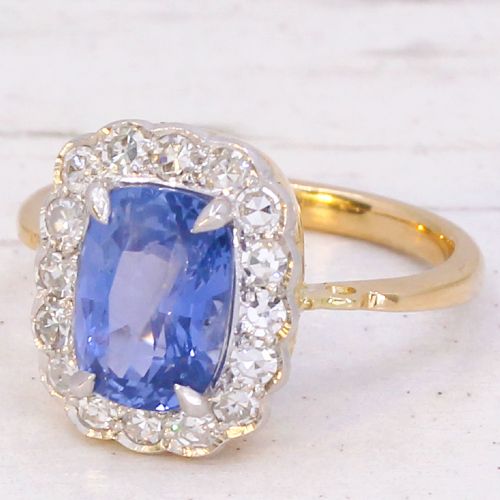
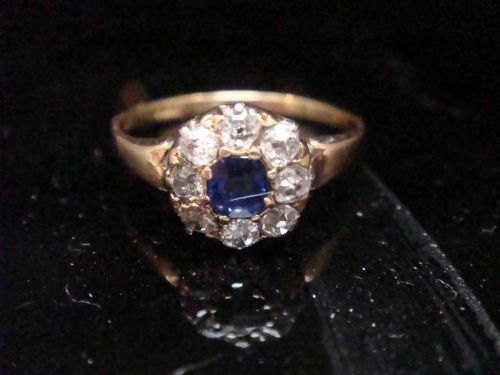
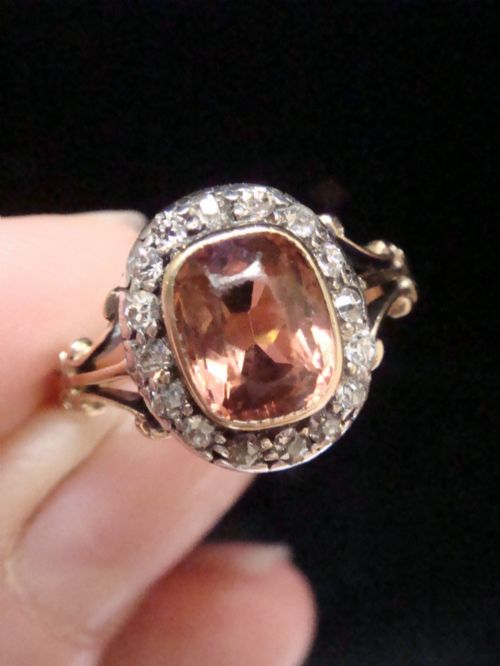
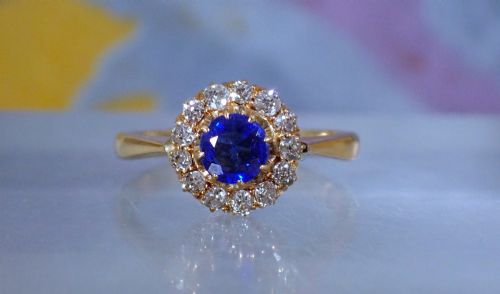
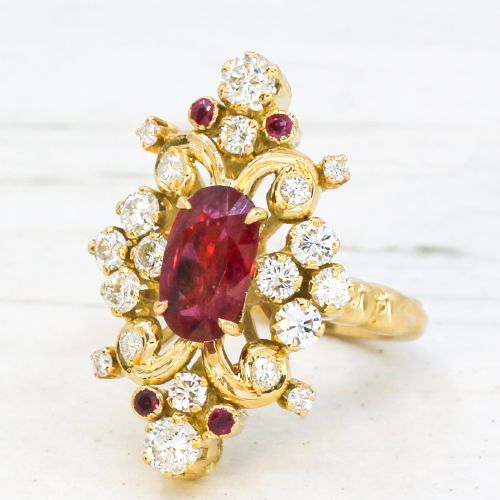
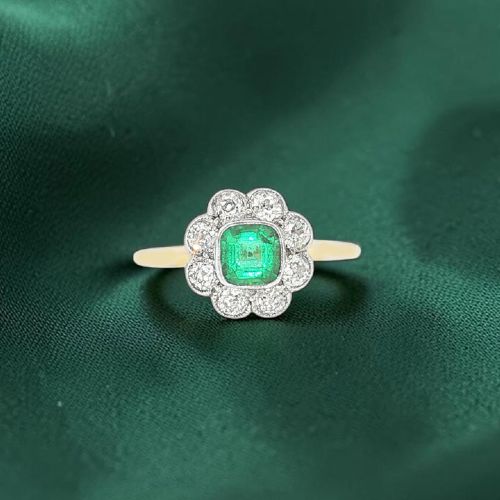
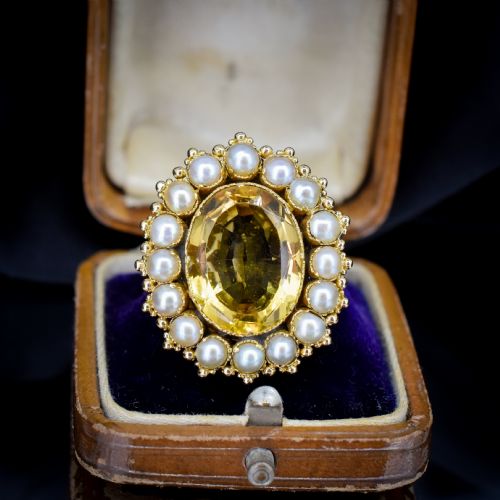
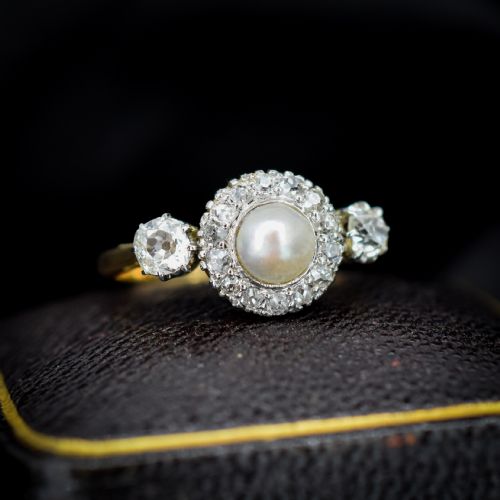
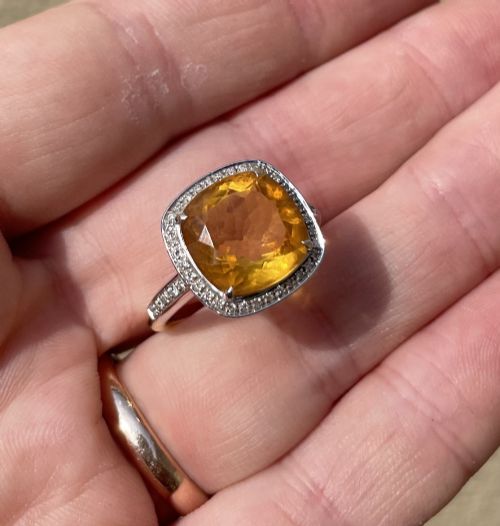
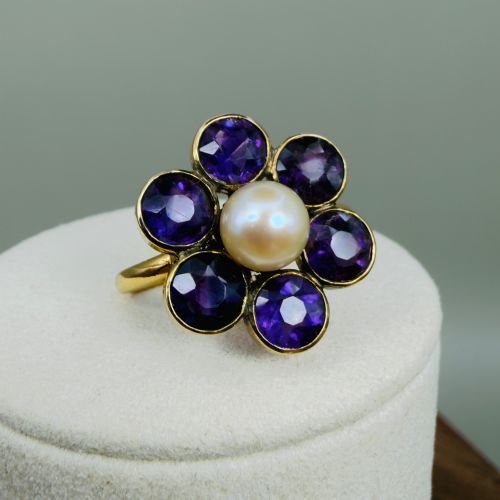
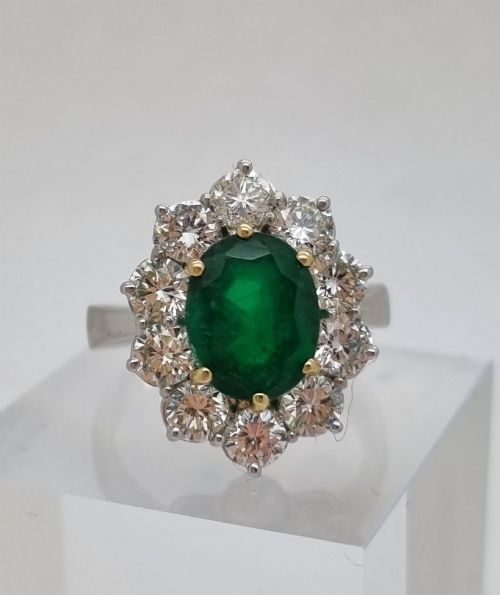
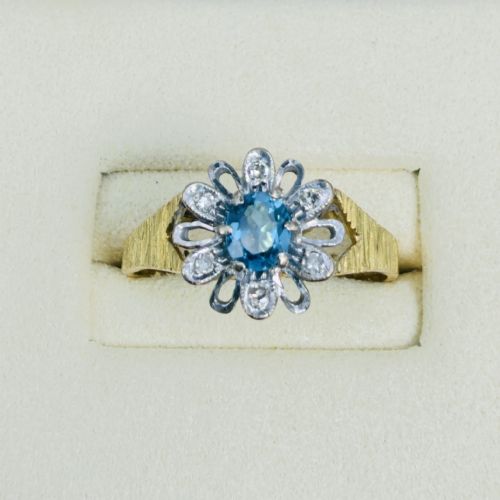
A vintage gold halo ring centres on a prominent gemstone encircled by smaller accent stones, typically diamonds forming a border. These pieces span periods from the Georgian and Victorian eras through Edwardian, Art Deco, and mid-century modern designs. Common configurations take the form of daisy clusters, floral motifs, or geometric shapes.
The selections available here range widely in origin and scale, grouping together rings set with sapphires, rubies, emeralds, opals, citrines, and pearls. Many examples utilise yellow or white 18ct gold mounts, alongside occasional platinum or lower carat gold variations.
Buyers frequently encounter antique pieces featuring old cut diamonds paired with unheated or untreated coloured stones. These rings served as sentimental tokens, engagement symbols, and fashionable dress jewellery throughout the nineteenth and twentieth centuries.
How they were made
Goldsmiths constructed these mountings predominantly in 18ct yellow or white gold, alongside platinum settings used particularly during the Edwardian and Art Deco periods. Stones were secured using claw, bezel, or flush settings designed to maximise light entry into the central gem and surrounding border.
Lapidaries shaped central gems into various cuts including old mine cuts, cushion cuts, oval facets, and smooth cabochons. Surrounding stones were typically matched carefully for size and clarity to create a unified ring of light around the main gemstone.
Some rings double as infinity symbols or floral daisy clusters designed to look like everlasting gardens on the hand.
What varies in quality
The quality of a halo ring depends heavily on the natural origin and clarity of the central gemstone, particularly when certified unheated rubies, sapphires, or emeralds are involved. Fine examples demonstrate exceptional colour saturation and minimal inclusion within the main stone.
Craftsmanship is visible in the uniformity of the surrounding diamond cluster and the delicacy of the metalwork connecting the basket to the shank. Well-preserved pieces retain crisp claw work and hallmarks that reflect their period of manufacture without excessive thinning of the band.
The Vintage Gold Halo Ring Glossary
- Halo ring
- A ring design featuring a central gemstone encircled by a concentric border of smaller stones, usually diamonds. This arrangement enhances the visual presence and perceived size of the main gem.
- Old cut diamond
- A diamond cut by hand before modern machinery standardised proportions, typically characterised by a smaller table, higher crown, and open culet. These stones display a distinctive candlelit sparkle.
- Cluster ring
- A jewellery form where multiple gemstones are grouped closely together to form a single design. They often resemble flowers or geometric patterns.
- Navette
- A boat-shaped gemstone setting or ring silhouette that tapers to pointed ends at either side. This style elongates the appearance of the finger.
- Cabochon
- A gemstone shaped and polished with a smooth, rounded convex surface rather than faceted edges. This cut is common for opals, moonstones, and certain sapphires.
Vintage Gold Halo Ring: Frequently Asked Questions
What is a halo ring?
A halo ring consists of a central gemstone surrounded by a border of smaller accent stones, usually diamonds. This configuration creates a frame that magnifies the visual impact of the primary gem.
Such designs have remained popular across centuries, appearing frequently in Victorian, Edwardian, and mid-century jewellery collections.
How do I date an antique ring?
Dating involves examining the cut of the stones, the metal composition, and any available hallmarks stamped inside the band. Old mine cut diamonds and specific claw settings often point towards Victorian or Edwardian origins.
Later mid-century pieces display different mounting techniques and gold purities that help narrow down their decade of creation.
Are these rings suitable for daily wear?
Many of these pieces were built for everyday use, particularly robust 18ct gold constructions from the nineteenth and twentieth centuries. Softer stones like opals or pearls require greater care to avoid scratching during routine activities.
Checking the security of the settings periodically helps ensure the stones remain firmly anchored in their mounts.
What stones are used in these rings?
Central stones include sapphires, rubies, emeralds, opals, citrines, amethysts, and pearls paired with diamond borders. Many historical pieces feature untreated or unheated coloured gemstones originating from Burma, Ceylon, or Colombia.
The surrounding border almost exclusively utilises diamonds or smaller white sapphires to create contrast against the coloured centre.