




Vintage Gold Cufflinks
These vintage gold cufflinks bring substance to a shirt cuff through period detail and precious metal.

Vintage Gold Cufflinks
Vintage gold cufflinks are functional fastening accessories for men's dress shirts, produced in various designs across the late nineteenth and twentieth centuries. The pieces available span eras from the Victorian period through Edwardian times and the Art Deco decades into the mid-century.
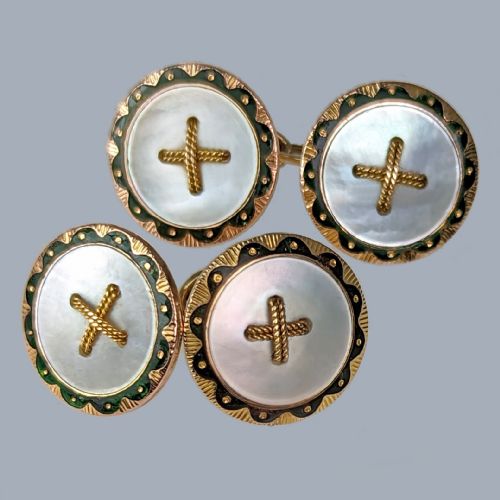
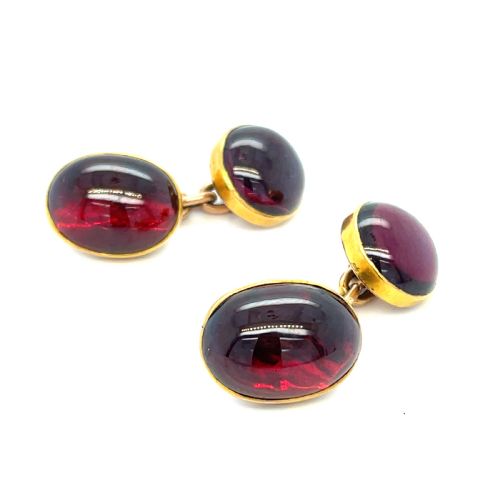
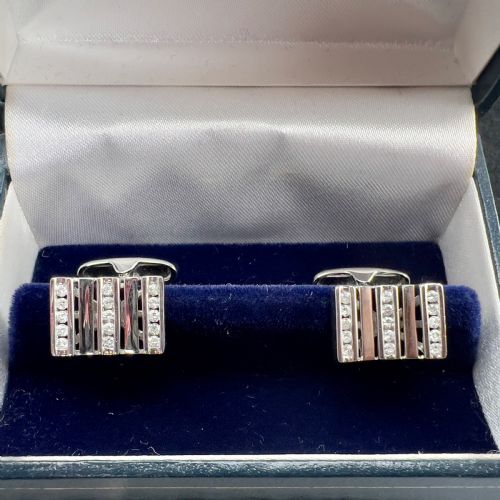
Buyers encounter forms ranging from simple engine-turned oval links in nine-carat and eighteen-carat yellow gold to elaborate geometric enamel work and gemstone-set double-sided pieces. Common materials paired with the gold include mother of pearl, sapphire, diamond, garnet, and enamel.
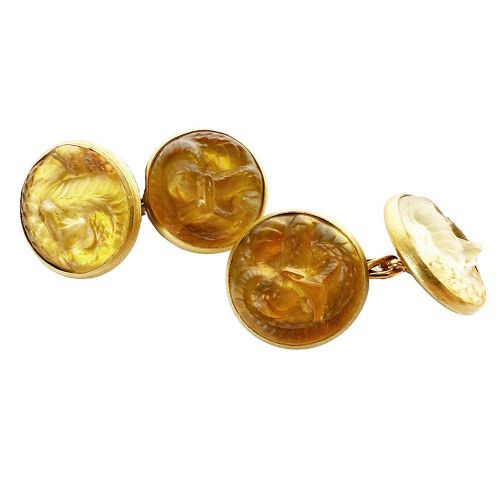
Origin points visible in the inventory include British workshops with Birmingham and Chester hallmarks alongside French makers working in yellow and rose gold. The selection covers styles from Art Nouveau natural motifs to modernist bark textures and strict geometric Art Deco layouts.
How they were made
Maker techniques rely on precious metal forming in nine-carat, fourteen-carat, fifteen-carat, and eighteen-carat gold, alongside platinum highlights. Surfaces receive pattern through engine turning, belt motif engraving, sun ray designs, and bark texture casting.
Ornamentation incorporates vitreous enamel, cabochon gemstones such as agate, garnet, and sapphire, plus organic elements like mother of pearl, lapis lazuli, and Essex crystal. Components join via chain links or rigid bars, often carrying clear town hallmarks and maker stamps.
Elks Lodge members once fastened their cuffs with painted crystal elk heads.
What varies in quality
Quality differences rest on the weight of the solid metal, the crispness of engine-turned patterns, and the precision of enamel work. Pieces featuring double-sided construction or signed maker marks demonstrate higher execution levels.
Gemstone selection and secure setting methods separate standard production from exceptional examples, as do legible hallmarks confirming precise periods and assay offices.
Solomon Blanckensee Son·R Lalique·Payton Pepper Co·Taye Kenning Spencer Ltd·Henry Griffiths·Roy King·Cartier·Kutchinsky·Henry Hobson
The Vintage Gold Cufflinks Glossary
- Engine turned
- A mechanical engraving method that cuts intricate geometric patterns into the metal surface. It creates tactile texture on gold links.
- Cabochon
- A gemstone shaped and polished with a smooth, convex dome rather than faceted edges. This cut highlights the natural colour of stones like garnet and agate.
- Hallmark
- An official stamp indicating metal purity, assay office, and date letter. It provides verifiable proof of origin.
- Double-sided
- A cufflink construction featuring decorative faces connected by a short chain rather than a fixed T-bar. Both ends display the design when worn.
- Essex crystal
- Reverse-carved and painted rock crystal that creates a three-dimensional miniature image. Subjects often include sporting motifs or monograms.
Vintage Gold Cufflinks: Frequently Asked Questions
How do I fasten chain link cufflinks?
Tilt the smaller toggle bar parallel to the post to slide it through the shirt buttonholes. Once through, let the bar drop flat to secure the cuff.
Double-sided links require the same manoeuvre on both ends, as there is no fixed rigid post.
What is the difference between nine-carat and eighteen-carat gold?
Nine-carat gold contains thirty-seven point five percent pure gold alloyed with other metals for durability. Eighteen-carat gold contains seventy-five percent pure gold, offering a richer colour and softer weight.
Both levels appear frequently across the Victorian and twentieth-century selections.
Can I date my cufflinks from hallmarks?
British hallmarks often include a specific letter code indicating the exact year of assay alongside the maker's mark. Birmingham, Chester, and London offices used distinct date stamp cycles.
Assay marks combined with style clues like Art Deco geometry confirm the era of manufacture.
How should I store vintage gold cufflinks?
Keep them in a lined box or individual compartments to prevent metal friction and stone scratching. Enamel and softer gems like mother of pearl require separation from harder diamonds.
Regular dry cloth wiping preserves the polished gold surfaces.