
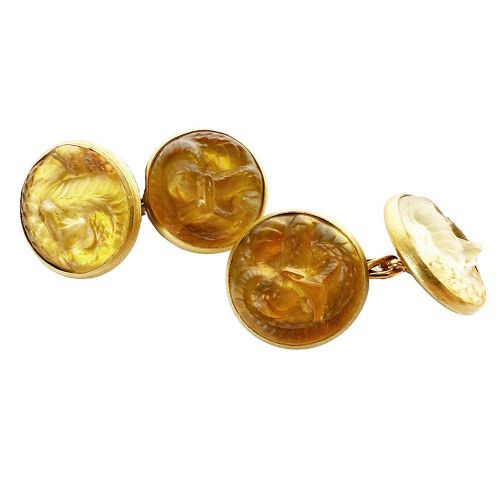


Antique Sleeve Links
Antique sleeve links are the small, functional jewels that fasten a gentleman's cuff, bringing craftsmanship and period character to modern tailoring.
What antique sleeve links are
Antique sleeve links are masculine accessories designed to secure shirt cuffs, appearing across the late nineteenth and early twentieth centuries in forms that reflect changing tastes. When searching for antique sleeve links, collectors encounter pieces ranging from delicate floral motifs to bold, architectural designs.
The examples gathered here span from the late nineteenth century through to the middle of the twentieth century, capturing distinct aesthetic movements. Edwardian and Art Nouveau pieces sit alongside geometric Art Deco designs.
Materials vary widely across the inventory, pairing precious metals with natural stones and vitreous decoration. Buyers frequently find combinations of gold, platinum, enamel, and mother of pearl.
How they were made
The construction of these pieces relies on traditional goldsmithing techniques applied to precious metals such as eighteen-carat yellow gold, gold plate, and platinum. Artisans shaped and joined these metals to create secure double-sided links and hinged fittings.
Surface decoration frequently involves the application of coloured enamel, requiring skilled firing to achieve smooth, durable finishes. Other pieces incorporate mother of pearl and set sapphires, demanding precision in cutting and mounting small gemstones.
Retail Price Guide 2026
Typical UK retail prices for sleeve links, calculated from the Sellingantiques database of over a million retail prices indexed since 2003. This retail price guide relies exclusively on Sellingantiques data; no external sources or auction records are used, so the figures do not describe the wider market.
The selection includes pieces from three distinct design movements: Art Nouveau, Edwardian, and Art Deco.
What varies in quality
Quality in these accessories rests upon the crispness of the metalwork and the integrity of any applied decoration. Enamel work that remains smooth and complete without chips distinguishes finer examples from simpler production.
The choice of materials also dictates the tier of the piece, with heavier gold and platinum settings alongside precious stones marking out superior manufacture. Well-engineered linkages and secure double-sided mountings indicate careful attention to both utility and longevity.
The Antique Sleeve Links Glossary
- Platinum
- A dense, durable white precious metal used in fine jewellery and sleeve links throughout the Edwardian and Art Deco periods.
- Mother of pearl
- An iridescent inner layer of mollusc shell utilised as a decorative inlay in cufflinks.
- Enamel
- A glassy substance fused to metal through high-temperature firing to add colour and pattern.
- Double-sided
- A cufflink construction featuring decorative faces on both ends of the connecting bar rather than a simple T-bar or fixed backing.
Frequently Asked Questions
How do I wear antique sleeve links?
These pieces require French cuff shirts with buttonholes on both sides of the cuff. Insert the smaller toggle through both holes so the decorative face rests outward.
Ensure the mechanism or connecting bar sits comfortably against the wrist without straining the fabric during movement.
Are these links made for daily use?
Solid gold and platinum examples withstand regular wear when handled with reasonable care. Enamelled and mother of pearl components benefit from gentler treatment to avoid impact damage.
Store them in a dedicated box to protect delicate surfaces from scratching against other metal items.
How do I identify Art Deco links?
Art Deco pieces rely on geometric patterns, symmetrical lines, and stylised motifs typical of the nineteen-thirties. Enamel work in contrasting colours frequently defines this aesthetic.
They often feature platinum or white gold settings paired with stark black or green geometric accents.
What does Edwardian mean for cufflinks?
Edwardian items date from the early nineteen-hundreds and often showcase lighter, more refined craftsmanship. Platinum and yellow gold frequently appear alongside pearls and subtle gemstones.
Designs from this era lean towards floral or garland motifs rather than the bold geometry of later decades.