



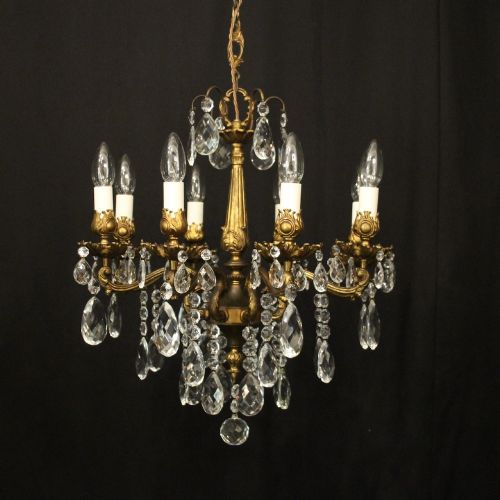
Vintage Gold Chandelier
A vintage gold chandelier brings warmth and illumination to a room through gilded metalwork and crystal drops.
Vintage Gold Chandelier
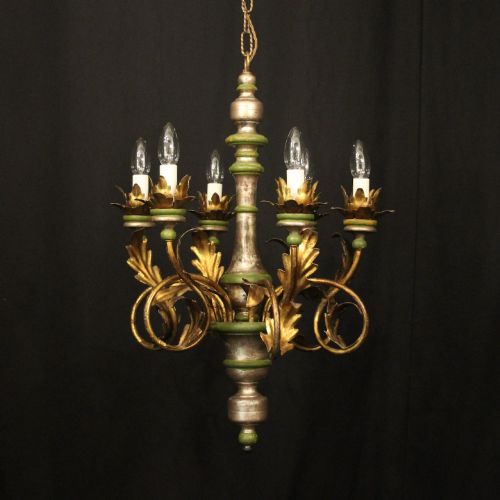
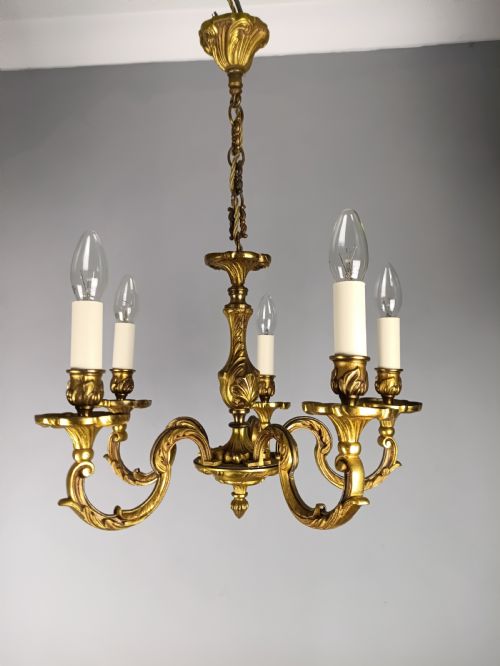
When searching for a vintage gold chandelier, buyers encounter lighting fixtures spanning the nineteenth and twentieth centuries, predominantly originating from French and Italian workshops. These pieces range from compact single-light lanterns and wall sconces to multi-armed structures carrying ten or more lights.
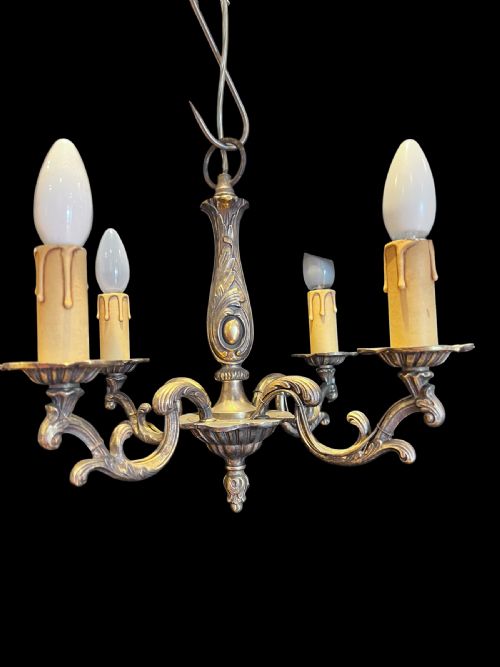
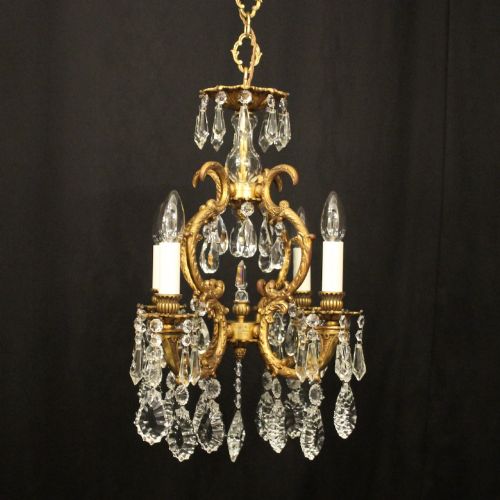
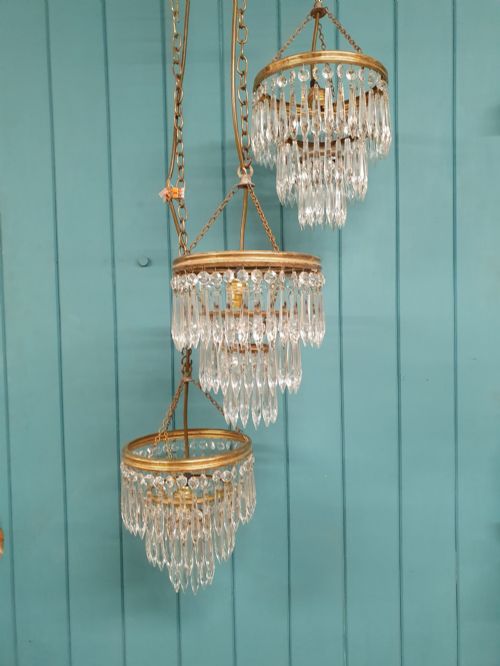
The selection on this page centres on ceiling lighting, including birdcage designs, tent and waterfall configurations, and neoclassical lyre shapes. Materials such as brass, bronze, and spelter receive gilt finishes, often combined with cut glass and crystal components.
Materials and Construction
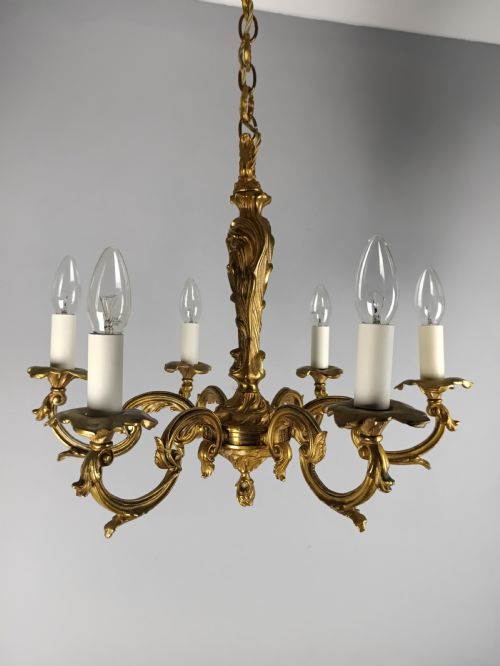
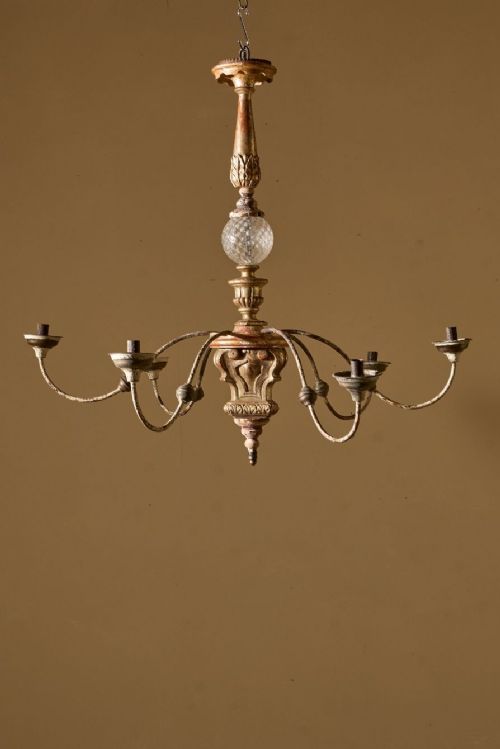
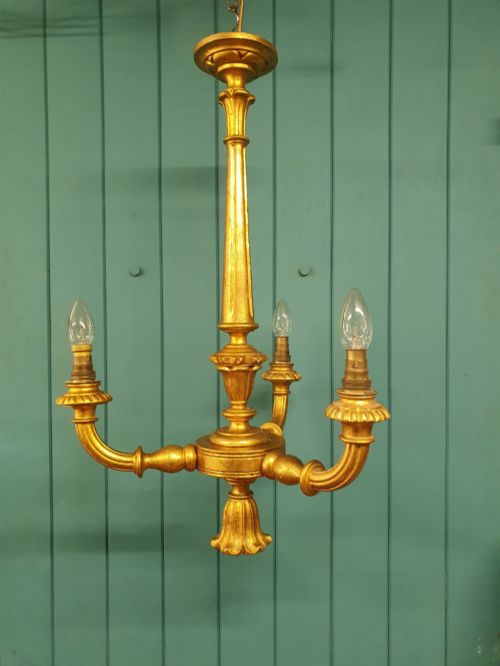
The construction of these fixtures relies on cast or carved metal frameworks formed from brass, bronze, or gilded wood. Artisans applied gold leaf or gilt finishes to the metal surfaces, creating the distinctive golden tone characteristic of the period.
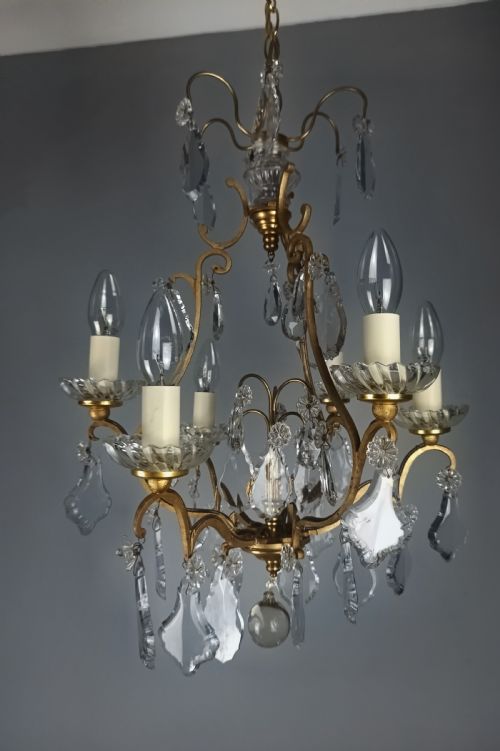
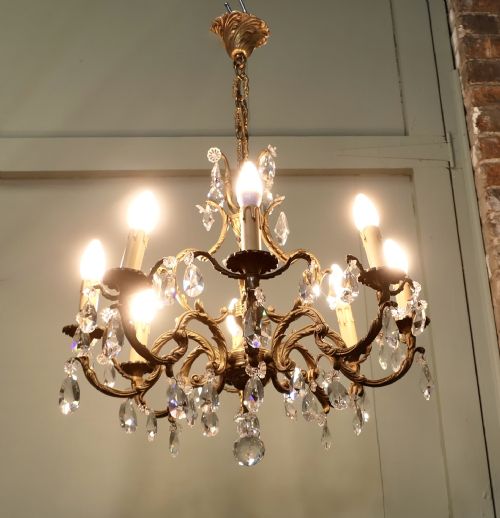
Cut glass and crystal lustres, spikes, and pendants are wired or pinned directly to the metal frames, frequently arranged in tent and waterfall drops or surrounding central stems.
Assessing Quality
Quality in these chandeliers rests on the precision of the metal casting and the depth of the gilding. Heavier bronze and brass frames demonstrate superior durability compared to lighter metal or spelter alternatives.
The clarity and cut of the crystal components further distinguish standard pieces from finer examples. Hand-carved details, such as those found on gilded wood or elaborate floral ceramic elements, indicate higher levels of craftsmanship.
The Vintage Gold Chandelier Glossary
- Gilt bronze
- Bronze treated with a gold-coloured finish or gold leaf. This material provides a heavy, durable structure for ornate casting.
- Crystal lustre
- A cut glass pendant suspended from the arms or crown of a fixture. These elements refract light across the room.
- Tent and waterfall chandelier
- A design featuring an upper canopy forming a tent shape above a cascading arrangement of crystal strands. This style gained popularity in formal reception spaces.
- Spelter
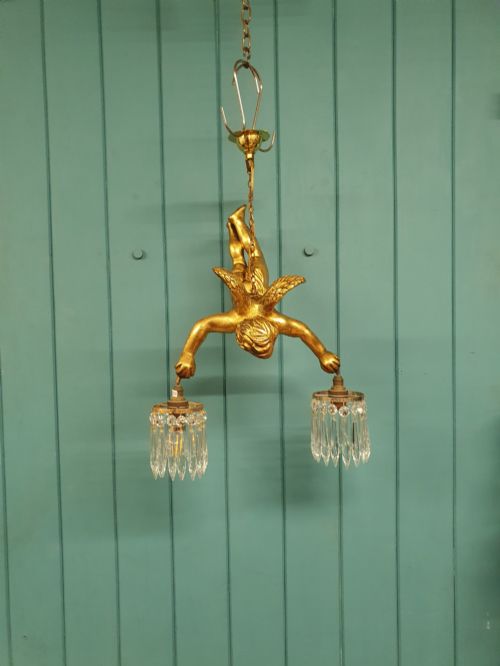
- An alloy of zinc and lead used as a cheaper substitute for bronze. It appears in figurative elements such as cherubs.
- Rococo revival
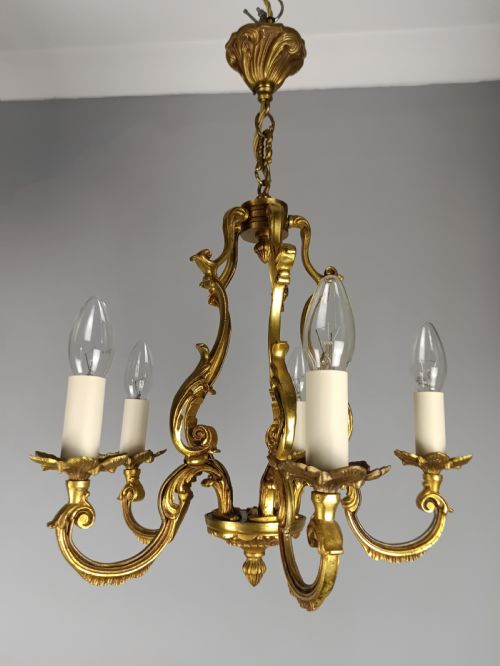
- A nineteenth-century design style mimicking eighteenth-century asymmetry and scrollwork. It manifests in curved brass arms and organic motifs.
Vintage Gold Chandelier: Frequently Asked Questions
How do I hang a heavy brass chandelier safely?
Installation requires anchoring the fixture directly into ceiling joists using a rated electrical box and steel mounting bracket. Professional assistance ensures the weight of the metal and crystal is supported securely.
Wiring should be inspected by an electrician to meet current safety standards before connecting the power supply.
What is the best way to clean crystal lustres?
Cleaning involves removing individual crystal drops and washing them in warm water with a mild detergent. Rinsing with distilled water prevents mineral spots from forming on the glass.
The metal frame can be dusted gently with a dry microfibre cloth to preserve the gilt finish.
How can I date a gilded bronze chandelier?
Dating relies on stylistic clues, such as the symmetrical restraint of neoclassical designs versus the elaborate curves of rococo revival pieces. Examining the fastening methods, wiring holes, and casting seams provides further context for the period of manufacture.
Earlier nineteenth-century pieces often feature hand-cut threads and heavier bronze content compared to twentieth-century brass productions.
Are these lights compatible with modern electrical systems?
Most antique fixtures accommodate modern wiring and standard lamp holders, though rewiring is frequently necessary for safe operation. Standard LED or incandescent bulbs fit most restored candle tubes and sockets.
Consulting a specialist electrician ensures the internal components comply with local electrical regulations.