




Vintage Globe Ceiling Light
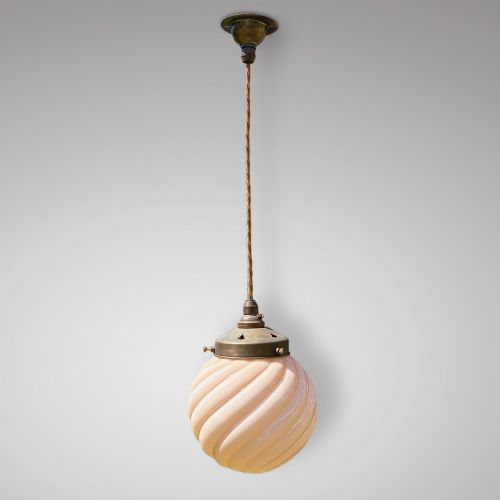
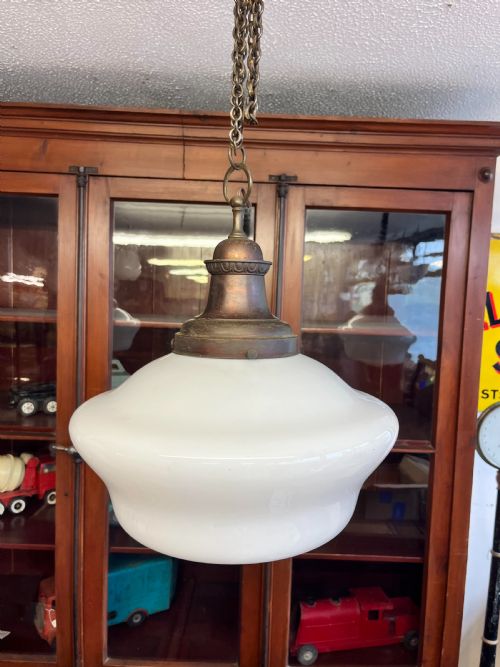
These vintage globe ceiling light fixtures bring warmth and architectural character to a room through diffusing glass and robust metal fittings.
Vintage Globe Ceiling Light
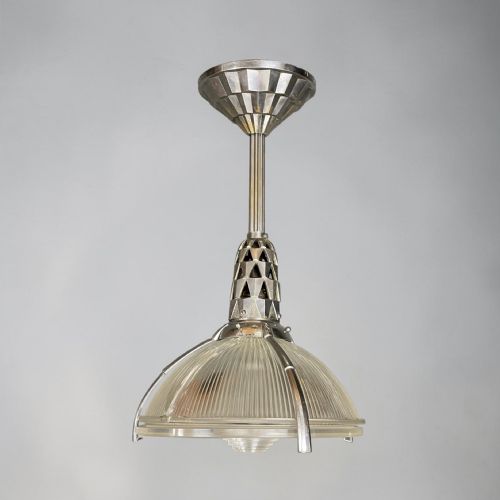
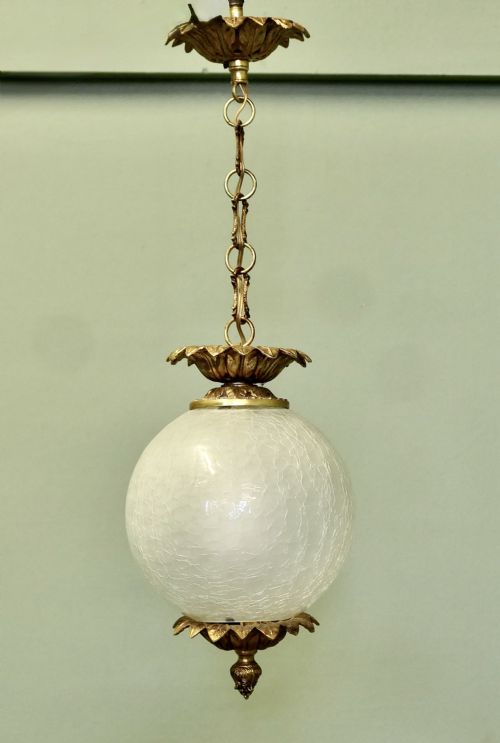
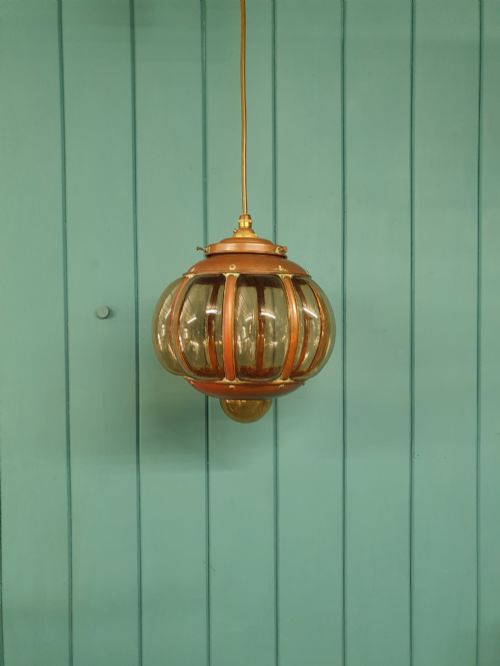
When you search for a vintage globe ceiling light, you are looking at overhead fixtures that suspend glass or crystal spheres from ceilings to illuminate spaces with soft, even light. The selection here spans early twentieth century designs, featuring Edwardian examples alongside Art Deco and industrial pieces from the 1920s and 1930s.
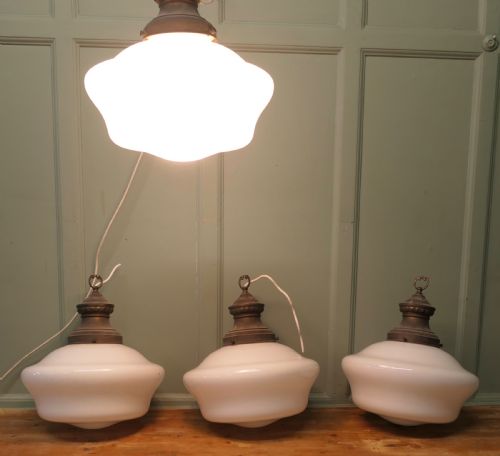
You are most likely to meet opaline and frosted glass globes paired with brass, chrome, or metal mountings among these listings. These pieces originated as functional lighting in French homes, English pharmacies, chapels, and nautical settings before finding a second life in modern interiors.
How they were made
Glassmakers blew and moulded opaline, moonstone, frosted, and smoked glass into spherical and domed shapes, sometimes incorporating prismatic patterns or fish scale textures to manipulate the light. Artisans shaped metal fitments from brass, copper, bronze, chrome, and nickel plated metal to secure the glass globes safely overhead.
Workshops combined these glass shades with hanging pendants, chains, and bracket structures, drawing on Edwardian, Art Deco, Art Nouveau, and Gothic Revival design vocabularies. The resulting fixtures balance utilitarian durability with decorative metalwork and specialised glass treatments.
Listings feature pieces from the Edwardian era through the 1930s, utilising brass, chrome, opaline glass, and frosted glass across industrial and Art Deco styles.
What varies in quality
The distinction between ordinary and exceptional examples rests in the ambition of the glasswork and the integrity of the metal fittings. Heavier, thicker glass such as etched crystal or layered opaline demonstrates superior material substance, while specialised forms like double prismatic Holophane lenses show advanced optical engineering.
Finishes on the metal components, from cast brass to polished chrome and bronze, reveal the original tier of manufacture through their weight and casting detail. Pieces bearing attribution to recognised designers or specific institutional origins, such as French workshops or English pharmacies, hold greater presence.
Émile-Jacques Ruhlmann
The Vintage Globe Ceiling Light Glossary
- Opaline Glass
- A milky, semi-translucent glass that diffuses light evenly without harsh glare. It was widely utilised in twentieth century lighting for its soft luminescence.
- Holophane
- A brand of specialised glass featuring precise prismatic ribs designed to direct and diffuse light efficiently. These lenses were standard in industrial and commercial settings.
- Art Deco
- A design style from the interwar period characterised by streamlined geometric forms and stylised motifs. In lighting, it manifests in clean metal mounts and symmetrical glass globes.
- Edwardian
- A stylistic period spanning the early years of the twentieth century defined by ornate yet lighter interpretations of historical revivals. Fixtures from this time often employ brass and detailed metalwork.
- Pendant Light
- A single light fixture suspended from the ceiling by a cord, chain, or metal rod. These fixtures concentrate illumination directly downwards or diffuse it throughout a space.
Vintage Globe Ceiling Light: Frequently Asked Questions
How do I hang a vintage globe ceiling light?
These fixtures suspend from ceilings using original or adapted chains, rods, or cords attached to wiring terminals. You will need a qualified electrician to secure the mount safely to your ceiling joists and connect the electrical supply.
Ensure the weight of the glass globe matches the load capacity of your ceiling box. Adjust the hanging height so the globe sits clear of head height while providing balanced illumination to the room.
Where should I place a vintage globe ceiling light?
These lights suit hallways, kitchens, dining areas, and bathrooms where diffused overhead illumination is required. Their enclosed glass shapes distribute light evenly across the space rather than casting harsh directional beams.
Consider the scale of the room when selecting a globe size. Larger spaces benefit from sizeable opaline or prismatic spheres, while diminutive shades fit narrower corridors and smaller architectural niches.
How do I clean an opaline glass globe?
Remove the glass shade from the metal fitting if it is securely detachable, taking care to support the weight with both hands. Wash the glass gently in warm water with a mild dish soap to lift accumulated dust and grease.
Dry the glass thoroughly with a soft lint-free cloth before reassembling the fixture. Avoid harsh chemical cleaners or abrasive scouring pads that can damage the surface of vintage glass.
How do I date a vintage ceiling light?
Examine the materials and design motifs to determine the era of manufacture, comparing them against Edwardian, Art Nouveau, Art Deco, and 1930s industrial styles. Elements like chrome plating, specific glass textures, and brass castings point to particular decades.
Look for maker stamps, casting marks, or structural construction methods typical of early twentieth century workshops. The combination of metal types, such as nickel plated brass or heavy bronze, helps narrow down the production period.