



Vintage Glass Wine Stopper
These vintage glass wine stopper vessels and matching decanters bring period craftsmanship to the table, combining heavy crystal with practical pouring design.
Vintage Glass Wine Stopper
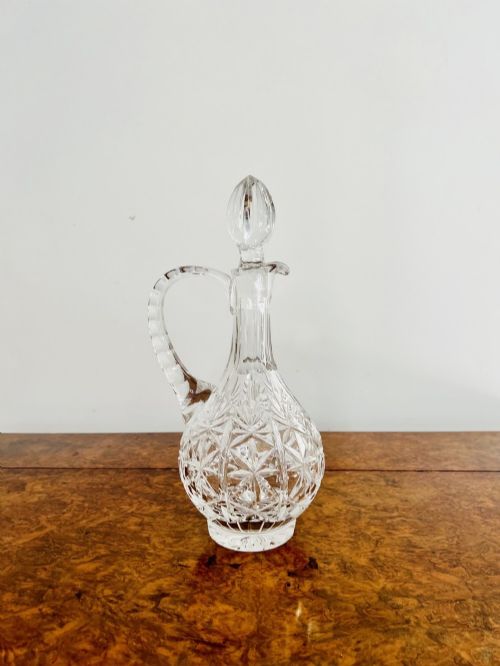
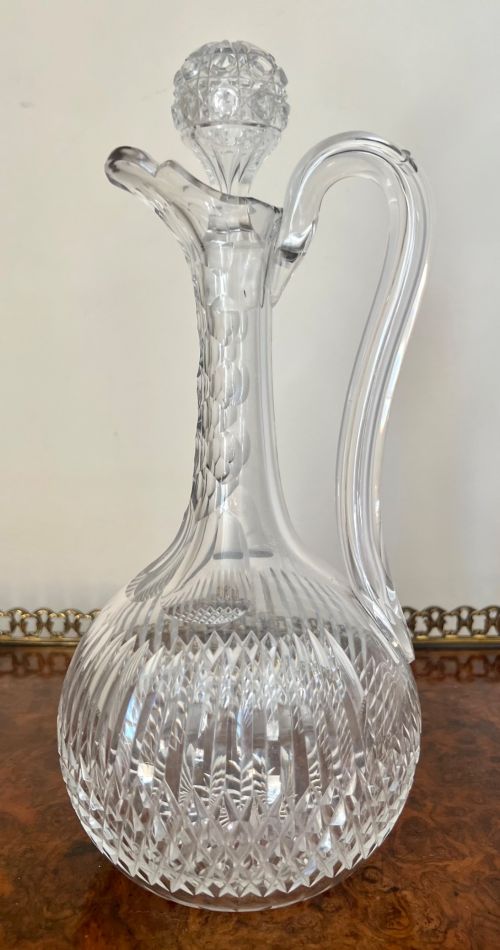
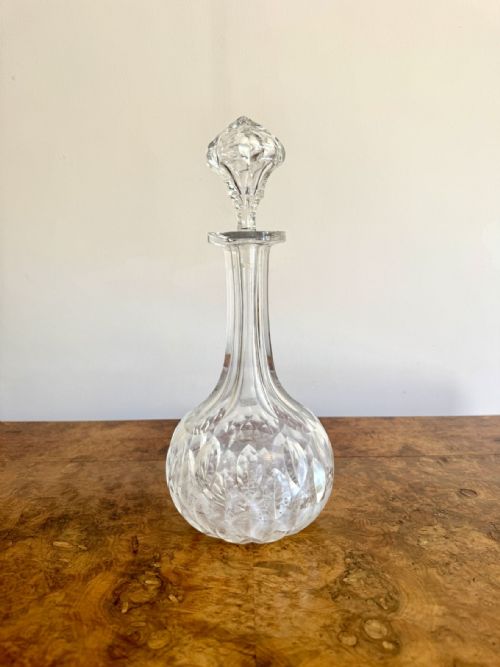
When you search for vintage glass wine stopper pieces, you encounter a selection of decanters, ewers, and claret jugs originating from the nineteenth and early twentieth centuries. These vessels served to hold and serve wine at the dining table, with stoppers designed to seal the contents securely.
The items found here span the Victorian, Edwardian, and Art Deco periods, encompassing English, Irish, and continental European workshops. You are most likely to meet Edwardian and Victorian cut glass decanters alongside bell-shaped jugs and shaft-and-globe forms.
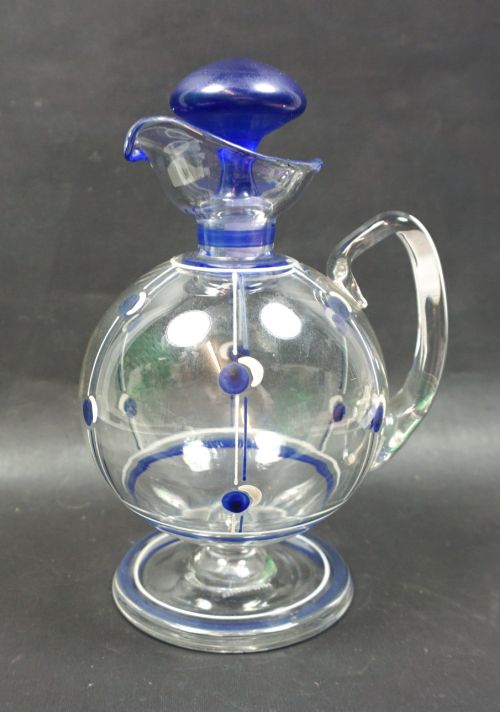
Forms range from simple spirit bottles to elaborate claret jugs fitted with silver plate mounts and blue enamel decoration. Each piece reflects the dining customs of its era, preserved through generations of careful use.
Materials and manufacturing techniques
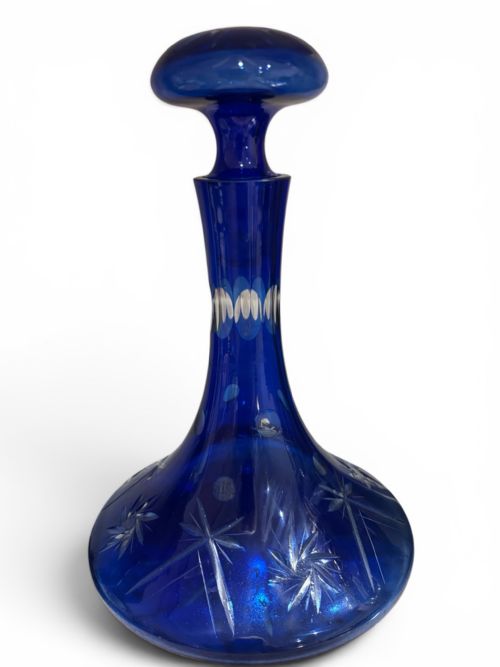
Makers utilised clear glass, lead crystal, and coloured glass, often applying ruby overlay or emerald green hues to the molten metal. Artisans shaped these materials into heavy decanters, ewers, and carafes through free-blowing or mould-blowing techniques.
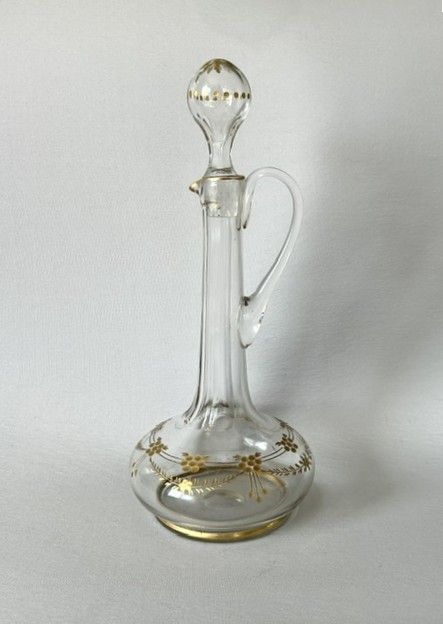
Decoration relied on deep cutting, wheel engraving, and gilding to catch the light on the sideboard. Many pieces integrated silver plate hardware or hand-painted enamel details, particularly seen in Victorian floral motifs and Bohemian coloured crystal.
Object forms span from standard decanters and carafes to specialised claret jugs and ewers from English and Bohemian makers.
What separates the finest examples
Distinction in these vessels lies in the weight and clarity of the crystal, alongside the crispness of the hand-cut facets. Superior pieces display deep, sharp geometric cutting that refracts light cleanly through the body of the decanter.
The matching of the stopper to the neck remains a primary indicator of original integrity, as well-fitted stoppers show precise grinding specific to that individual vessel. Additional elements like crisp silver plate mounts, intact gilding, and unusual colour overlays elevate certain ewers and claret jugs above standard production.
Stevens & Williams
The Vintage Glass Wine Stopper Glossary
- Decanter
- A glass vessel used for holding and serving wine, typically fitted with a matching stopper.
- Claret jug
- A specialised pouring vessel for red wine, frequently featuring a silver plate handle and mount.
- Ewer
- A large pitcher with a wide spout and handle, designed for serving liquids at the table.
- Lead crystal
- A heavy variety of glass containing metallic oxide, prized for its high refractive index and clarity.
- Ruby overlay
- A manufacturing technique where a thin layer of red glass is fused over clear glass before being cut away to reveal the colour beneath.
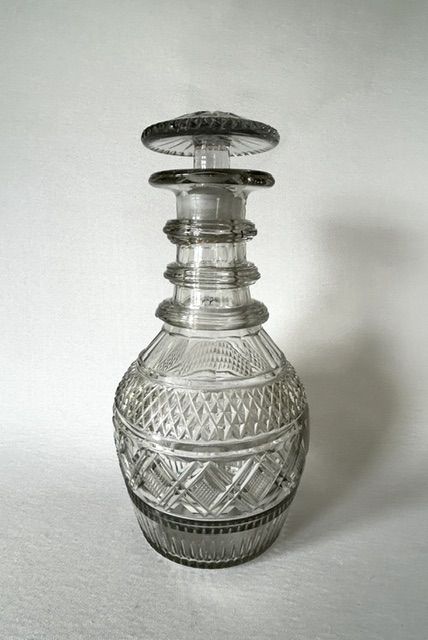
- Prussian style
- A nineteenth-century decanter shape characterised by a slightly tapered body and multiple neck rings.
Vintage Glass Wine Stopper: Frequently Asked Questions
How do I date a glass decanter?
Dating relies on stylistic clues such as the depth of glass cutting, the shape of the neck rings, and the overall silhouette of the vessel. Victorian and Edwardian examples often feature heavy cut crystal or engraved floral patterns.
Additional dating markers include the presence of pontil marks on the base, manufacturing materials like lead crystal or ruby overlay, and associated silver plate hardware which followed period metalworking trends.
Were these wine stoppers made to fit?
Original stoppers were ground by hand to fit the specific neck of each individual decanter during production. This means stoppers are often unique to their specific vessel and rarely interchange smoothly between different bottles.
When examining a piece, look for matching hand-cut numbers or subtle grinding marks on both the stopper peg and the inside of the neck to confirm their original pairing.
What is the difference between a decanter and a claret jug?
Decanters are typically symmetrical glass bottles with stoppers designed to store and serve wine or spirits. They rely entirely on a glass-on-glass seal to keep the contents fresh.
Claret jugs feature an attached handle and a hinged metal spout made of silver plate, built specifically for pouring red wine at the table without requiring a removable stopper.
How should I clean antique glass decanters?
Cleaning requires warm water and mild detergent, avoiding harsh scrubbing or sudden temperature changes that could stress the historical glass. Specialised bottle brushes help reach interior residue safely.
Stoppers should be washed separately and left out of the neck until completely dry to prevent moisture from trapping inside the vessel.