






Vintage Glass Wall Sconces
Vintage glass wall sconces bring focused illumination and decorative presence to interiors, combining period metals with moulded, frosted, or cut glass.

Vintage Glass Wall Sconces
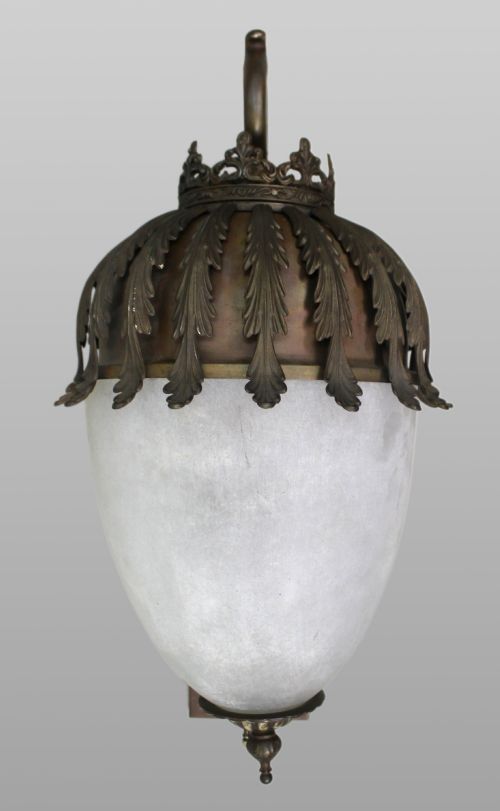
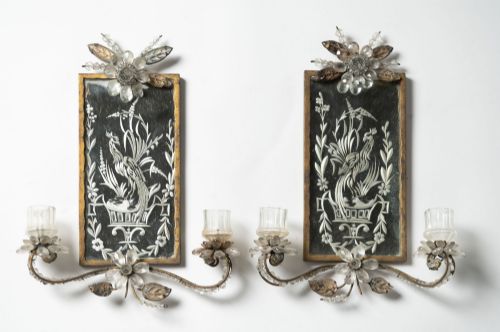
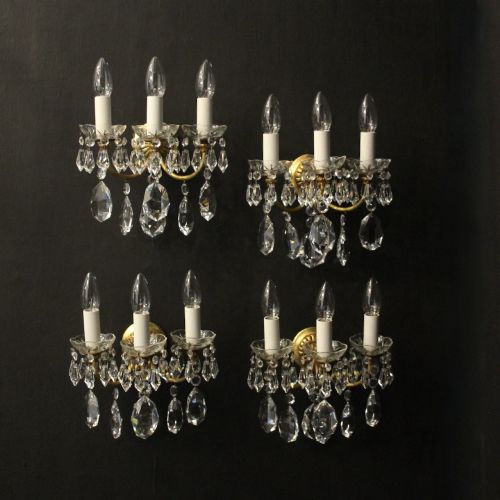
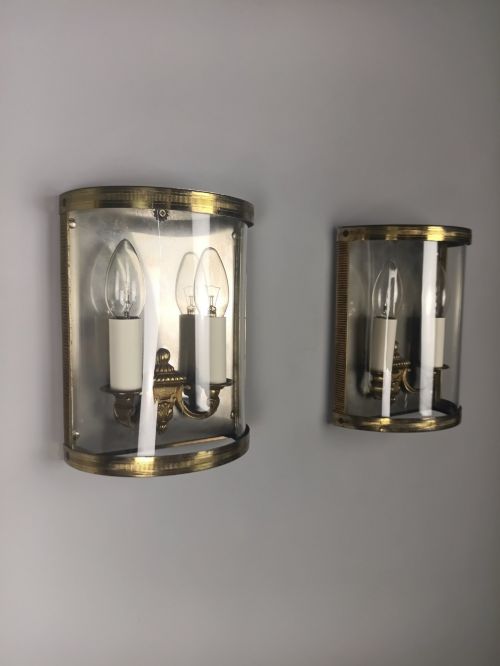
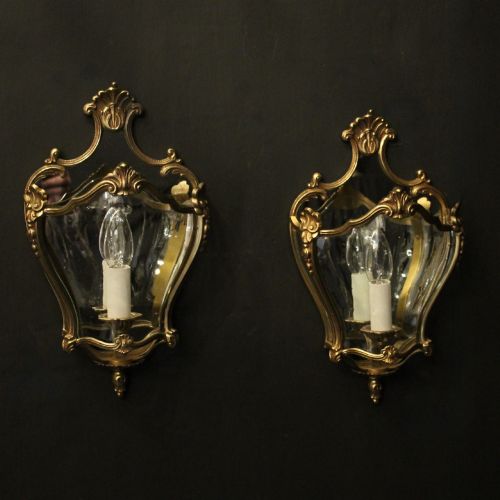
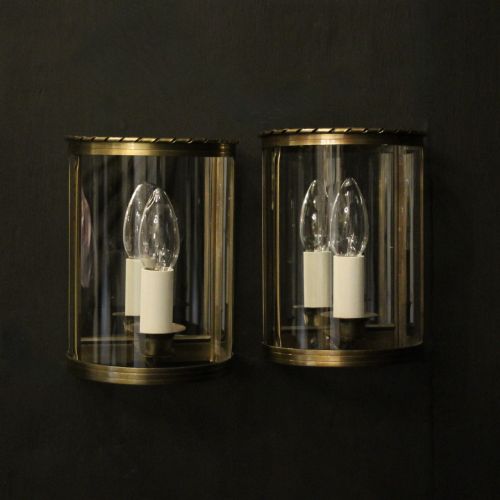
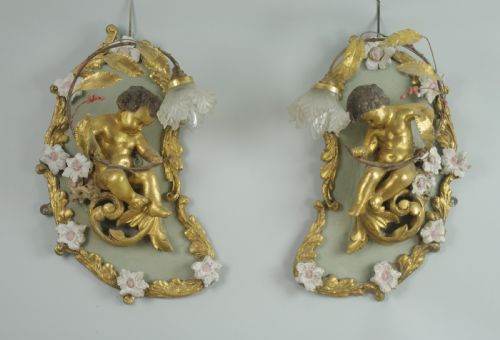
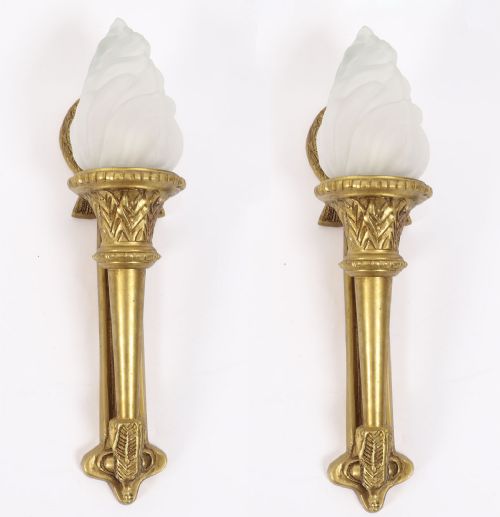
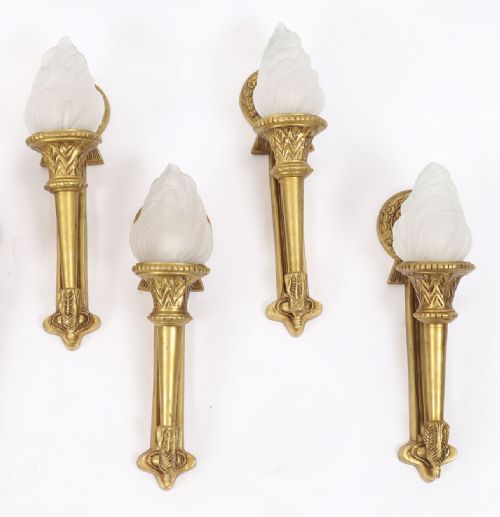
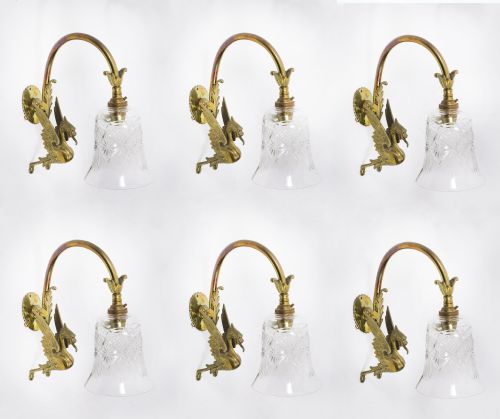
The selection ranges from restrained Edwardian brass designs to elaborate Art Deco chrome and glass assemblies, alongside French neoclassical ormolu and gilded bronze fixtures. Common configurations include single arms, multi-armed candelabra styles, bag lights, and flush-mounted clam shell or cloud-shaped shades. Many examples incorporate mirrored backs, crystal drops, or brass and copper frames to amplify the light cast from internal bulbs.
How they were made
Maker workshops utilised combination assemblies of cast and spun metals such as brass, bronze, chrome, ormolu, and wrought iron to form the structural backplates, arms, and frames. Glass components were produced through cutting, moulding, frosting, or bevelling, resulting in heavy crystal drops, textured trumpet shades, or smooth convex half-lantern panels.
Fixings and structural joints often relied on threaded screws, pinned joints, and original wiring channels housed within decorative metalwork. Gilded finishes, toleware paint, and polished metal surfaces were applied to enhance the visual depth of the brass and bronze frameworks supporting the glass elements.
Listings feature French neoclassical, Art Deco, and Edwardian periods utilising brass, chrome, crystal, and frosted glass in wall-mounted configurations.
What varies in quality
The standard of a sconce is determined by the weight and clarity of the glass elements, from deeply cut crystal to standard moulded panes, and the crispness of the metal casting in the ormolu, bronze, or brass frames. Superior examples display refined chasing on metal mounts, intact original fittings, and well-balanced proportions across matched pairs or larger sets.
Workmanship shows in the integration of structural components, such as secure bezel settings for glass shades and substantial backplates that sit flush against the wall. Consistency in matching sets and the presence of documented maker or shade signatures further distinguish the finer pieces within this category.
Maison Baguès·F. & C. Osler·Dugué
The Vintage Glass Wall Sconces Glossary
- Ormolu
- Gilded bronze, commonly utilised for decorative mounts on neoclassical and French lighting fixtures.
- Toleware
- Painted tin or sheet metal, frequently shaped and coloured to resemble heavier materials.
- Half Lantern
- A wall light projecting outward with glazed panels on three sides, derived from traditional outdoor lanterns.
- Bag Light
- A wall sconce featuring a cascade of hanging crystal prisms suspended in a teardrop or basket configuration.
- Bevelled Glass
- Glass panes possessing an angled edge cut around the perimeter to catch and refract light.
Vintage Glass Wall Sconces: Frequently Asked Questions
How do I install vintage wall sconces?
Most vintage wall sconces require mounting to standard wall junction boxes using the existing backplate fixings. Professional installation is recommended to ensure secure physical attachment and safe integration with modern electrical circuits.
Older fixtures may require rewiring with modern flex and lamp holders to comply with current electrical safety standards while retaining their original aesthetic exterior.
Can these sconces be used outdoors?
Certain pieces categorized as wall lanterns or carriage lamps were originally designed for exterior thresholds or sheltered porches. However, surviving vintage examples often lack modern Ingress Protection ratings required for exposed outdoor weather conditions.
Consulting a qualified electrician helps determine whether a specific brass, copper, or glass lantern is suitable for outdoor placement or protected interior hallways.
How do I clean antique glass shades?
Glass shades and crystal drops should be removed from the metal framework whenever possible and washed gently in lukewarm water with mild soap. Avoid harsh chemical cleaners that can damage aged metal patinas, brass lacquers, or gilded surfaces.
Allow all components to dry completely before reattaching them to the cleaned and dusted metal arms.
How do I date a glass wall sconce?
Dating relies on identifying stylistic markers, such as geometric Art Deco chrome lines, ornate Victorian ormolu cast motifs, or Edwardian neoclassical brass proportions. Examining construction techniques, screw types, and wiring channels also provides clues regarding the decade of manufacture.
Comparing the design against documented maker outputs or period interior catalogues helps narrow down the production era.