



Vintage Glass Trumpet
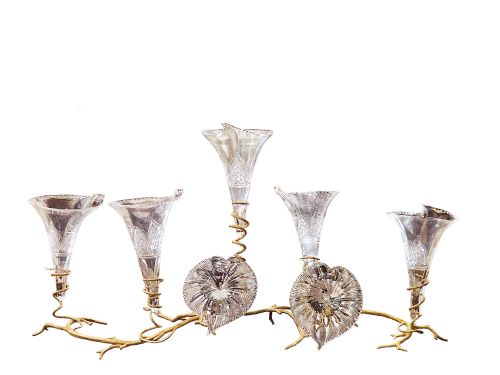
These vintage glass trumpet pieces are slender vessels and epergnes designed to hold a single bloom or anchor a table arrangement with height and poise.
Vintage Glass Trumpet
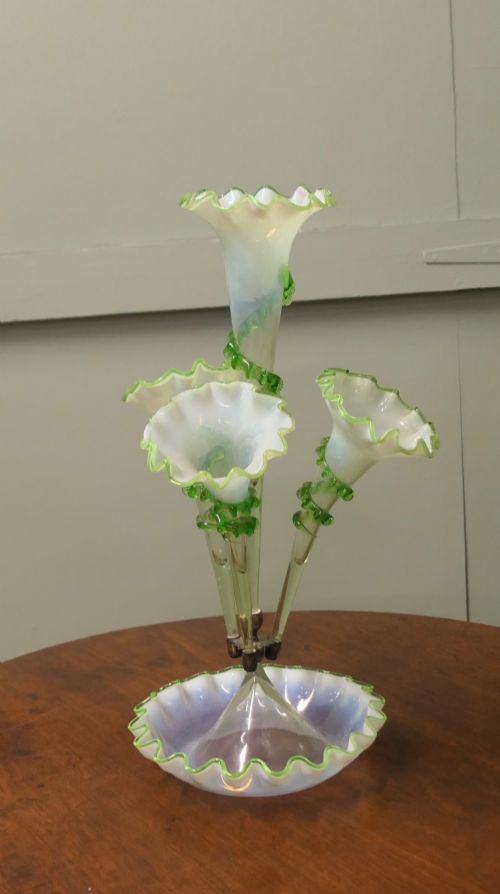
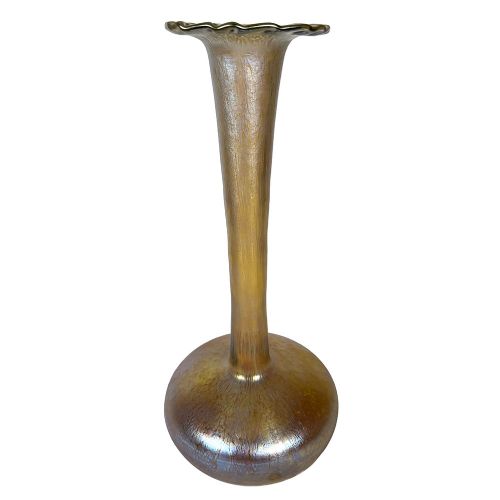
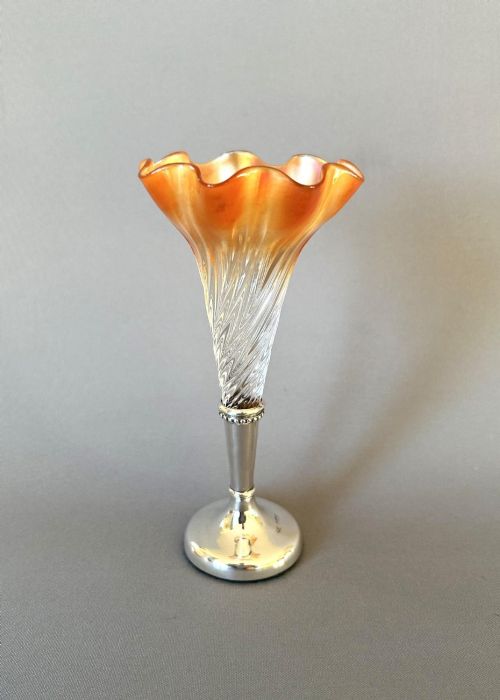
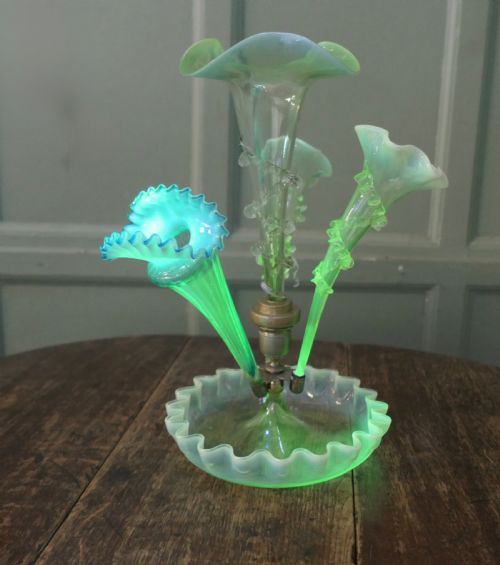
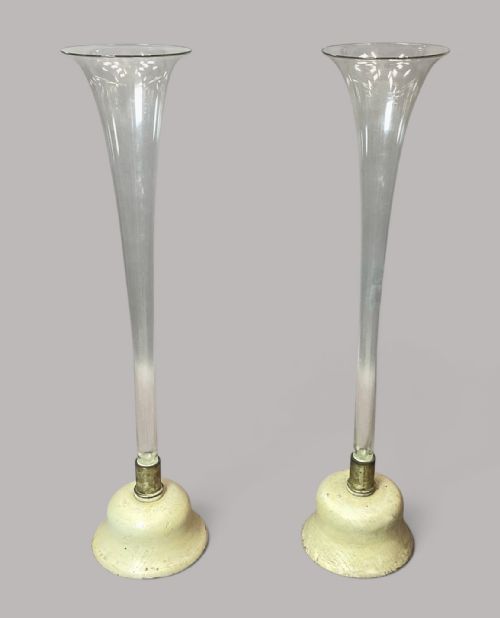
A vintage glass trumpet takes the form of a flared, slender vessel expanding from a narrow base toward an open, scalloped or frilled rim. Collectors seeking a vintage glass trumpet encounter diverse forms ranging from single posy vases and slender flutes to multi-horn epergnes and wall sconces.
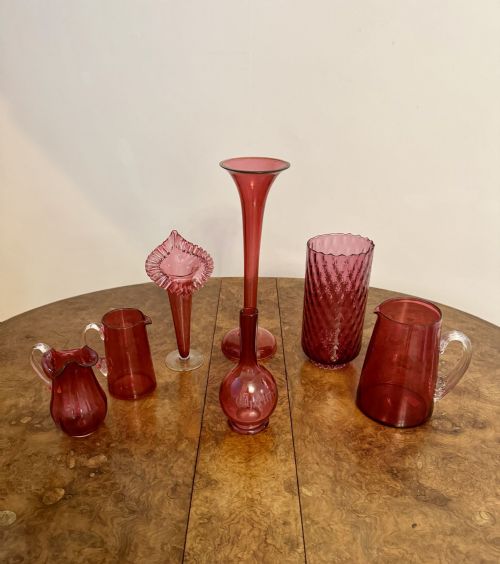
The objects span multiple eras, appearing in Victorian, Edwardian, and Art Deco designs alongside earlier Georgian examples and later twentieth-century creations. Materials shift between clear glass, opalescent glass, uranium glass, and cranberry glass, frequently mounted in sterling silver, silver plate, brass, or chrome.
Materials and construction
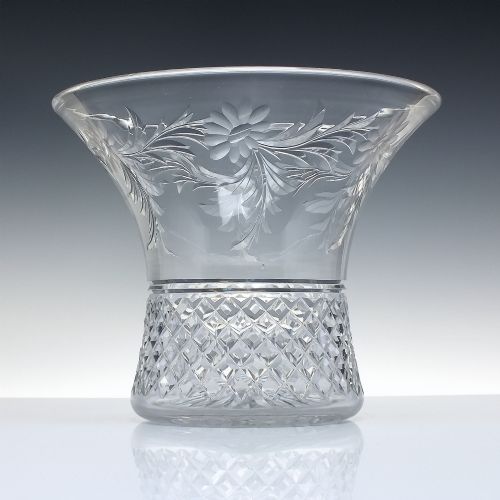
Many pieces rely on hand-blown glass techniques, resulting in organic wall variations and distinct surface textures like wrythen twists or iridescent papillon décors. Engraving and gilding appear on nineteenth-century specimens, adding surface detail to clear or coloured grounds.
Mounts and bases involve metals such as sterling silver, silver plate, brass, and chrome, secured to the glass body to provide stability for the tall, narrow stems.
Vintage Glass Trumpet Retail Price Guide 2026
Typical asking prices for vintage glass trumpet among the pieces listed under this phrase on Sellingantiques today, from the lower quarter to the upper quarter. They describe what is for sale here now, not the wider market.
Certain antique glass trumpets reach forty inches in height, requiring substantial tables to support their outsized floral ambitions.
Assessing quality and execution
Quality rests in the balance of the proportions and the clarity or depth of the glass colour, whether in uranium green, cranberry hues, or pearlescent opalescence. Superior examples demonstrate precise hand-forming at the flared rim and clean integration with metal mounts like sterling silver or chrome.
Engraved or gilded decoration displays crisp execution rather than faint or rubbed lines, while complex epergne multi-trumpet assemblies show careful coordination of matching glass horns.
Loetz·Julien Glass France
The Vintage Glass Trumpet Glossary
- Trumpet vase
- A tall, slender vessel with a narrow lower stem that widens progressively toward the rim. The silhouette mimics the flared bell of a brass horn.
- Epergne
- A centrepiece table ornament featuring a central bowl with multiple detachable trumpet-shaped vases radiating outwards. These constructions create elaborate tiered displays for flowers or fruit.
- Uranium glass
- Glass impregnated with uranium oxide to produce a vivid yellow-green colour that glows brightly under ultraviolet light. It appears frequently in Victorian tablewares.
- Cranberry glass
- A rich red-pink transparent glass created by adding gold chloride to the molten batch. The intensity of the shade depends on the precise chemical mixture and temperature control.
- Wrythen
- A decorative spiral pattern moulded or twisted into the body of glassware. This technique creates diagonal ribs that catch the light as the vessel turns.
Vintage Glass Trumpet: Frequently Asked Questions
How were trumpet epergnes used on dining tables?
These centrepieces sat in the middle of formal dining tables during the Victorian and Edwardian eras. The central bowl held fruit or sweetmeats, while the detachable trumpet horns accommodated fresh cut flowers.
The height of the trumpets allowed guests to converse across the table without visual obstruction. Servants could dismantle the horns easily for cleaning and refilling between courses.
What is the difference between an epergne and a posy vase?
A posy vase is a single, self-contained vessel designed to hold a small handful of short-stemmed flowers. They are compact and intended for side tables, desks, or mantelpieces.
An epergne is a larger, multi-component centrepiece assembly. It combines a main base bowl with several distinct trumpet vases branching out from a central point.
How do I identify Art Deco trumpet lighting?
Art Deco trumpet wall lights and sconces combine geometric metal frames in chrome or brass with glass shades. The glass takes the characteristic flared trumpet silhouette but serves to diffuse electric light rather than hold water.
These fixtures emerged around 1930, trading Victorian floral motifs for streamlined metallic structures and cleaner industrial lines.
Why do some trumpet vases have silver bases?
Makers added silver or silver-plated bases to provide weight and stability to the top-heavy glass stems. Sterling silver mounts also elevated the decorative status of the piece for formal display.
These collars often carry hallmarks that help date the manufacture precisely, complementing the stylistic clues of the glass above.