

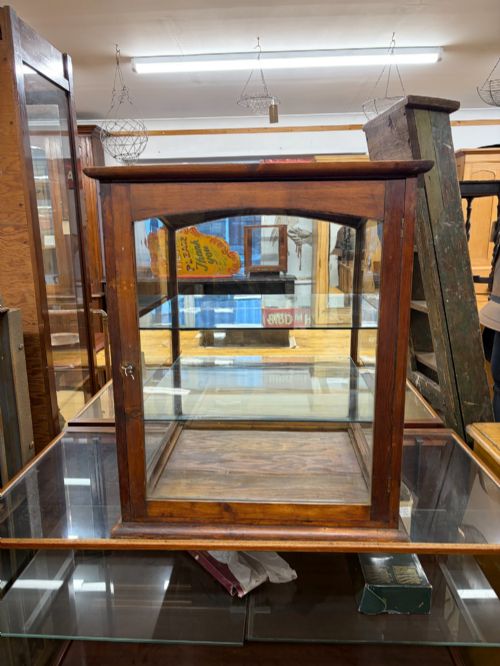






Vintage Glass Top Counter
A vintage glass top counter is a commercial showcase designed to display retail goods while keeping them protected under glass.
Vintage Glass Top Counter
A vintage glass top counter brings utilitarian shop furniture into domestic and commercial interiors. These pieces take the form of table top display cabinets, shop counters, and cocktail bars originating from the Victorian period through to the 1930s.
Buyers will find counter-top cabinets framed in timber or brass alongside larger floor-standing shop counters. Many examples survive from commercial settings including chemists, drapers, and confectioners.
Materials and construction
Makers utilised timber such as mahogany, oak, and blonde maple for the main framework of these counters and cabinets. Brass and metal framing also appear alongside glazed panels to provide visibility for the goods inside.
Interiors often feature fitted drawers, shelving, and linings of felt or velvet to cushion the items displayed. Sign-writing and mechanical dispensing elements occasionally form part of the construction.
Vintage Glass Top Counter Retail Price Guide 2026
Typical asking prices for vintage glass top counter among the pieces listed under this phrase on Sellingantiques today, from the lower quarter to the upper quarter. They describe what is for sale here now, not the wider market.
Some display cabinets still carry the original commercial branding for soap and chocolate.
Distinctions in quality
Quality rests in the choice of timber and the precision of the joinery used to construct the frame. Finishes range from simple hardwood to detailed black lacquer and specialised brass framing.
The presence of original manufacturer details, such as specialised display hardware or maker signatures, elevates the piece. Intact original glass and fitted interior components also distinguish finer examples.
Saml. Elliott & Sons·H&L Epstein·Quincy Showcase Works
The Vintage Glass Top Counter Glossary
- Counter-top cabinet
- A small display case designed to sit upon an existing shop counter for customer viewing. These pieces typically feature glazed tops and hinged or sliding rear doors.
- Display counter
- A substantial retail furnishing featuring a glazed upper section for merchandise and a solid lower base. They formed the central selling station in traditional shops.
- Apothecary jar
- A glass vessel used in pharmacies to hold ingredients and medicines. Examples with covers frequently accompany chemist shop displays.
- Cocktail bar
- A specialised piece of furniture for mixing and serving drinks. Some vintage variants incorporate original glass tops into their design.
- Dispensing cabinet
- A specialised commercial unit with mechanical elements to distribute goods. These were utilised by soap and confectionery manufacturers for counter sales.
Vintage Glass Top Counter: Frequently Asked Questions
What were vintage glass top counters used for?
Merchants used these counters to display small retail goods securely while allowing customers a clear view from above. They served in drapers, chemists, and general stores to present items like chocolate, soap, and stationery.
In modern settings, they function effectively as display furniture for collections or as functional home bars.
How do I date a shop display counter?
Dating relies on observing the timber species, construction methods, and hardware style. Victorian and Edwardian examples often feature heavier timber frames and traditional joinery.
Pieces from the 1920s and 1930s frequently introduce brass framing, streamlined edges, or art deco influences such as blonde maple and black lacquer.
Are these counters suitable for modern homes?
These pieces integrate well into contemporary interiors as statement furniture or practical storage. Table-top models sit easily on sideboards or desks, providing enclosed display space.
Larger floor-standing counters serve effectively as kitchen islands, shop fittings, or home cocktail bars.
What is the difference between a cabinet and a counter?
Cabinets are typically smaller units designed to rest upon an existing surface, featuring glazed tops and fronts for close inspection of goods. Counters are larger, floor-standing structures that form the barrier between shop assistants and customers.
Both incorporate glass display areas, but counters provide a full-height working base for retail transactions.